Pollyanna
"Gladness tested in New England"
Keys: Space play/pause · ←/→ 10s · F fullscreen · M mute · </> speed
About this film
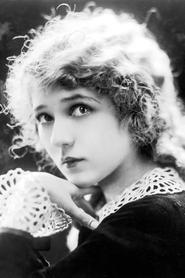
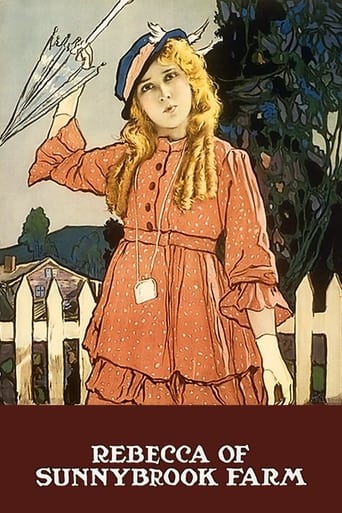
Orphaned Pollyanna arrives in her stern Aunt Polly's New England town and disarms ill-tempered neighbors with her 'glad game.' Mary Pickford embodies eternal optimism in this first screen version of Porter's novel.
Cast & crew
More films like this


More Comedy films
View all →







More from Paul Powell
View all →
More about this film
About the production
Release dateJanuary 18, 1920
Box officeHighly successful - grossed over $1 million, making it one of Pickford's biggest hits
ProductionMary Pickford Film Corporation, Famous Players-Lasky Corporation
Filmed inLos Angeles, California, Famous Players-Lasky Studios
Mary Pickford, then 27, played the 11-year-old Pollyanna, continuing her trademark 'America's Sweetheart' persona of playing young girls despite being an adult. The film was shot during the summer of 1920 with extensive location work to create the New England atmosphere. Pickford personally supervised every aspect of production, as was her practice with films under her own company name.
Themes
The transformative power of optimismThe wisdom and innocence of childhoodCommunity and social responsibilityEmotional healing and redemptionThe conflict between material wealth and emotional richness
Themes & topics
orphanoptimismNew Englandaunt-niece relationshipsmall towntransformationaccidentcommunitychild protagonistemotional healing
Historical background
Archival records place Pollyanna in 1920, a year when the silent feature period shaped what theaters booked.
Why this film matters
Retrospectives include Pollyanna when mapping craft and subject matter from the silent feature period.
Making of
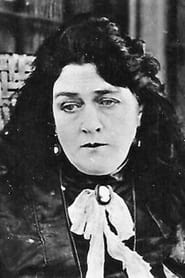
The production was a labor of love for Mary Pickford, who had long wanted to adapt Porter's beloved novel. She worked closely with director Paul Powell to ensure the film captured the book's spirit while making it cinematically engaging. The casting was particularly important - Pickford personally selected Katherine Griffith to play Aunt Polly, wanting an actress who could convincingly portray both sternness and eventual warmth. The famous 'glad game' scenes were rehearsed extensively to make them feel natural rather than preachy. The film's climax, involving Pollyanna's accident, was shot using innovative camera techniques for the time, including low angles to emphasize the child's vulnerability. Pickford's attention to detail extended to the costumes - she wore specially designed dresses that made her appear younger, with shorter hemlines and youthful fabrics despite the film's period setting.
What critics said
Critics revisiting Pollyanna emphasize performative and technical choices visible in surviving prints.
Did you know?
- Mary Pickford was 27 years old when she played 11-year-old Pollyanna, maintaining her 'girl with golden curls' image that made her famous
- The film was among the leading faithful adaptations of Eleanor H. Porter's 1913 novel, which had been a massive bestseller
- Pickford bought the film rights herself for $25,000, a substantial sum at the time
- The 'glad game' from the film became a cultural phenomenon, with newspapers and magazines running features about it
- This was the first of three film adaptations of Pollyanna, predating the 1960 Disney version by 40 years
- The film's success helped cement Pickford's status as the most powerful woman in Hollywood
- Howard Ralston, who played Jimmy Bean, was a popular child actor of the era who appeared in numerous Pickford films
- The film's sets were designed to authentically recreate a New England town, with imported materials and period-accurate architecture
- Pickford insisted on doing her own stunts, including the fall that injures Pollyanna in the film's climax
- The film was one of the first to use intertitles extensively to convey dialogue and emotional states, a technique Pickford helped popularize
Visual style
The cinematography by Charles Rosher and William Marshall employed innovative techniques for the time, including soft focus lighting during emotional scenes to enhance the film's sentimental tone. The camera work was notably mobile for 1920, with several tracking shots that followed Pollyanna through the town, creating a sense of her energy and movement. The New England setting was captured through carefully composed exterior shots that emphasized the town's quaint charm while subtly suggesting its emotional coldness before Pollyanna's arrival. Interior scenes used lighting to reflect emotional states, with Aunt Polly's house initially shot in harsh, angular light that gradually softens as the characters transform. The film's climax featured dramatic low-angle shots that emphasized Pollyanna's vulnerability and the community's concern.
Innovations
Pollyanna featured several technical innovations for its time, including sophisticated matte paintings to create the illusion of the complete New England town. The film employed early forms of makeup techniques to help Mary Pickford appear convincingly child-like, including special lighting and camera filters. The accident sequence utilized innovative editing techniques, cross-cutting between Pollyanna's fall and the reactions of various townspeople to build suspense and emotional impact. The production also pioneered the use of detailed continuity scripts to maintain consistency across the film's many location and studio shots. The intertitles were unusually sophisticated for the period, using different fonts and artistic treatments to match the emotional tone of each scene.
Music
As a silent film, Pollyanna would have been accompanied by live musical performance in theaters. The original score was composed by William Axt and David Mendoza, who created a lush, romantic orchestral score that emphasized the film's emotional journey. The main theme, 'Pollyanna's Theme', became popular in its own right and was published as sheet music for home performance. Different theaters would adapt the score based on their orchestra size, with larger venues presenting more elaborate arrangements. The music prominently featured strings and woodwinds to convey innocence and hope, with brass instruments used sparingly for dramatic moments. The score's influence extended beyond the film, with several of its themes being adapted for use in other Pickford productions.
Famous quotes
When you look for the bad in mankind, expecting to find it, you surely will." - Pollyanna
There is something about everything that you can be glad about, if you keep hunting long enough to find it." - Pollyanna
The game is to just find something about everything to be glad about - no matter what 'tis." - Pollyanna
I'm so glad I'm glad." - Pollyanna
I don't think we ought to have any sad days." - Pollyanna
Memorable scenes
- The opening sequence where Pollyanna arrives at the train station with her meager belongings, immediately establishing her optimistic character despite her orphan status
- The scene where Pollyanna teaches the 'glad game' to the grumpy townspeople, showing her infectious enthusiasm spreading through the community
- The emotional climax where Pollyanna falls from the window and the entire town rushes to help, demonstrating how she has transformed everyone
- The final scene where Aunt Polly finally breaks down emotionally and embraces Pollyanna, representing the complete healing of the family
- The sequence where Pollyanna visits the reclusive Mr. Pendleton and gradually breaks through his isolation, showcasing her ability to reach the most hardened hearts
What audiences thought
Audiences in 1920 embraced Pollyanna with extraordinary enthusiasm, packing theaters for months and generating tremendous word-of-mouth buzz. Many viewers reported being deeply moved to tears, and newspapers carried stories about audience reactions, including accounts of people who claimed the film changed their outlook on life. The film's message of optimism particularly resonated with post-war audiences seeking hope and healing. Children especially loved the film, with many adopting the 'glad game' in their own lives. The movie's success was international as well, with reports of packed theaters across Europe and even in Japan, where Pickford was enormously popular. Contemporary audience polls consistently ranked it among the year's favorite films, and it remained popular through re-releases throughout the 1920s.
Film connections
Influenced by
- Eleanor H. Porter's 1913 novel 'Pollyanna'
- Contemporary progressive era beliefs about childhood innocence
- Post-WWI American desire for optimism and healing
- Mary Pickford's established 'America's Sweetheart' persona
- Silent era conventions of family melodrama
This film influenced
- Rebecca of Sunnybrook Farm (1917, 1938)
- The Little Princess (1917, 1939)
- Anne of Green Gables (1934)
- Heidi (1937)
- The Secret Garden (1949)
- Pollyanna (1960 Disney version)
- The Sound of Music (1965)
- Annie (1982)
Film restoration
Pollyanna is preserved in the Library of Congress and has been restored by major film archives. A complete 35mm print exists at the Museum of Modern Art, and the film has been digitally restored for home video release. While some scenes show minor deterioration typical of films of this era, the overall print quality is excellent for a silent film of its age. The restoration work has preserved the original tinting techniques used in the 1920 release, with different scenes featuring subtle color tints to enhance emotional impact.
Where to watch
- Available on DVD from Warner Archive Collection
- Streaming on The Criterion Channel
- Available for digital rental/purchase on Amazon Prime Video and iTunes
- Occasionally screened at film festivals and silent cinema revival events
- Accessible through some university film archives and library collections