Return of Lifeboat
Plot
Return of Lifeboat is a brief actuality film that records a Pacific Coast Life Saving Service boat coming back to shore near San Francisco after a rescue or patrol. The camera watches from land as the lifeboat appears in the distance, manned by several oarsmen, and gradually works its way through rough surf toward the beach. Much of the film's drama comes from the natural motion of the sea: the waves surge around the craft, and the boat must maintain its course as it nears the shore. Rather than presenting a staged narrative, the film emphasizes the physical effort of the crew and the dangerous conditions of coastal rescue work. Its purpose is documentary observation, turning a moment of everyday maritime labor into a vivid screen event.
Director
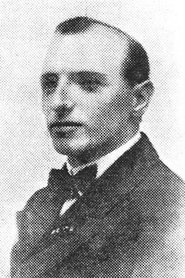
James H. WhiteAbout the Production
This film belongs to the earliest phase of cinema, when short actuality views were filmed primarily to capture recognizable events, labor, and local scenes rather than constructed drama. It was directed by James H. White, one of the key Edison cameramen and producers of motion pictures in the 1890s, and appears to have been photographed outdoors at a coastal location near San Francisco. Because films of this period were typically made with fixed cameras, natural light, and minimal editing, the visual interest depends on the timing of the boat's approach and the energy of the surf. No evidence survives of elaborate staging, special effects, or a separate publicity campaign, and production records for such a short 1897 subject are sparse.
Historical Background
Return of Lifeboat was made in 1897, when cinema was still a new public amusement and the basic grammar of film was only beginning to form. The late 1890s were a period of intense experimentation in the United States and Europe, with companies like Edison producing short actuality films, scenic views, and brief staged scenes for nickelodeon-style exhibition and vaudeville programs. The film also emerged during an era of rapid growth in coastal infrastructure and maritime safety organizations, making the Pacific Coast Life Saving Service a symbol of modern emergency response and public service. In this context, the film served both as entertainment and as a demonstration of the camera's ability to capture real-world motion, environmental danger, and labor on the American frontier of the West Coast.
Why This Film Matters
Although extremely short and apparently modest, Return of Lifeboat is significant as an example of early nonfiction cinema and the documentary impulse that would become central to film history. It preserves a glimpse of lifeboat operations and seafaring labor at a time when such subjects were rarely recorded visually, offering historians a moving-image record of coastal rescue practice near San Francisco in the 1890s. Films like this helped audiences become accustomed to seeing real events, distant places, and everyday work on screen, expanding cinema beyond trick films and staged scenes. In the broader evolution of film culture, it stands as part of the groundwork for actualities, travel views, and later documentary traditions that treat observation itself as cinematic subject matter.
Making Of
Little detailed behind-the-scenes documentation survives for Return of Lifeboat, which is common for Edison shorts from the 1890s. What is known points to a straightforward field production overseen by James H. White, likely using a single stationary camera set up to capture the boat's approach from shore. The production would have depended heavily on weather, tide, and daylight, since early film stock was slow and exterior scenes had to be shot under strong natural light. As with many Edison actuality subjects, the crew's challenge was not performance in the modern sense but simply obtaining a clear, legible view of the desired action before the boat passed out of frame or the conditions changed. The film reflects the practical, on-location experimentation that helped establish documentary filmmaking as a viable and compelling screen form.
Visual Style
The cinematography is characteristic of late-1890s actuality filming: a fixed or nearly fixed camera, a single continuous shot, and an emphasis on composition that allows action to unfold naturally within the frame. Because the subject is a boat returning through surf, the visual interest comes from contrast between the relatively stable shoreline vantage point and the unstable, dynamic movement of the waves and vessel. Early film operators often favored clear daylight, deep focus by necessity of the format, and wide framing that made the entire action readable, and Return of Lifeboat appears to fit that tradition. The film likely uses no camera movement, optical effects, or editing, instead trusting the inherent drama of the maritime scene.
Innovations
The film's main technical achievement lies in its successful capture of moving surf, a boat in motion, and an outdoor subject under natural light with the limited apparatus available in 1897. Recording a legible image of a craft approaching through rough water required careful planning of camera position and exposure conditions, especially with early film stock and hand-cranked equipment. While not innovative in the sense of introducing a new device, it is representative of the practical mastery that early cameramen developed in order to film real-world action reliably. Its enduring value is technical-historical: it demonstrates how early cinema could register complex environmental motion without editing or post-production enhancement.
Music
As a 1897 silent film, Return of Lifeboat had no synchronized recorded soundtrack. In exhibition, it would typically have been accompanied by live music from a pianist, organist, or small ensemble, depending on the venue and local practice. No original cue sheet or composer information is known for this film. Any music heard today in restorations or digital presentations is usually a modern accompaniment created for archival presentation rather than an historically documented score.
Memorable Scenes
- The lifeboat appears on the horizon and steadily works its way toward shore through broken surf.
- Several men at the oars strain against the waves as the boat nears the beach, creating the film's central moment of visual tension.
- The final approach through surging water captures the practical difficulty of returning a rescue craft safely to land.
Did You Know?
- The film is an early Edison actuality and belongs to the period when motion pictures were often only a single shot long.
- It documents the Pacific Coast Life Saving Service, a precursor to modern United States coastal rescue organizations.
- James H. White was one of Thomas Edison's most important early film operators and helped define the visual style of Edison nonfiction subjects.
- The scene relies on real surf and real maritime labor rather than reenactment, which was typical of cinema's documentary instincts in the 1890s.
- Like many films from 1897, it was probably shown in vaudeville and projected as part of a mixed program of short subjects.
- The film's value today is largely historical, preserving a glimpse of rescue practice and coastal life in late-19th-century California.
- Short actuality films such as this one helped audiences understand cinema as a way of seeing distant or inaccessible events.
- The title refers to the return of a lifeboat, but the film is not a narrative rescue drama in the modern sense; it is observational in form.
- Because the film is from the pre-feature era, it likely lacked intertitles, sound, and any form of synchronized accompaniment specified by the producer.
What Critics Said
Contemporary reviews specific to Return of Lifeboat have not survived or were never widely published under the film's title, which is typical for many very early Edison shorts. At the time, audiences and exhibitors generally valued actuality films for their novelty, immediacy, and visible realism rather than for plot or performance, and this film would likely have been received in that spirit. Modern critics and historians tend to assess it as a historically important survival of early nonfiction filmmaking, notable less for artistic complexity than for what it reveals about early camera practice and the period's appetite for real-world spectacle. Its current reputation is therefore archival and scholarly rather than commercial, with interest centered on preservation, provenance, and historical documentation.
What Audiences Thought
Direct audience-response records are not known to survive for this specific film. In 1897, however, actuality subjects like this one were usually appreciated for their immediacy and their ability to show authentic motion, especially scenes involving the sea, machinery, public services, or physically difficult labor. Viewers likely found the rough water and the boat's struggle toward shore compelling because early spectators were still learning how to watch moving images and often responded strongly to simple but vivid action. Today, audiences interested in film history, maritime history, or early California imagery may find it fascinating as a rare surviving window into both the era and the infancy of nonfiction cinema.
Film Connections
Influenced By
- Early Lumière-style actuality films
- Motion pictures of public events and labor scenes
- Late-19th-century photographic traditions of documentary observation
This Film Influenced
- Early nonfiction newsreels
- Maritime documentary shorts
- Coastal rescue and labor actualities in early cinema
You Might Also Like
More Documentary Films
View allMore from James H. White
View allFilm Restoration
The film appears to survive in archival form and is cataloged in modern film databases, though as with many Edison-era shorts, the surviving material may be limited, fragmentary, or derived from archival copies rather than pristine original elements. It is not known as a widely restored title for general theatrical circulation, but it is available through archival and scholarly access channels in some cases.