Sons of Ingmar
"Part one of an ambitious screen adaptation of Selma Lagerlöf's"
Keys: Space play/pause · ←/→ 10s · F fullscreen · M mute · </> speed
About this film
Part one of an ambitious screen adaptation of Selma Lagerlöf's book Jerusalem.
Cast & crew
More films like this
More Drama films
View all →







More from Victor Sjöström
View all →


More about this film
About the production
Release dateJanuary 6, 1919 (Sweden)
Box officeUnknown - box office records for 1919 Swedish films are not preserved
ProductionSvenska Biografteatern
Filmed inStockholm, Sweden, Rural locations in Södermanland, Sweden
The film was shot entirely on location in Sweden during the summer of 1918. Director Victor Sjöström insisted on authentic rural settings and used local villagers as extras to enhance the film's realism. The production faced challenges with weather conditions, as the Swedish summer was unusually rainy, causing delays in outdoor shooting. Sjöström, known for his perfectionism, required multiple takes for emotional scenes, which was unusual for the period.
Themes
Religious conflict and fanaticismFamily bonds and loyaltyTradition versus modernityRural life and communityMoral responsibility
Themes & topics
religious revivalrural Swedenfamily dramafaith crisiscommunity conflictfather-son relationshipreligious conversiontraditional valuesmoral dilemmaspiritual journey
Historical background
Silent-era production in 1919 relied on intertitles, live accompaniment, and studio systems that were rapidly consolidating into national industries.
Why this film matters
Early works like Sons of Ingmar help map how filmmakers, exhibitors, and viewers developed the visual language of cinema during the medium's first decades. Later revivals, archive screenings, and digitization have kept such titles accessible to researchers and dedicated viewers long after their first commercial runs.
Making of
Victor Sjöström approached this adaptation with meticulous attention to detail, spending months researching rural Swedish life of the 1880s. He insisted on authentic costumes and props, many of which were borrowed from local museums. The casting process was rigorous, with Sjöström conducting extensive screen tests - an uncommon practice at the time. The relationship between Sjöström and author Selma Lagerlöf was collaborative, with Lagerlöf visiting the set multiple times to ensure the adaptation remained faithful to her vision. The film's production coincided with the Spanish flu pandemic, which created additional challenges for the cast and crew. Sjöström's directing style was revolutionary for the period, often using natural lighting and encouraging actors to deliver subtle, naturalistic performances rather than the exaggerated acting typical of silent films.
What critics said
Trade and newspaper reviews from the silent period for Sons of Ingmar survive only in fragments, making precise reception history difficult to reconstruct. Modern assessment tends to emphasize historical value, craft, and cultural context rather than box-office performance.
Did you know?
- This was the first part of a two-part adaptation of Selma Lagerlöf's novel 'Jerusalem', with the second part being 'Karin Ingmarsdotter' released later in 1919
- Director Victor Sjöström not only directed but also starred in the lead role, a common practice in early Swedish cinema
- The film was based on Nobel Prize-winning author Selma Lagerlöf's work, who was highly involved in the adaptation process
- Sjöström and Lagerlöf had previously collaborated on 'The Outlaw' (1918) and 'The Phantom Carriage' (1921)
- The film's original Swedish title was 'Ingmarssönerna'
- Harriet Bosse, who played the female lead, was a famous stage actress and former wife of playwright August Strindberg
- The film was considered lost for decades before a print was discovered in the 1970s in the Soviet film archives
- Sjöström used innovative deep focus techniques that were ahead of their time
- The religious themes in the film caused some controversy upon its release in deeply religious rural Sweden
- The film was among the costliest Swedish productions of its time, utilizing over 500 extras for crowd scenes
Visual style
The cinematography by Julius Jaenzon was groundbreaking for its time, featuring innovative use of natural light and deep focus compositions. Jaenzon employed location shooting to capture the stark beauty of the Swedish landscape, using the environment to reflect the characters' emotional states. The film's visual style emphasized contrast between light and shadow to underscore the moral and spiritual conflicts in the narrative. Jaenzon experimented with camera movement, including subtle tracking shots that were technically advanced for 1919. The cinematography also featured carefully composed group scenes that utilized depth of field to create complex visual narratives within single frames.
Innovations
The film pioneered several technical innovations that influenced subsequent cinema. Sjöström employed advanced editing techniques, including cross-cutting between parallel action sequences to build dramatic tension. The production utilized newly developed panchromatic film stock, which allowed for more accurate representation of colors in black and white photography. The film's soundstage construction techniques allowed for more elaborate interior scenes than typical of the period. The use of multiple cameras for certain scenes enabled more dynamic editing possibilities. The film's special effects, while subtle, included innovative matte paintings and composite shots that enhanced the visual storytelling.
Music
As a silent film, Sons of Ingmar originally featured live musical accompaniment that varied by theater. In Sweden, it was typically accompanied by piano or organ music based on cue sheets provided by the studio. The musical selections often included Swedish folk melodies and classical pieces that complemented the film's emotional arc. Modern restorations have featured newly composed scores by contemporary musicians specializing in silent film accompaniment. The original Swedish cue sheets emphasized minor key compositions for dramatic scenes and folk-inspired melodies for rural sequences.
Famous quotes
'Faith can be both salvation and destruction,' - Ingmar Ingmarsson
'When the spirit moves, the heart must follow,' - The Preacher
'Some wounds cannot be healed by prayer alone,' - Village Elder
'The soil remembers what the people forget,' - Ingmar Ingmarsson
Memorable scenes
- The climactic confrontation between Ingmar and his son in the church during the revival service, where the camera uses deep focus to capture both characters' emotional turmoil while showing the divided congregation
- The opening sequence showing the Swedish harvest with villagers working together, establishing the community's traditional way of life before the religious conflict begins
- The night scene where Ingmar walks alone through the snow-covered fields, contemplating his family's future, using silhouette and natural moonlight for dramatic effect
What audiences thought
The film was a commercial success in Sweden, drawing large audiences in Stockholm and other major cities. Rural audiences had mixed reactions, with some finding the depiction of religious conflict uncomfortable or controversial. The film's emotional power resonated with post-war audiences seeking meaningful narratives. International audiences, particularly in Germany and France, embraced the film's artistic qualities, helping establish Swedish cinema's reputation abroad. The film's success led to increased demand for Swedish films internationally and inspired other countries to seek distribution rights for Swedish productions. Contemporary audience reactions were documented in newspaper reviews, with many viewers praising the film's authenticity and emotional impact.
Film connections
Influenced by
- Selma Lagerlöf's novel Jerusalem
- Swedish literary tradition
- Ibsen's dramatic works
- D.W. Griffith's narrative techniques
- German Expressionist visual style
- Nordic folklore traditions
This film influenced
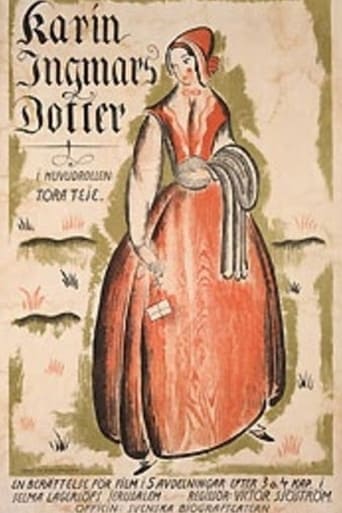
- Karin Ingmarsdotter (1920)
- The Phantom Carriage (1921)
- Gosta Berlings Saga (1924)
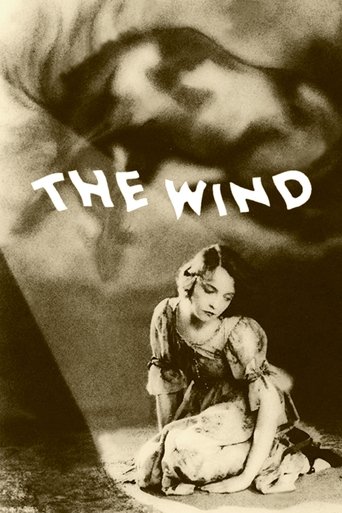
- The Wind (1928)
- The Seventh Seal (1957)
Film restoration
The film was believed lost for decades but a complete print was discovered in the Gosfilmofond archive in Moscow in the 1970s. The Swedish Film Institute has since restored the film using this and other surviving elements. A digitally restored version was released in 2011 as part of the Victor Sjöström collection. The restoration process involved frame-by-frame digital cleaning and color correction based on original production notes. The film is now preserved in the archives of the Swedish Film Institute and is available for scholarly study.
Where to watch
- Available on the Criterion Collection streaming service
- Included in the Victor Sjöström: The Master Collection DVD/Blu-ray set
- Accessible through the Swedish Film Institute's digital archive
- Available on specialized classic film streaming platforms like MUBI
- Screened occasionally at film festivals and cinematheques specializing in silent cinema
- Digital copies available through academic film archives and university libraries