Swords and Hearts
"A poor girl is secretly in love with a wealthy young planter."
Keys: Space play/pause · ←/→ 10s · F fullscreen · M mute · </> speed
About this film
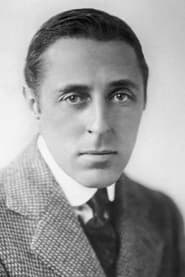
Griffith and released by the Biograph Company. A poor girl is secretly in love with a wealthy young planter.
Cast & crew
More films like this
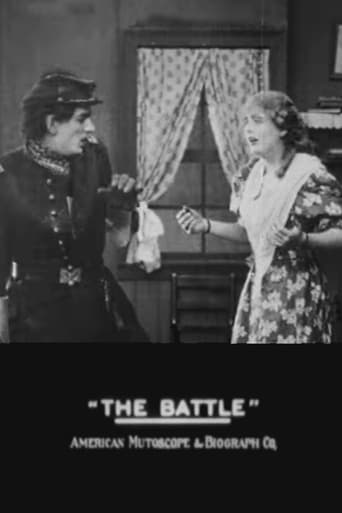
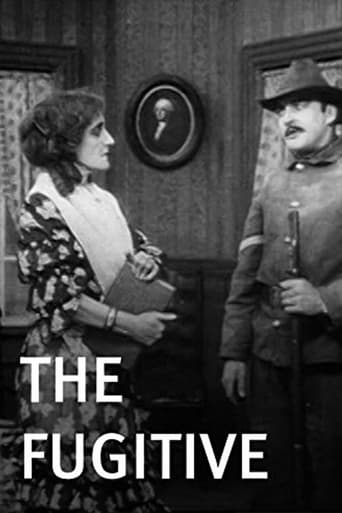
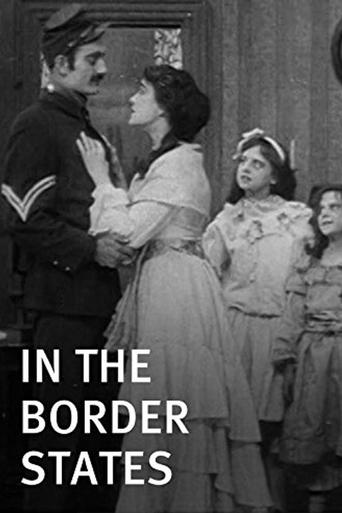
More Romance films
View all →




More from D.W. Griffith
View all →
More about this film
About the production
Release dateOctober 20, 1911
BudgetApproximately $500-750 (typical Biograph short budget of the era)
Box officeExact figures unavailable, but Biograph shorts typically earned $2,000-5,000 through distribution rentals
ProductionAmerican Mutoscope and Biograph Company
Filmed inBiograph Studio, New York City, Fort Lee, New Jersey
This film was part of Griffith's prolific 1911 output where he directed approximately 70 films for Biograph. The production utilized the company's stock company of actors, with minimal sets built on the studio lot. Griffith was already experimenting with more sophisticated camera techniques including cross-cutting between parallel action sequences. The Civil War setting allowed Biograph to reuse costumes and props from their other period productions, making it economically efficient.
Themes
Class division and social barriersLove across social boundariesThe impact of war on personal relationshipsSacrifice and devotionSouthern honor and tradition
Themes & topics
Historical background
Made in 1911, in United States, under D. W. Griffith, Swords and Hearts belongs to silent filmmaking amid the silent era's rapid stylistic experiments. Swords and Hearts is a 1911 American silent drama film directed by D.
Why this film matters
Within silent history, D. W. Griffith's name attaches to the work; surviving prints help researchers study silent-era craft; 1911 film by D. W. Griffith.
Making of
D.W. Griffith was in his most productive period during 1911, directing multiple films each week for Biograph. 'Swords and Hearts' was typical of his work from this era, featuring his developing cinematic techniques including close-ups (which were still controversial at the time) and sophisticated cross-cutting between parallel storylines. Griffith worked with a stock company of actors who appeared in multiple films, allowing for efficient production. The Civil War setting was one Griffith would return to repeatedly throughout his career, culminating in his controversial masterpiece 'The Birth of a Nation' (1915). The film was shot quickly on Biograph's New York studio lot with minimal location work, using the company's existing collection of period costumes and props. Griffith was already establishing his reputation as a demanding director who pushed actors to deliver more naturalistic performances than was typical in the theatrical style of early cinema.
What critics said
Contemporary reviews of Swords and Hearts are sparse in open sources; later catalog entries chiefly summarize plot and credits.
Did you know?
- This was one of over 400 short films D.W. Griffith directed before making his first feature film in 1913
- The film was released just a few months before Griffith's groundbreaking 'The Battle' (October 1911), which featured more elaborate Civil War battle sequences
- Biograph films from this period were not copyrighted individually but as part of the company's catalog, making some historical documentation challenging
- The film's title 'Swords and Hearts' reflects Griffith's tendency to use evocative, dualistic titles that hinted at both action and emotion
- Wilfred Lucas, who plays the wealthy planter, was one of Griffith's favorite actors and appeared in over 30 of his Biograph films
- The film was shot on 35mm film at Biograph's standard frame rate of 16 frames per second
- Like many Biograph productions, this film was likely shot in just 1-2 days, reflecting the rapid production schedule of the era
- The film's Civil War setting was particularly relevant to 1911 audiences, as many Civil War veterans were still alive and the war remained in living memory
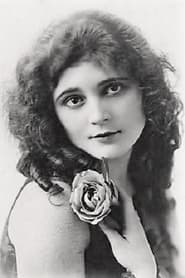
- Dorothy West, who plays the poor girl, was only 16 years old when this film was made
- The film was distributed internationally, with documented screenings in Britain and Australia in 1912
Visual style
The cinematography in 'Swords and Hearts' reflects the Biograph Company's house style of 1911, characterized by relatively static camera positions but with increasing use of close-ups and medium shots to highlight emotional moments. The film was likely shot by Billy Bitzer or Arthur Marvin, Biograph's principal cinematographers who frequently worked with Griffith. The visual composition shows Griffith's emerging understanding of film space, with careful arrangement of actors within the frame to convey relationships and power dynamics. The film uses natural lighting where possible, a Biograph trademark, with some artificial lighting for interior scenes. The camera work includes subtle movements and pans that were innovative for the period, helping to create a more immersive experience than the completely static shots common in earlier films. The Civil War battle scenes, while limited by budget, demonstrate Griffith's growing ability to create action through editing rather than elaborate staging.
Innovations
While 'Swords and Hearts' doesn't feature major technical innovations, it demonstrates several techniques that were relatively advanced for 1911. Griffith's use of cross-cutting between parallel actions (the romantic storyline and the war elements) shows his mastery of this editing technique, which was still being refined at the time. The film employs close-ups for emotional emphasis, a technique Griffith was pioneering despite industry resistance from those who felt it violated theatrical conventions. The film's pacing and narrative structure show Griffith's developing understanding of cinematic time, using editing to compress and expand time for dramatic effect. The battle sequences, while modest in scale, demonstrate early techniques for creating action through editing rather than elaborate staging. The film also shows Griffith's experiments with depth of field and focus to guide audience attention within the frame. These technical elements, while individually small, collectively represent the rapid evolution of film language occurring in 1911.
Music
As a silent film, 'Swords and Hearts' would have been accompanied by live musical performance during its theatrical run. The score would have been provided by the theater's pianist or organist, often using compiled music from various sources rather than a composed score. The music likely included popular songs of the era, classical pieces, and specialized mood music published for silent film accompaniment. For the Civil War setting, musicians might have incorporated period songs like 'Dixie' or 'Battle Hymn of the Republic' to enhance the historical atmosphere. The emotional scenes would have been underscored with romantic melodies, while the battle sequences would have featured more dramatic, martial music. Some larger theaters might have had small orchestras perform the accompaniment. The specific musical choices would have varied by theater and performer, as there was no standardized score for Biograph shorts of this period.
Famous quotes
Silent film intertitles included: 'Jennie, a poor mountain girl, loved Hugh, the rich planter's son'
'War came between them'
'Love knows no class distinction'
'Her devotion saved his life'
Memorable scenes
- The opening sequence establishing the class divide between the poor mountain girl and wealthy plantation owner
- The emotional farewell scene as Hugh leaves for war
- The battle sequence where Hugh is wounded and in danger
- Jennie's brave rescue mission through dangerous territory
- The final reunion scene where social barriers are overcome by love and devotion
What audiences thought
Audiences in 1911 responded positively to 'Swords and Hearts,' particularly appreciating its emotional storyline and Civil War setting. The film's themes of love overcoming social barriers resonated with contemporary audiences, and the war setting provided familiar historical context. The film was part of Biograph's successful programming strategy of pairing dramatic shorts with comedies for variety theater bills. Audience feedback collected by Biograph indicated that films with romantic storylines and historical settings were particularly popular with female viewers, who made up a significant portion of early cinema audiences. The film's success in various American markets and its international distribution suggest it found broad appeal. Contemporary accounts mention audiences being moved by the film's emotional climax and appreciating the naturalistic performances, which were becoming increasingly important to moviegoers as film acting evolved away from theatrical gestures.
Film connections
Influenced by
- Stage melodramas of the late 19th century
- Contemporary literature about the Civil War
- Earlier Biograph shorts directed by Griffith
- Thomas Dixon's novels about the South
- French film d'art productions
- Theatrical traditions of romantic drama
This film influenced
- The Birth of a Nation (1915)
- The Little Colonel (1935)
- Gone with the Wind (1939)
- Jezebel (1938)
- So Red the Rose (1935)
- Later Griffith Civil War films
Film restoration
The film survives in 35mm format and is preserved at the Museum of Modern Art (MoMA) in New York. A complete print exists in the film collection, though some nitrate deterioration may be present. The film has been transferred to safety stock and digital formats for archival purposes. It is one of the fortunate Biograph shorts to have survived complete, as many films from this era have been lost. The preservation status allows for continued scholarly study and occasional public screenings.
Where to watch
- Available on DVD in 'D.W. Griffith: Years of Discovery 1909-1913' collection
- Streaming on The Criterion Channel
- Viewable at the Museum of Modern Art film screenings
- Accessible through some university film archives
- Available on silent film specialty streaming services
- Occasionally broadcast on Turner Classic Movies (TCM) during silent film programming