The Bat Whispers
"Infamous burglar "The Bat" commits a daring jewelry theft de"
Keys: Space play/pause · ←/→ 10s · F fullscreen · M mute · </> speed
About this film
Infamous burglar "The Bat" commits a daring jewelry theft despite heavy police presence. Soon after, a bank theft occurs, which may be the work of the criminal as well. Meanwhile, Cornelia Van Gorder has various people arrive at her old mansion, including her niece, Dale, a bank employee, and police detective Anderson. When guests start turning up dead, Cornelia begins to suspect that The Bat may be lurking around the estate.
Cast & crew
More films like this
More Mystery films
View all →
More from Roland West
View all →
More about this film
About the production
Release dateNovember 29, 1930
Budget$400,000 (estimated)
Box officeApproximately $600,000 (domestic)
ProductionArt Cinema Corporation, Feature Productions
Filmed inUnited Artists Studios, Hollywood, Los Angeles, California, USA
Director Roland West was obsessed with visual perfection and filmed the movie simultaneously in two different formats: standard 35mm for general release and a 65mm wide-screen format called 'Magnifilm.' This was an incredibly expensive and risky endeavor during the early transition to sound. West utilized miniature sets and complex camera rigs to achieve the picture's sweeping, fluid camera movements, which were rare for early talkies. The production was also notable for its use of 'The Bat's' point-of-view shots, which required innovative rigging and lighting to simulate the perspective of a prowler on a rooftop.
Themes
Hidden IdentityGreed and CorruptionFear of the UnknownThe Duality of ManIsolation
Themes & topics
masked criminalold dark housestolen moneysecret passagesdetectivethunderstormwidescreenwhodunit
Historical background
The Bat Whispers (1930) reached audiences through Art Cinema Corporation in United States, when exhibitors still built programs from varied shorts and features rather than single-block bookings.
Why this film matters
Programmers and historians revisit The Bat Whispers (1930) because its story—infamous burglar "the bat" commits a daring jewelry theft despite heavy police presence—illustrates popular narrative habits and production norms of the period.
Making of
The production of 'The Bat Whispers' was a technical marvel for 1930. Roland West worked closely with cinematographer Ray June to break away from the static camera work that plagued many early sound films. They used a specially designed crane to allow the camera to 'swoop' like a bat through the miniature cityscapes and down the hallways of the mansion. Because they were filming in two formats (35mm and 65mm), the lighting had to be meticulously adjusted for each take to ensure the wide-screen format didn't lose detail in the shadows. The cast often worked long hours into the night to capture the eerie atmosphere West demanded, with the director reportedly keeping the set quiet and dark to help the actors maintain a sense of dread.
What critics said
English-language trade reviews of The Bat Whispers are limited for 1930. Where notices survive, they stress pacing and photographic clarity; later criticism values the title as archival evidence of studio style.
Did you know?
- the picture is a remake of Roland West's own 1926 silent film 'The Bat,' which was based on the 1920 play by Mary Roberts Rinehart and Avery Hopwood.
- Bob Kane, the creator of Batman, cited the masked villain in as one of his primary inspirations for the look and concept of the DC Comics character.
- the picture was shot twice, once for the 35mm version and once for the 65mm 'Magnifilm' version, meaning actors had to perform scenes twice for different camera setups.
- The 65mm Magnifilm version was considered lost for decades until a print was found and restored by the UCLA Film and Television Archive in the 1980s.
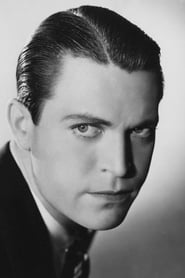
- Chester Morris, who plays Detective Anderson, was a major star of the era and later became famous for the 'Boston Blackie' film series.
- the picture features a unique 'curtain speech' at the end where Chester Morris steps out of character to address the audience directly.
- The miniature work used for the opening city sequences was so detailed that it set a new standard for special effects in the early 1930s.
- The character of Lizzie Allen, played by Maude Eburne, provides the 'old dark house' trope of the hysterically frightened maid.
- Director Roland West retired from filmmaking only a few years after this release following the mysterious death of his lover, actress Thelma Todd.
- the picture's use of shadows and low-key lighting is a prime example of American Cinematography influenced by German Expressionism.
Awards & recognition
- National Board of Review - Top Ten Films (1931)
Visual style
The cinematography by Ray June is the picture's standout feature. It utilizes deep shadows, high-contrast lighting, and incredibly fluid tracking shots that were years ahead of their time. The use of miniatures for the exterior shots of the city and the mansion creates a dreamlike, almost surreal environment. The 65mm version offers a much wider field of view, allowing for more complex blocking of actors within the frame.
Innovations
The primary technical achievement was the 65mm Magnifilm process, which provided a resolution and scale unseen by most audiences of the time. Additionally, the picture utilized a 'double-exposure' technique for certain effects and pioneered the use of a mobile camera crane in a sound-synchronized environment. The creation of the 'Bat-Signal' (a shadow cast against a wall) was also a notable practical effect.
Music
As an early sound film, the 'soundtrack' consists primarily of diegetic sounds—creaking doors, howling wind, and thunder—to build atmosphere. There is no continuous musical score, which was common for the era, but the use of silence is handled expertly to increase tension. The dialogue is crisp, though delivered with the theatrical cadence typical of early 1930s cinema.
Famous quotes
The Bat has no face! He is a shadow!
I am The Bat. I'm going to kill you all, one by one!
Don't reveal the identity of The Bat to your friends who haven't seen the picture!
There's something in this house... something that isn't human.
Memorable scenes
- The opening sequence featuring a miniature city where the camera glides over rooftops to find The Bat committing a robbery.
- The moment the 'Bat-Signal' is first projected onto the wall, signaling the villain's presence.
- The final reveal where the actor breaks the fourth wall to swear the audience to secrecy.
- The scene where a hand reaches through a secret panel in the library to snatch a blueprint.
What audiences thought
Audiences in 1930 were captivated by the picture's suspense and the novelty of the 'Magnifilm' presentation in select theaters. The 'don't tell the ending' gimmick was highly effective, creating a sense of community and mystery around the viewing experience. Today, it is a cult favorite among fans of classic horror and mystery, often screened at festivals focusing on early technical innovations.
Film connections
Influenced by
- The Bat (1926)
- The Cat and the Canary (1927)
- German Expressionism
- Mary Roberts Rinehart's mystery novels
This film influenced
- Batman (Comic/Film franchise)
- The Bat (1959)
- House on Haunted Hill (1959)
- Seven Keys to Baldpate
Film restoration
the picture is well-preserved. The 35mm version was always available, but the 65mm Magnifilm version was restored by the UCLA Film and Television Archive in 1988 from the original nitrate negatives found in Roland West's personal collection.
Where to watch
- Available on Blu-ray/DVD via Milestone Video
- Streaming on specialized classic film platforms like Criterion Channel (occasionally)
- Public domain prints available on YouTube and Archive.org