
The Benson Murder Case
"Vance at country murder"
Keys: Space play/pause · ←/→ 10s · F fullscreen · M mute · </> speed
About this film
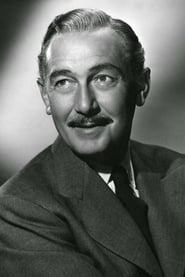
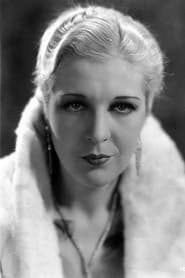
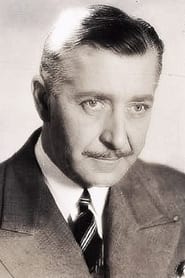
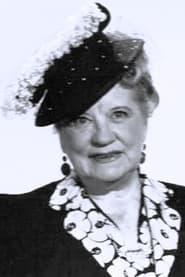
Philo Vance happens upon murder of crooked stockbroker Anthony Benson at his estate in this 1930 early talkie mystery starring William Powell.
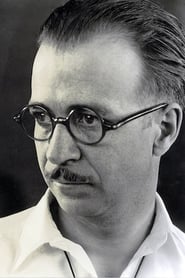
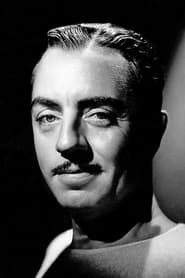
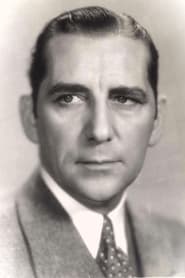
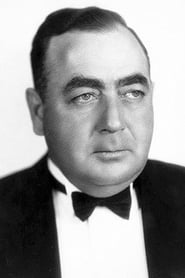
Cast & crew
More films like this

More Crime films
View all →

More from Frank Tuttle
View all →
More about this film
About the production
Release dateApril 13, 1930
BudgetEstimated at $200,000 - $250,000
Box officeApproximately $800,000 (Domestic)
ProductionParamount Publix Corporation
Filmed inParamount Studios, Hollywood, California, USA
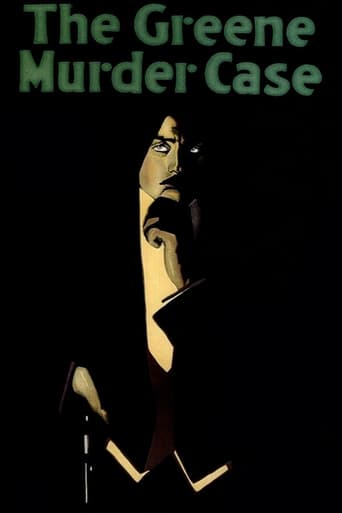
The film was produced during the industry's rapid transition to sound, which is evident in its somewhat static, stage-bound presentation characteristic of 1930 talkies. It was the third film in Paramount's Philo Vance series to star William Powell, following 'The Canary Murder Case' and 'The Greene Murder Case'. Unlike the novel, which was a 'locked-room' mystery, the film adaptation significantly altered the plot to focus more on the 1929 stock market crash to make it more topical for contemporary audiences. A Spanish-language version titled 'El Cuerpo del Delito' was filmed simultaneously by Paramount to cater to international markets, a common practice before dubbing became standardized.
Themes
Themes & topics
Philo VanceStock Market CrashWhodunitHunting LodgeSuave Detective1929 CrashMurder InvestigationPre-Code
Historical background
The Benson Murder Case launched Powell as Vance before The Thin Man; studio also filmed a rival version.
Why this film matters
The film is significant for solidifying the 'urbane detective' archetype in American cinema. William Powell's portrayal of Philo Vance served as the direct precursor to his most famous role as Nick Charles in 'The Thin Man' (1934). Furthermore, it helped establish the 'closed-circle' or 'country house' mystery as a staple of Hollywood cinema, a format that remains popular in the genre today.
Making of
Director Frank Tuttle faced the typical challenges of early sound production, including the need to hide microphones in props like flower vases and furniture, which limited the movement of the actors. William Powell was reportedly growing tired of the Philo Vance character's 'foppish' qualities and pushed for a more grounded performance, which is visible in his more cynical delivery here compared to previous entries. The production utilized many of the same sets used in other Paramount mystery films of the era to save on costs during the burgeoning Depression. The script went through several rewrites to ensure the 'fair play' aspect of the mystery remained intact while adding the high-stakes financial drama that Paramount felt would resonate with 1930 audiences.
What critics said
Mystery fans note stiff early sound; Powell's charm already visible.
Did you know?
- This was William Powell's third time playing the character Philo Vance, a role that helped establish his persona as a sophisticated, witty detective years before 'The Thin Man'.
- The film's plot was heavily revised from S.S. Van Dine's original 1926 novel to incorporate the 1929 Wall Street Crash, which had occurred only six months prior to the film's release.
- The character of Anthony Benson was loosely based on the real-life unsolved murder of bridge expert Joseph Bowne Elwell in 1920.
- Paul Lukas, who plays the suspect Adolph Mohler in, would later go on to play Philo Vance himself in the 1935 film 'The Casino Murder Case'.
- The film features an early appearance by Mischa Auer, who would later become a famous character actor and Oscar nominee.
- The 'William Stage Boyd' appeared in the film is often confused with William 'Hopalong Cassidy' Boyd; they were two different actors, though both worked for Paramount at the time.
- The film was one of the first to use a montage sequence to represent a financial disaster, specifically the stock market crash.
- Dashiell Hammett famously criticized the original novel's ballistics logic, which the film attempted to modernize.
- It is one of the few Philo Vance films where the detective is actually present at the scene when the murder occurs.
- The film entered the public domain in the United States on January 1, 2026.
Visual style
Shot by Archie Stout, the cinematography is largely functional and typical of early sound films, favoring medium shots to keep actors near hidden microphones. However, the film is notable for its creative use of shadows during the lodge sequences to create a sense of dread. The opening montage depicting the stock market crash is the visual highlight, using rapid cuts and superimposed images to convey chaos.
Innovations
The film is noted for its early use of a narrative montage to condense complex events (the market crash) into a brief visual sequence. It also demonstrated improvements in sound synchronization compared to Paramount's efforts from just a year prior, featuring clearer dialogue and better-integrated sound effects.
Music
The film features a minimal score, as was common in 1930 when continuous background music was not yet standard. The 'soundtrack' consists mostly of diegetic sounds and a studio-recorded orchestral theme during the opening and closing credits. Sound effects, such as the recurring thunderstorm at the lodge, are used prominently to heighten the suspenseful atmosphere.
Famous quotes
Philo Vance: 'A professional killer, Markham, leaves a professional signature. This... this is the work of an amateur with a very specific grudge.'
Sgt. Heath: 'I'm telling you, Mr. Vance, it's an open and shut case. He had the gun, he had the motive, and he's got a face I don't like!'
Anthony Benson: 'I didn't lose a dime in the crash. I simply let the dead wood fall away.'
Philo Vance: 'Psychology, my dear Sergeant, is the only weapon that never runs out of ammunition.'
Memorable scenes
- The Opening Montage: A stylized, rapid-fire sequence depicting the 1929 Wall Street Crash, using ticker tapes, shouting traders, and falling graphs to set the stage for the murder.
- The Discovery: The tense moment when the guests at the lodge realize Benson hasn't emerged from his room, leading to the discovery of his body in a chair, seemingly undisturbed except for the fatal wound.
- The Reconstruction: Philo Vance meticulously walks the suspects through the crime, using a gold pencil and a piece of paper to prove the exact height of the killer based on the bullet's trajectory.
What audiences thought
The film was a commercial success for Paramount, as audiences were eager to see the popular Philo Vance character return to the screen. The topicality of the stock market crash provided a visceral connection for 1930 moviegoers, many of whom had personally suffered financial losses. Powell's popularity was at an all-time high, and his performance was the primary draw for the public.
Film connections
Influenced by
- The Canary Murder Case (1929)
- The Greene Murder Case (1929)
- Sherlock Holmes (Literary Works)
- The real-life Joseph Bowne Elwell murder
This film influenced
- The Thin Man (1934)
- The Kennel Murder Case (1933)
- Knives Out (2019)
- Gosford Park (2001)
Film restoration
The film is preserved and exists in its entirety. It was restored and released on Blu-ray by Kino Lorber as part of their 'Philo Vance Collection'.
Where to watch
- Kino Lorber Blu-ray/DVD
- Internet Archive (Public Domain)
- YouTube (Public Domain uploads)
- Kanopy (via some libraries)