



The Big Combo
"The most deadly of all passions — obsession."
Keys: Space play/pause · ←/→ 10s · F fullscreen · M mute · </> speed
About this film
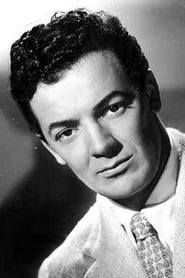
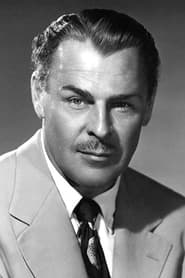
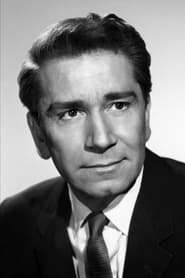
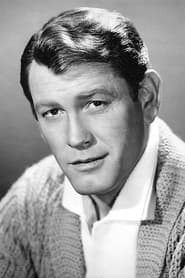
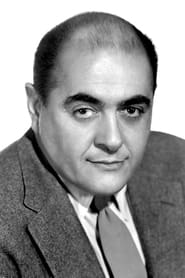
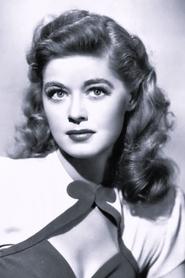
Police Lt. Leonard Diamond vies to bring a clever, well connected, and sadistic gangster to justice all the while obsessing over the gangster's girlfriend. The film stars Cornel Wilde, Richard Conte and Brian Donlevy, as well as Jean Wallace, who was Wilde's wife at the time. The supporting cast features Lee Van Cleef, Earl Holliman and the final screen appearance of actress Helen Walker. The Big Combo received positive reviews from critics.
Cast & crew
More Drama films
View all →






More from Joseph H. Lewis
View all →
More about this film
About the production
Release dateJuly 20, 1955
Budget$350,000
Box officeModest box office success typical of film noirs of the era
ProductionSecurity Pictures, Allied Artists Pictures Corporation
Filmed inLos Angeles, California, Van Nuys Airport, Van Nuys, California
The film was shot in just 23 days on a tight budget, but director Joseph H. Lewis and cinematographer John Alton created a visually stunning masterpiece. The famous fog scene at the airport was created using artificial fog machines and strategic lighting. Cornel Wilde and Jean Wallace were married in real life during filming, which added tension to their on-screen chemistry. The film pushed boundaries with its depiction of violence and sadism, particularly in the torture scene involving a blind man.
Themes
Obsession and desireCorruption and powerMoral ambiguityPsychological violenceThe thin line between law and crime
Themes & topics
Film noirPolice detectiveGangsterObsessionCrime investigationSadismCorruptionFemme fatalePsychological thrillerViolencePolice corruptionOrganized crime
Historical background
Postwar screen culture in 1955 faced television competition, shifting star systems, and new international co-production models. Archival sources describe The Big Combo as 1955 american film noir crime film directed by joseph h. lewis. Contemporary context can be traced through sources such as the Wikipedia article on The Big Combo.
Why this film matters
The Big Combo remains part of the screen heritage of its era, offering evidence of prevailing genres, production methods, and audience tastes. Later revivals, archive screenings, and digitization have kept such titles accessible to researchers and dedicated viewers long after their first commercial runs.
Making of
The production faced several challenges during its tight 23-day shooting schedule. Director Joseph H. Lewis, known for his efficient shooting techniques, had to be creative with limited resources. The relationship between Cornel Wilde and Jean Wallace was complicated during filming, as their real-life marriage was experiencing difficulties, which ironically enhanced their on-screen tension. Lewis encouraged improvisation, particularly in the controversial torture scene, which shocked censors at the time. Cinematographer John Alton worked miracles with the lighting, creating the film's distinctive noir atmosphere using minimal equipment. The production team had to negotiate with airport authorities to film the climactic fog scene, which became especially memorable endings in film noir history.
What critics said
Reception records for The Big Combo are uneven; interest today is concentrated among archivists, historians, and viewers of older cinema. Modern assessment tends to emphasize historical value, craft, and cultural context rather than box-office performance.
Did you know?
- Cornel Wilde and Jean Wallace were married in real life during filming, though their marriage was strained at the time
- The film was originally titled 'The Syndicate' before being changed to 'The Big Combo'
- Cinematographer John Alton won an Academy Award for 'An American in Paris' the same year this film was released
- The film was banned in several countries for its violence and sexual content
- Director Joseph H. Lewis was known as 'Wagon Wheel Joe' for his distinctive visual style
- The famous torture scene with the blind man was partially improvised by the actors
- The film's score was composed by David Raksin, who also composed the famous 'Laura' theme
- The film was selected for preservation in the National Film Registry in 2021
- Brian Donlevy reportedly based his portrayal of Mr. Brown on real-life gangster Mickey Cohen
- The airport fog scene required 15 fog machines and took three days to film
Awards & recognition
- Selected for preservation in the National Film Registry (2021)
- Ranked #65 on the American Film Institute's list of greatest American thrillms
- Cinematography award from the National Society of Film Critics for John Alton (retrospective recognition)
Visual style
John Alton's cinematography in The Big Combo is considered groundbreaking and represents some of the finest work in film noir history. His mastery of low-key lighting creates dramatic shadows and silhouettes that enhance the film's psychological tension. Alton employed innovative techniques such as shooting through Venetian blinds, using smoke and fog to create depth, and positioning lights at extreme angles to achieve dramatic effects. The film's visual palette is dominated by blacks and whites with minimal grays, creating stark contrasts that mirror the moral ambiguity of the characters. The famous airport finale, shot in thick artificial fog, demonstrates Alton's ability to create atmosphere and tension through visual means alone. His use of deep focus and wide-angle lenses adds to the film's sense of claustrophobia and entrapment.
Innovations
The Big Combo pioneered several technical innovations that would influence filmmaking for decades. John Alton's lighting techniques, particularly his use of practical light sources and minimal artificial lighting, created a more realistic and immersive visual style. The film's sound design was innovative for its use of off-screen sounds to create tension and suggest violence without always showing it explicitly. The fog sequence at the airport required multiple fog machines and specialized lighting techniques to achieve the desired atmospheric effect. The film's editing, particularly in the torture sequences, used jump cuts and rapid pacing to create psychological discomfort. The production team developed new methods for creating realistic gunshot sounds and impact effects that would become standard in later crime films.
Music
David Raksin composed the film's score, creating a haunting musical landscape that perfectly complements the noir atmosphere. Raksin, who had previously composed the famous theme for 'Laura,' brought his sophisticated understanding of psychological drama to The Big Combo. The score features jazz elements and dissonant harmonies that reflect the characters' inner conflicts and the film's moral ambiguity. Raksin's use of brass instruments and percussion creates tension during action sequences, while string arrangements underscore the romantic and obsessive elements of the story. The music never overwhelms the dialogue but subtly enhances the psychological depth of each scene. The main theme, with its melancholic saxophone melody, has become widely recognized pieces of noir film music.
Famous quotes
First is first, and second is nobody. - Mr. Brown
I'm gonna get him, if it takes me the rest of my life. - Lt. Diamond
You're a curious man, Mr. Diamond. You want to know everything. - Mr. Brown
I don't like to be touched. - Mr. Brown
The world is full of guys like me. - Mr. Brown
You're a good cop, Leonard. You're just a little too good. - Mr. Brown
I've been waiting for you. - Susan Lowell
Some people can't help being the way they are. - Lt. Diamond
Memorable scenes
- The shocking torture scene where Mr. Brown's men torment a blind man by amplifying his hearing aid, creating unbearable noise
- The climactic airport showdown filmed in thick fog, where Diamond confronts Brown in a visually stunning and tense sequence
- The first meeting between Diamond and Susan Lowell, where the detective's obsession becomes immediately apparent
- The scene where Brown demonstrates his power by crushing a light bulb in his bare hand
- The confrontation in Brown's office where the psychological battle between Diamond and Brown reaches its peak
What audiences thought
The Big Combo found moderate success with 1950s audiences, particularly among fans of crime dramas and film noir. While it didn't achieve blockbuster status, it developed a strong following among urban audiences who appreciated its gritty realism and sophisticated themes. Over the decades, the film has gained a cult following among cinema enthusiasts and noir aficionados. Modern audiences discover it through film societies, revival screenings, and home video releases, with many praising its ahead-of-its-time psychological depth and visual artistry. The film's reputation has grown significantly through word-of-mouth and critical reevaluation, making it a beloved classic among those who appreciate the darker aspects of classic Hollywood cinema.
Film connections
Influenced by
- The Maltese Falcon (1941)
- Double Indemnity (1944)
- The Third Man (1949)
- German Expressionist cinema
- Real-life organized crime investigations of the 1950s
- Hardboiled detective fiction by Raymond Chandler and Dashiell Hammett
This film influenced
- Point Blank (1967)
- Chinatown (1974)
- The French Connection (1971)
- Reservoir Dogs (1992)
- L.A. Confidential (1997)
- The Usual Suspects (1995)
- Sin City (2005)
- Drive (2011)
Film restoration
The film has been preserved by the UCLA Film & Television Archive and was selected for inclusion in the National Film Registry in 2021 for its cultural, historical, and aesthetic significance. The Criterion Collection released a restored version on Blu-ray in 2020, featuring a new 4K digital restoration from the original camera negative. Several restoration efforts have ensured the film's survival and availability for future generations, with particular attention paid to preserving John Alton's distinctive cinematography.
Where to watch
- The Criterion Channel
- HBO Max
- Amazon Prime Video
- Apple TV
- Google Play Movies
- YouTube Movies
- Available on Blu-ray and DVD from The Criterion Collection
- Various classic film streaming services