
The Conquering Power
"Love and a miserly uncle"
Keys: Space play/pause · ←/→ 10s · F fullscreen · M mute · </> speed
About this film
Playboy Charles Grandet is sent to his miser uncle after his father loses his fortune and falls in love with cousin Eugénie. Balzac's Eugénie Grandet becomes a Metro silent tale of love thwarted by greed.
Cast & crew
More films like this

More Romance films
View all →




More from Rex Ingram
View all →
More about this film
About the production
Release dateSeptember 25, 1921
Budget$100,000 (estimated)
Box officeSuccessful commercially, though exact figures not documented
ProductionMetro Pictures Corporation
Filmed inMetro Studios, Los Angeles, California, On location in California
This was the first film collaboration between director Rex Ingram and his wife Alice Terry, who would become his frequent leading lady. The film was adapted from Honoré de Balzac's 1833 novel 'Eugénie Grandet,' with significant changes to make it more suitable for American audiences and Valentino's star persona. The production utilized elaborate sets to recreate 19th-century French provincial life, with particular attention to period detail in costumes and props. The film was shot during the summer of 1921 when Valentino's popularity was soaring after 'The Four Horsemen of the Apocalypse.'
Themes
Love versus greedThe corrupting influence of moneyFamily loyalty and betrayalThe power of true love to overcome obstaclesGenerational conflict
Themes & topics
forbidden lovemiserly relativeinheritancefamily dramaromancebetrayal19th centuryFrench settingpoverty to wealtharranged marriagecousinssuicidebusiness failure
Historical background
The Conquering Power (1921) reached audiences during the silent feature period, when exhibitors mixed shorts and features on the same program.
Why this film matters
Historians retain The Conquering Power as a record of how filmmakers in 1921 addressed popular genres.
Making of
The production of 'The Conquering Power' marked a significant turning point in Rudolph Valentino's career. Director Rex Ingram was known for his meticulous attention to visual composition and his ability to draw subtle performances from his actors. During filming, Ingram worked closely with Valentino to develop a more nuanced performance than his previous roles, emphasizing emotional depth over mere romantic charm. The set design was particularly elaborate for the time, with the Grandet mansion interior constructed to reflect the character's miserly nature - appearing grand on the surface but with details showing the family's penny-pinching ways. Alice Terry, who had previously worked with Ingram in 'The Great Moment' (1921), developed a natural chemistry with Valentino that translated effectively on screen. The film's climactic scenes required multiple takes, as Ingram sought to perfect the emotional intensity of the confrontation between father and daughter. The production team faced challenges in recreating 19th-century French provincial life in California, requiring extensive research and period-accurate props and costumes.
What critics said
Trade coverage from 1921 treated The Conquering Power as program material; later writers evaluate it through preservation and genre context.
Did you know?
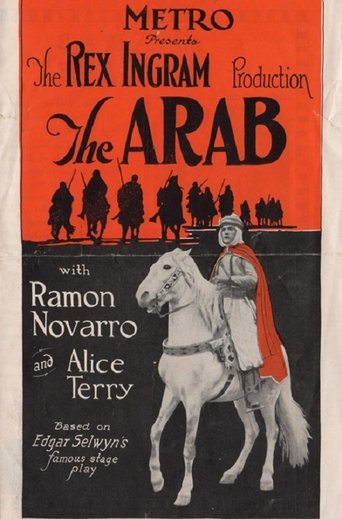
- This was the first of three films that Rudolph Valentino made with director Rex Ingram, followed by 'The Sheik' (1921) and 'The Arab' (1924).
- Alice Terry and Rex Ingram married in 1921, the same year the release was released, beginning both a personal and professional partnership.
- The film's source material, Balzac's 'Eugénie Grandet,' was considered quite scandalous in its time for its critique of bourgeois greed and materialism.
- Rudolph Valentino was paid $350 per week for the release, a substantial sum at the time but far less than what he would command after 'The Sheik' made him a superstar.
- The character of Charles Grandet was significantly altered from Balzac's original novel to better suit Valentino's romantic leading man image.
- The film's title 'The Conquering Power' refers to the power of love to conquer greed and materialism, a theme emphasized in the film's marketing.
- This was one of the few films where Valentino played a French character, as he was more often typecast as Latin or exotic lovers.
- The film's success helped establish Metro Pictures as a major studio before its merger to become MGM in 1924.
- Ralph Lewis, who played Uncle Grandet, was a character actor who appeared in over 200 films between 1912 and 1938.
- The film's intertitles were written by June Mathis, especially powerful women in early Hollywood and the screenwriter who discovered Valentino.
Awards & recognition
- No major awards were given for the release as the Academy Awards were not established until 1929
Visual style
The cinematography by William H. Daniels features the sophisticated visual style that characterized Rex Ingram's films. Daniels employed soft focus techniques to enhance the romantic scenes, particularly in the moments between Charles and Eugenie. The lighting design used naturalistic effects to create the claustrophobic atmosphere of the Grandet household, with deep shadows in the interior scenes to reflect the oppressive greed of Uncle Grandet. The film utilized the full range of gray tones available in the black and white medium, creating rich visual textures that added depth to the storytelling. Camera movements were relatively static, as was typical of the period, but Ingram and Daniels used careful composition and framing to create dynamic visual interest. The exterior scenes featured sweeping shots of the French countryside, providing contrast to the confined interior spaces. The cinematography successfully conveyed the emotional states of the characters through visual means, crucial in a silent film where visual storytelling was paramount.
Innovations
While 'The Conquering Power' did not introduce groundbreaking technical innovations, it demonstrated mastery of existing cinematic techniques of the early 1920s. The film's art direction, particularly the detailed recreation of 19th-century French provincial settings, showcased the growing sophistication of Hollywood production design. The makeup techniques used to age characters and convey emotional states were advanced for the period. The film's editing employed effective cross-cutting between parallel actions to build dramatic tension, particularly in the climactic scenes. The use of lighting to create mood and character was notably sophisticated, with the cinematography employing chiaroscuro effects to enhance the film's dramatic moments. The intertitles were well-integrated into the visual narrative, using typography that complemented the film's period setting. The film's preservation in relatively good condition has allowed modern audiences to appreciate the technical craftsmanship of early 1920s filmmaking.
Music
As a silent film, 'The Conquering Power' originally featured no recorded soundtrack but would have been accompanied by live musical performance in theaters. The typical presentation would have included a piano or organ accompaniment, with larger theaters providing full orchestras. The musical score would have been compiled from classical pieces and popular music of the era, with selections chosen to match the mood of each scene. Romantic scenes likely featured sweeping melodies from composers like Chopin or Liszt, while dramatic moments would have been accompanied by more intense classical pieces. The film's intertitles would have been presented with musical underscoring to maintain emotional continuity. Modern restorations and presentations of the film have featured newly composed scores by silent film accompanists, typically using piano or small ensemble combinations that reflect the film's romantic and dramatic elements. The absence of recorded dialogue made the visual and musical elements even more crucial in conveying the story's emotional depth.
Famous quotes
Love is the one power that conquers all others - even the greed of a miser's heart.
Money can buy everything but a true heart, my dear Eugenie.
In this world of gold and greed, our love is the only treasure that matters.
A father's greed should never stand between two hearts that beat as one.
Memorable scenes
- The emotional confrontation scene between Eugenie and her father where she defies his greedy demands and declares her love for Charles
- The tender moonlit scene where Charles and Eugenie first declare their love in the garden, surrounded by shadows that symbolize their forbidden romance
- The dramatic departure scene where Charles is sent away, with the train station setting emphasizing the separation of the lovers
- The final reconciliation scene where love triumphs over greed, featuring powerful close-ups of the emotional resolution
What audiences thought
Audiences in 1921 responded enthusiastically to 'The Conquering Power,' particularly drawn to Valentino's charismatic performance and the film's romantic storyline. The film performed well at the box office, capitalizing on the growing Valentino mania that would explode with 'The Sheik' later that year. Contemporary audience letters and reviews in fan magazines praised the film's emotional power and the chemistry between Valentino and Terry. Many viewers appreciated the film's moral message about the triumph of love over greed, which resonated with traditional values while still providing the romantic escapism audiences craved. The film's success helped solidify Valentino's status as a leading man capable of carrying dramatic films, not just romantic spectacles. Modern audiences who have seen the film through revival screenings and home video releases often praise its atmospheric qualities and the subtle performances, though some find the pacing slow compared to modern cinema.
Film connections
Influenced by
- Honoré de Balzac's novel 'Eugénie Grandet' (1833)
- 19th-century French realist literature
- Previous romantic dramas of the silent era
- The visual style of D.W. Griffith's dramatic films
This film influenced
- Subsequent Valentino romantic dramas
- Later adaptations of Balzac's works
- Romantic dramas of the 1920s that emphasized emotional depth over spectacle
Film restoration
The film is preserved in its complete form at the Library of Congress and has been restored by several film archives. A high-quality restoration was released on DVD by Warner Archive Collection, featuring a new musical score. While some nitrate decomposition has occurred over the decades, the film remains largely intact and viewable. The preservation effort has maintained the original tinting techniques used in the 1921 release, particularly the amber tones for interior scenes and blue tints for night sequences.
Where to watch
- Available on DVD from Warner Archive Collection
- Streaming on The Criterion Channel (periodically)
- Available for digital rental or purchase on Amazon Prime Video
- Occasionally screened at silent film festivals and revival theaters
- Accessible through some university film archives and library collections