The Dawn Patrol
"survival: a pre-war drama"
Keys: Space play/pause · ←/→ 10s · F fullscreen · M mute · </> speed
About this film
Following pre-war life, world War I ace Dick Courtney derides the leadership of his superior officer, but he soon is promoted to squadron commander and learns harsh lessons about sending subordinates to their deaths.
Cast & crew
More films like this
More War films
View all →


More from Howard Hawks
View all →
More about this film
About the production
Release dateJuly 10, 1930 (New York City premiere)
Budget$729,000
Box office$1,624,000 (worldwide rentals)
ProductionFirst National Pictures, Warner Bros.
Filmed inNewhall, California, USA, Sherwood Forest, California, USA, Van Nuys Airport, Los Angeles, California, USA, Metropolitan Airport, Van Nuys, California, USA
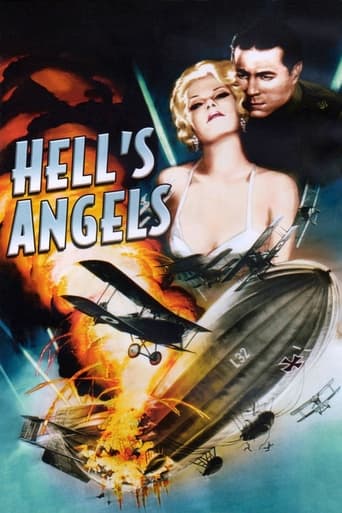
The film was rushed through production to compete with Howard Hughes' 'Hell's Angels'. Director Howard Hawks, a former WWI flight instructor, sought extreme realism, often flying in the film himself as an uncredited German pilot. The production used a variety of modified aircraft, including Nieuport 28s and Travel Air 4000s (known as 'Wichita Fokkers'), to simulate authentic aerial combat. Due to the high cost and quality of the aerial footage, much of it was later reused in the 1938 remake and other films like 'British Intelligence' (1940).
Themes
The Burden of CommandMale CamaraderieThe Futility of WarThe Cycle of ViolenceStoicism in the Face of Death
Themes & topics
World War IRoyal Flying CorpsFighter PilotAerial CombatSquadron CommanderAlcoholismSacrificeBrotherhood
Historical background
By 1930, cinema had matured into a mass medium; The Dawn Patrol reflects the tastes and anxieties of that pre-war moment. It was directed by Howard Hawks, a former World War I flight instructor, who even flew in the film as a German pilot in an uncredited role. The Dawn Patrol won the Academy Award for Best Story for John Monk Saunders, an American writer said to have been haunted by his inability to get into combat as a flyer with the U.S.
Why this film matters
Archivists and historians cite The Dawn Patrol when discussing the evolution of screen storytelling in the pre-war.
Making of
The making of 'The Dawn Patrol' was a race against time and legal threats. Howard Hughes attempted to sabotage the film by placing a spy on the set and trying to buy up all available vintage WWI aircraft in California to prevent Hawks from filming. Hawks responded by using 'Wichita Fokkers'—Travel Air 4000s modified to look like German planes. The production was physically demanding; Hawks insisted on filming in actual locations rather than studios to capture the authentic 'gray' look of Northern France. The director's background as a flyer allowed him to communicate effectively with the stunt pilots, resulting in some of the most visceral aerial combat ever captured on film at that time.
What critics said
Contemporary notices praised The Dawn Patrol for meeting audience expectations of the pre-war; today it is studied as part of the period canon. The Dawn Patrol won the Academy Award for Best Story for John Monk Saunders, an American writer said to have been haunted by his inability to get into combat as a flyer with the U.S.
Did you know?
- Director Howard Hawks appears uncredited as the German pilot, Von Richter, who shoots down Richard Barthelmess at the end of the film.
- Howard Hughes sued the production for plagiarism, claiming it stole elements from his film 'Hell's Angels', but he and Hawks actually became friends during the legal battle.
- The film was retitled 'Flight Commander' for television and re-release to avoid confusion with the 1938 remake starring Errol Flynn.
- Frank McHugh made his first speaking onscreen appearance in this film as a drunken motorcycle messenger.
- The aerial sequences were so well-regarded that they were reused almost in their entirety for the 1938 remake.
- John Monk Saunders, who won the Oscar for the story, was a Rhodes Scholar and former flight instructor who was reportedly haunted by never seeing actual combat.
- The film is considered one of the first 'talkies' to successfully integrate complex outdoor aerial action with dialogue.
- To save money and ensure realism, Hawks hired many of the same pilots and cameramen who had just finished working on Hughes' 'Hell's Angels'.
- The original title cards were discarded when the film was retitled, meaning most modern prints feature redrawn titles.
- The film features the traditional pilots' song 'Stand to Your Glasses' (also known as 'Hurrah for the Next Man That Dies').
Awards & recognition
- Academy Award for Best Writing, Best Story (John Monk Saunders, 1931)
Visual style
Lensed by Ernest Haller with aerial photography by Elmer Dyer, the film is noted for its minimalist and gritty visual style. Unlike the more flamboyant 'Hell's Angels', Hawks used a static camera and tight framing to emphasize the claustrophobia of the pilots' situation. The aerial scenes are famous for their 'clipped' pacing and the use of real explosives, creating a sense of genuine danger that was rare for early sound films.
Innovations
The film was a pioneer in using 'Wichita Fokkers'—civilian aircraft modified for the screen—which became a standard practice in Hollywood for decades. It also featured innovative sound recording techniques for aerial scenes, managing to capture dialogue and engine noise in a way that didn't feel disjointed. The stunts were so advanced for their time that they were recognized by The Hollywood Reporter as the best of the 1929-1930 period.
Music
The 1930 version is notable for its lack of a traditional background score, which was common in early sound films to maintain realism. Instead, it relies on diegetic sound—the roar of engines, the whistling of wind, and the singing of the pilots. The theme song 'Stand To Your Glasses! (Hurrah For The Next Man To Die)' is used effectively to underscore the fatalistic atmosphere of the squadron.
Famous quotes
Major Brand: 'It's a funny world, Phipps, when you can be annoyed into your grave almost by a man, yet tear yourself to pieces worrying about his safety.'
Dick Courtney: 'Right, watch him. Remember you're protecting the tail.'
Major Brand: 'Where am I going to get the men to do it? ... If any men get back from filthy work like this, they'll be lucky.'
Dick Courtney: 'That out there is the only thing that's real. Wouldn't it be funny to be back there again... imagine waking up in the morning and not having a thing to do all day but to enjoy peace and quiet.'
Memorable scenes
- The 'Empty Chair' Scene: After a mission, the pilots gather for drinks and notice the empty seats of those who didn't return, leading to a somber rendition of 'Hurrah for the Next Man That Dies'.
- The Munitions Dump Raid: Courtney and Scott defy orders to conduct a daring, low-level bombing raid on a German munitions depot, a sequence featuring spectacular practical explosions.
- The Final Sacrifice: Courtney gets Scott drunk to prevent him from flying a suicide mission, taking his place and ultimately dying in a dogfight with the German ace Von Richter.
- The New Replacements: The haunting final scene where Scott, now the commander, stoically greets a group of fresh-faced, doomed replacements, realizing the cycle has started again.
What audiences thought
Audiences in 1930 were captivated by the film's thrilling aerial stunts and its emotional core. It resonated with a public still processing the trauma of WWI, offering a relatable depiction of the 'lost generation'. The film's success was so enduring that it remained a staple of early television broadcasts (under the title 'Flight Commander') for decades.
Film connections
Influenced by
- Wings (1927)
- The Big Parade (1925)
- The Flight Commander (Story by John Monk Saunders)
This film influenced
- The Dawn Patrol (1938 Remake)
- Only Angels Have Wings (1939)
- Twelve O'Clock High (1949)
- Top Gun (1986)
Film restoration
The film is preserved and exists in its entirety, though most available prints bear the 'Flight Commander' title cards from its 1950s re-release. It has been screened at the Museum of Modern Art (MoMA) and is occasionally aired on Turner Classic Movies (TCM).
Where to watch
- Turner Classic Movies (TCM)
- Internet Archive (Public Domain prints)
- YouTube (Warner Archive/Various channels)
- Warner Archive Collection (DVD)