
The Face on the Barroom Floor
"Drunken tramp draws his lost love on the floor"
Keys: Space play/pause · ←/→ 10s · F fullscreen · M mute · </> speed
About this film
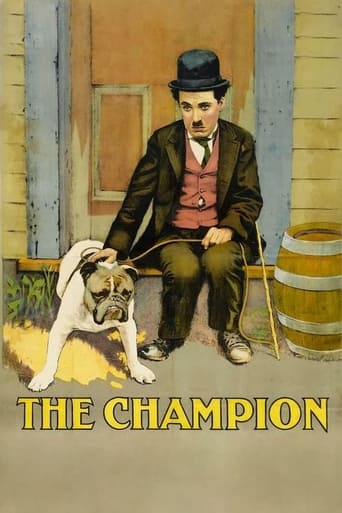
A painter turned tramp (Chaplin), devastated by losing the woman he was courting as a wealthy man, finds himself drunk and getting drunker by the minute with some sailors at a bar until he's literally falling down. He keeps futilely trying to draw the woman's picture on the floor with a piece of chalk until he finally passes out cold (or perhaps dies, as in the poem) at the end of the film.
Cast & crew
More films like this
More Comedy films
View all →







More from Charlie Chaplin
View all →


More about this film
About the production
Release dateJanuary 26, 1914
ProductionKeystone Studios
Filmed inLos Angeles, California
This was one of Chaplin's early films during his time at Keystone Studios, where he was still developing his iconic Tramp character. The film was based on the popular 1872 poem 'The Face on the Barroom Floor' by Hugh Antoine d'Arcy. Chaplin adapted the dramatic poem into a comedy, showcasing his ability to blend pathos with humor. The production was typical of Keystone's rapid shooting schedule, likely completed in just a few days.
Themes
Lost loveArtistic frustrationAlcoholismClass differencesThe artist as outsider
Themes & topics
Historical background
Made during the nickelodeon years around 1914, The Face on the Barroom Floor reached audiences through theatrical programs, fairground booths, or specialized distribution channels typical of its generation. A painter turned tramp (Chaplin), devastated by losing the woman he was courting as a wealthy man, finds himself drunk. Historians now read such works for what they reveal about production methods, national taste, and the expanding vocabulary of screen narrative.
Why this film matters
Archivists and programmers still screen The Face on the Barroom Floor when tracing how popular entertainment evolved. Its subject—a painter turned tramp (chaplin), devastated by losing the woman he was courting as a wealthy man,—gives later viewers tangible evidence of what drew crowds in the silent period. Home video, restorations, and festival sidebars keep the title circulating among students of film history.
Making of
The production took place during Chaplin's incredibly prolific first year in films. At Keystone Studios under Mack Sennett, the pace was frantic, with new shorts being produced almost weekly. Chaplin was still refining his Tramp character, moving away from the more purely comic portrayal toward the more nuanced character that would make him famous. The adaptation of a serious poem into comedy showed Chaplin's early confidence in reinterpreting source material. The bar set was likely a reused Keystone set, as the studio frequently recycled locations to save time and money. Chaplin's method of preparing for drunk scenes involved studying actual intoxicated people to capture their movements authentically.
What critics said
Original trade coverage treated The Face on the Barroom Floor as routine program filler rather than a landmark production—common for shorts. Later criticism emphasizes preservation, stylistic comparison with contemporaries, and whatever cast or crew names later gained prominence. Contemporary writing is mostly historical: assessing completeness, influence, and place in a director's or studio's catalog.
Did you know?
- This was one of the first films where Chaplin began to develop the pathos that would become a hallmark of his later work
- The original poem by Hugh Antoine d'Arcy was a serious dramatic work that Chaplin transformed into comedy
- This film was released just months after Chaplin first appeared as the Tramp character in 'Kid Auto Races at Venice'
- The film showcases Chaplin's early experimentation with the balance between comedy and tragedy
- Keystone Studios typically produced films very quickly, with this one likely shot in 1-2 days
- The barroom setting was a common backdrop for early comedy films due to its potential for physical humor
- Chaplin's character's artistic aspirations would reappear in later films like 'Limelight'
- The film demonstrates Chaplin's early mastery of drunk acting, a skill he would perfect in later works
- This was one of over 30 films Chaplin made in 1914 alone during his Keystone period
- The chalk drawing sequence required precise timing to achieve the comic effect of deteriorating artistic skill
Visual style
The film utilized the static camera techniques typical of 1914, with the camera remaining in a fixed position for most scenes. The barroom setting was filmed in wide shots to capture the physical comedy. The lighting was naturalistic, using the available studio lighting. The cinematography focused on clearly capturing Chaplin's physical performance, particularly his drunk acting and the chalk drawing sequence. The visual composition emphasized the character's isolation within the crowded bar.
Innovations
The film demonstrates early mastery of continuity editing and comic timing. Chaplin's integration of the chalk drawing prop into the comedy shows sophisticated prop work. The drunk acting sequence required precise physical control to appear believably intoxicated while remaining comic. The film's pacing, building from sober to increasingly drunk, shows an understanding of comic escalation. The blending of comic and dramatic elements was innovative for 1914.
Music
As a silent film, it would have been accompanied by live music in theaters, typically piano or organ. The score would have been improvised by the theater musician, following the mood of each scene. Drunken scenes would have been accompanied by comic, stumbling music, while moments of pathos would have received more melancholic themes. No original score was composed specifically for the film.
Famous quotes
Being a silent film, quotes would have appeared as intertitles, but specific intertitles from this film are not well documented in available sources
Memorable scenes
- The sequence where Chaplin attempts to draw his love's face on the barroom floor while increasingly drunk, with the drawing becoming progressively worse as his intoxication increases
- Chaplin's entrance into the bar and initial interactions with the sailors
- The final collapse on the floor surrounded by failed chalk drawings
What audiences thought
The film was well-received by audiences of 1914, who were becoming increasingly familiar with and fond of Chaplin's Tramp character. Moviegoers appreciated the combination of physical comedy with emotional elements. The film's themes of lost love and artistic frustration resonated with working-class audiences of the time. As with all of Chaplin's early work, it helped establish his massive popularity that would soon make him the most famous person in the world.
Film connections
Influenced by
- The poem 'The Face on the Barroom Floor' by Hugh Antoine d'Arcy
- French comedies of the early 1900s
- Music hall traditions
- Mack Sennett's Keystone comedy style
This film influenced
- Chaplin's later works featuring the Tramp character
- Subsequent drunk comedy routines in film
- Films blending comedy and pathos
- Later adaptations of the same poem
Film restoration
The film survives and has been preserved by various film archives. It is available in the public domain and has been included in several Chaplin collections. The surviving prints show typical deterioration for films of this era but remain watchable. Multiple versions exist with varying degrees of restoration.
Where to watch
- Available on YouTube in the public domain
- Included in various Chaplin DVD collections
- Streaming on some classic film platforms
- Available through film archive websites