The Georgetown Loop (Colorado)
Plot
The Georgetown Loop (Colorado) is a short actuality film that presents a moving view from the rear of a passenger train traveling through the rugged mountain landscape near Georgetown, Colorado. The camera is mounted to follow the train as it curves around the famous Georgetown Loop, allowing the audience to look ahead at the locomotive and passenger cars while also taking in the dramatic scenery. As the train passes through the silver-mining town at high altitude, the camera pans over modest rooftops and the settlement below, giving viewers a rare early-cinema glimpse of both industrial transport and mountain life. The passengers repeatedly wave white handkerchiefs from the windows, turning the brief travel record into a lively display of motion, spectacle, and tourist pleasure. Rather than telling a story in the narrative sense, the film functions as an early scenic document of a celebrated engineering route and the surrounding Colorado landscape.
Director
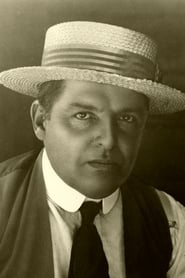
Billy BitzerAbout the Production
This film is an early actualities-style travel record photographed by Billy Bitzer for the American Mutoscope and Biograph Company. The surviving description indicates that the camera was attached to the rear of a four-car passenger train, a practical but challenging setup that created a highly dynamic moving panorama for 1903 audiences. The footage is identified with Georgetown, Colorado, in 1901 and copyrighted in 1903, reflecting the common early-cinema practice of filming scenes earlier than the copyright/release date. Because it was made before synchronized sound and before the standardization of narrative editing, the film relies on movement, scenic observation, and the novelty of train travel as its principal attractions. The exact runtime is not consistently documented in surviving reference sources, but films of this type from Biograph in the early 1900s were typically short, often under a minute.
Historical Background
This film was made during the first decade of commercial motion pictures, when short actuality films, scenic views, and travel subjects were among the most reliable attractions for audiences. At the time, the American West was still heavily mythologized in popular culture, and moving images of railroads, mining towns, and mountain scenery offered urban audiences a vivid encounter with distant places. The Georgetown Loop itself represented the triumph of railroad engineering over difficult geography, so filming it was both a documentary act and a celebration of modern transportation. In broader cinematic history, the film belongs to the phase before feature-length storytelling dominated exhibition, when a single minute of moving scenery could be enough to justify a ticket. It also captures a transitional moment in American visual culture, when film was beginning to preserve landscapes, infrastructure, and daily life in a way that still serves historians today.
Why This Film Matters
Although modest in length and scope, the film has significance as an early example of the scenic railroad film, a genre that helped define cinema as a medium of motion and spectacle. Its moving vantage point anticipates later train-point-of-view films, travelogues, and even more modern camera-mounted action shots, showing how early filmmakers were already experimenting with perspective and movement. As a record of Georgetown, Colorado, and the historic railroad loop, it also has archival value beyond cinema, documenting landscape and built environment at an important moment in western development. The film reflects how early moviegoing audiences were fascinated by the experience of movement, distance, and exotic or inaccessible locations. Today, it matters both as a cinema artifact and as a visual historical document of Colorado’s mining and transportation heritage.
Making Of
The Georgetown Loop (Colorado) appears to have been produced as part of the American Mutoscope and Biograph Company’s effort to supply exhibitors with visually striking actualities and scenic subjects. Billy Bitzer’s camera work on this film likely involved mounting the apparatus on a moving train, a demanding task in the era of large, relatively immobile motion-picture cameras. That setup would have required careful coordination to keep the train, the surrounding landscape, and the forward-looking perspective legible to the viewer while minimizing excessive shake. The result is a film that combines travelogue, industrial spectacle, and a sense of place, all achieved with extremely simple means. As with many early Biograph productions, no elaborate production records survive, but the film’s enduring interest lies in its real-world location, its technically ambitious camera placement, and its documentation of a notable mountain railroad route.
Visual Style
The cinematography is notable for its mobile camera position and its use of the train itself as a moving platform. By filming from the rear of the passenger cars and looking ahead as the train negotiates curves, the camera produces an unusual spatial arrangement that lets viewers simultaneously perceive the locomotive, the cars, and the surrounding mountain landscape. The panning movement over the town, especially the vantage looking down on rooftops as the tracks pass above Georgetown, adds depth and geographic context to the image. Because the film is an actuality subject, there is no staged composition in the later narrative sense; instead, the visual interest comes from motion, perspective, and the unfolding scenery. For 1903, this kind of moving travel view would have seemed technically impressive and highly immersive.
Innovations
The film’s principal technical achievement is its effective use of a moving camera mounted on a train, creating a traveling viewpoint that was still relatively novel in early cinema. The forward-looking angle achieved by shooting from the rear of the train allows for a dynamic interplay between motion, landscape, and machine. It also demonstrates an early understanding of how camera placement can shape the viewer’s experience of space and speed. In addition, the film captures the panning view over a town and surrounding rail line in a way that expands the possibilities of scenic nonfiction filmmaking. While not an innovation in the grand sense of later cinema technology, it is an accomplished and noteworthy early example of mobile cinematography.
Music
The film was made in the silent era and originally had no synchronized recorded soundtrack. Like most early silent films, it would have been shown with live musical accompaniment in theaters, typically improvised or selected by the exhibitor to match the scenic and travelogue mood. No original cue sheet or commissioned score is generally documented for this title. Modern presentations may use archival accompaniment or new scores, but no definitive original music is known to survive.
Memorable Scenes
- The camera rides on the rear of the train and looks forward toward the locomotive as the cars curve through the mountain route.
- Passengers wave white handkerchiefs from the left-side windows, turning the moving shot into a lively human spectacle.
- The train passes above Georgetown, and the camera pans down over the town’s rooftops, giving a rare elevated view of the settlement.
Did You Know?
- The film is associated with Billy Bitzer, one of the most important early American cinematographers and later a key collaborator with D. W. Griffith.
- It captures the famous Georgetown Loop railroad area, an engineering landmark created to help trains handle the steep mountain terrain near Georgetown, Colorado.
- The camera placement on the rear of the train creates an early example of mobile cinematography and a forward-looking view that was unusual for the period.
- Passengers waving white handkerchiefs from the windows add a playful human element to what is otherwise a scenic travel document.
- The film is identified in some references with an 1901 filming date and a 1903 copyright date, a common pattern for early actuality films.
- Because it is an actuality film, it has no conventional cast and no narrative roles, making the scenery and motion the main attractions.
- The title includes the location in parentheses, a cataloging convention often used for early films to distinguish them from similarly named subjects.
- The film belongs to the very early phase of American cinema when scenic and travel films were a major part of exhibition programs.
- Its value today is partly historical: it preserves a view of Georgetown and the surrounding rail line at the dawn of the twentieth century.
- The film is often discussed alongside other scenic railroad subjects from the period, which were popular because they simulated motion and travel for audiences.
What Critics Said
Contemporary critical reviews specific to this film do not appear to be widely preserved in easily accessible modern sources, which is common for very short early actuality films. At the time of release, such films were generally judged less by narrative or performance than by novelty, clarity of image, and scenic appeal, and this subject would likely have been appreciated for its moving viewpoint and picturesque mountain setting. Modern historians and archivists value it primarily as an early example of location cinematography and as a record of a notable railroad route. Its reputation today rests on historical interest rather than on conventional critical discourse, and it is typically discussed within the context of early travel films and Biograph’s nonfiction output.
What Audiences Thought
There is no detailed surviving audience-response record specific to this title, but films of this kind were popular with early cinema audiences because they offered motion, travel, and recognizable real-world scenes. Viewers in 1903 would likely have found the experience of riding visually through mountain country especially appealing, since the camera’s forward-facing motion created an immersive sensation of travel. The waving passengers and the panoramic views would have increased the entertainment value, making the film feel lively rather than purely documentary. Like other scenic actualities, it likely functioned as a program filler that could still draw strong interest because of its subject matter and novelty. Its survival in film-historical references suggests continuing appreciation among archivists and scholars rather than mass-audience notoriety.
Film Connections
Influenced By
- Early actuality films and scenic views of the 1890s
- Travelogues featuring railroads and landscapes
- Biograph's nonfiction short film production style
This Film Influenced
- Later railroad travel films and scenic actualities
- Train-point-of-view films in silent cinema
- Documentary travelogues that emphasize motion and place
You Might Also Like
More Documentary Films
View allMore from Billy Bitzer
View allFilm Restoration
The film is generally regarded as extant in archival reference, though detailed preservation and restoration information is limited in widely available sources. It is known through catalog records and historical descriptions, indicating that it has survived at least in some form rather than being entirely lost. No widely cited modern restoration campaign is commonly associated with it.