Lucky Jim
"Even dead, Jim haunts the marriage"
Keys: Space play/pause · ←/→ 10s · F fullscreen · M mute · </> speed
About this film
Gertrude chooses Jim over Jack, then marries Jack after Jim dies only to find herself haunted by jealousy of the deceased. A 1909 melodrama of love beyond the grave.
Cast & crew
More films like this


More Drama films
View all →







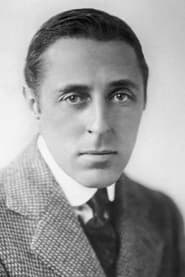
More from D.W. Griffith
View all →
More about this film
About the production
Release dateOctober 1909
Box officeNot documented for individual short films of this period
ProductionBiograph Company
Filmed inNew York City, Fort Lee, New Jersey
Filmed during Griffith's prolific period at Biograph where he directed dozens of short films annually. The production would have been completed in just one or two days, typical of the rapid production schedule of early cinema. The film was shot on 35mm black and white film stock using hand-cranked cameras of the era.
Themes
JealousyLove trianglesDeath and griefPossessivenessIrony
Themes & topics
Historical background
Lucky Jim (1909) reached audiences during the nickelodeon era, when exhibitors mixed shorts and features on the same program.
Why this film matters
Historians retain Lucky Jim as a record of how filmmakers in 1909 addressed popular genres.
Making of
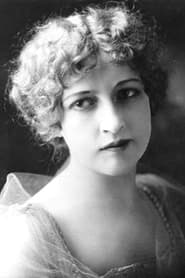
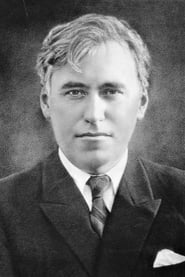
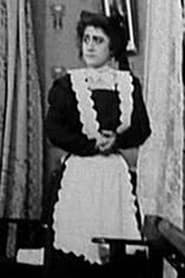
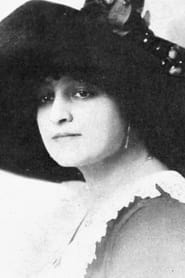
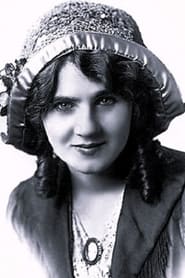
The production of 'Lucky Jim' took place during D.W. Griffith's remarkably productive tenure at the Biograph Company, where he was making up to three films per week. Griffith was rapidly developing his directorial style during this period, experimenting with camera placement, pacing, and narrative structure. Marion Leonard, who plays Gertrude, was part of Griffith's stock company of actors who appeared repeatedly in his films, allowing for the development of on-screen chemistry and efficient production. Mack Sennett, still primarily an actor at this time, would later credit his time working with Griffith as crucial to his understanding of film comedy and timing. The film was likely shot outdoors using natural light, as artificial lighting was still primitive and expensive in 1909.
What critics said
Trade coverage from 1909 treated Lucky Jim as program material; later writers evaluate it through preservation and genre context.
Did you know?
- the release represents one of Mack Sennett's early acting appearances before he became famous as the 'King of Comedy' and founded Keystone Studios
- Marion Leonard was one of D.W. Griffith's favorite leading ladies during his Biograph period, appearing in over 30 of his films between 1908-1911
- The film was released just as Griffith was beginning to develop his innovative cross-cutting techniques that would later revolutionize cinema
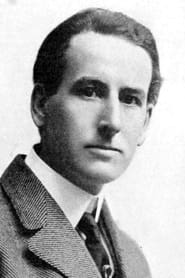
- Barry O'Moore, who played Jim, later changed his name to Herbert Rawlinson and had a long career as a leading man in silent films
- The film's theme of posthumous jealousy was relatively sophisticated for 1909, showing Griffith's early interest in complex emotional narratives
- Like most Biograph films of this era, it was originally released on a split-reel, sharing the reel with another short film to maximize theater bookings
- The film was created before the establishment of Hollywood as the film industry center, when New York and New Jersey dominated American film production
Visual style
The cinematography for 'Lucky Jim' would have been typical of Biograph productions in 1909, utilizing stationary camera positions with minimal movement. The film was shot by Biograph's regular cameramen, possibly including G.W. Bitzer or Arthur Marvin, who frequently worked with Griffith. The visual style emphasized clear staging and composition to ensure the story could be followed without dialogue. Natural lighting was used for outdoor scenes, while interior scenes relied on available window light or primitive artificial lighting. The film was shot on 35mm film at approximately 16 frames per second, the standard speed of the era.
Innovations
While 'Lucky Jim' does not represent a major technical breakthrough, it demonstrates Griffith's growing mastery of film language during his Biograph period. The film likely employed some degree of cross-cutting between characters to build tension and emotional impact, a technique Griffith was helping to refine. The use of intertitles to advance the narrative was still relatively new in 1909, and their placement and content would have been carefully considered. The film also shows the evolution of performance style from the exaggerated theatrical acting of earlier cinema to more naturalistic screen acting that Griffith was encouraging in his actors.
Music
As a silent film, 'Lucky Jim' had no synchronized soundtrack. The musical accompaniment would have been provided live in theaters, typically by a pianist or small ensemble. The music would have been selected from standard photoplay music catalogs, with selections chosen to match the emotional tone of each scene - romantic themes for the love scenes, dramatic music for the jealousy sequences, and somber melodies for Jim's death. Some theaters might have used popular songs of the era that matched the film's themes, but no specific musical score was composed for the film itself.
Famous quotes
No surviving dialogue quotes available as this is a silent film with lost intertitles
Memorable scenes
- The climactic scene where Jack, now married to Gertrude, displays his irrational jealousy toward the memory of the deceased Jim, highlighting the psychological complexity unusual for films of this era
What audiences thought
Audience reception in 1909 is difficult to document for individual short films, as theater owners typically booked programs rather than specific titles. However, Griffith's Biograph films were generally popular with audiences of the period, who appreciated their emotional stories and clearer narratives compared to many competing productions. The themes of love, jealousy, and death were familiar to nickelodeon audiences and would have resonated with the melodramatic tastes of early cinema patrons. The film likely played well as part of a varied program of shorts that constituted a typical theater showing of the era.
Film connections
Influenced by
- Stage melodramas of the late 19th century
- Contemporary literature dealing with themes of jealousy and obsession
This film influenced
- Later Griffith films exploring similar themes of jealousy and obsession
- Early 1910s melodramas that expanded on emotional complexity
Film restoration
The preservation status of 'Lucky Jim' (1909) is uncertain. Many Biograph films from this period have survived through paper print copies deposited for copyright purposes at the Library of Congress, but not all titles have been located or preserved. The film may exist in archives or private collections, but its accessibility to the public is limited.
Where to watch
- Currently not widely available on major streaming platforms
- May be accessible through specialized film archives or museum collections
- Possible inclusion in comprehensive D.W. Griffith or Biograph Company collections
- Check with Library of Congress for potential paper print copies