
The Iron Mask
"King Louis XIII of France is thrilled to have born to him a son - an heir to the throne."
Keys: Space play/pause · ←/→ 10s · F fullscreen · M mute · </> speed
About this film
In addition to some sequences with dialogue, the film featured a synchronized musical score with sound effects and a theme song. King Louis XIII of France is thrilled to have born to him a son - an heir to the throne. But when the queen delivers a twin, Cardinal Richelieu sees the second son as a potential for revolution, and has him sent off to Spain to be raised in secret to ensure a peaceful future for
Cast & crew
More films like this

More Adventure films
View all →


More from Allan Dwan
View all →


More about this film
About the production
Release dateOctober 21, 1929
Budget$1,250,000
Box office$1,800,000
ProductionThe Elton Corporation, United Artists
Filmed inHollywood, California, Pickford-Fairbanks Studios
This was Douglas Fairbanks's final silent film and his most expensive production. The film featured elaborate sets and costumes, with the iron mask itself being a particularly intricate prop. Fairbanks performed his own stunts well into his 40s, including spectacular sword fights and acrobatic sequences. The production took nearly six months to complete, unusually long for the silent era. The film was shot with both silent and sound versions, making it one of the earliest films to have dual versions for different markets.
Themes
Loyalty and honorPolitical intrigue and powerIdentity and disguiseSacrifice for loveThe conflict between personal desire and public duty
Themes & topics
twinsmusketeerssword fightingroyal intrigueprisonrescue missionbanishmentcardinalkingconventsecret identityiron masksequelhistorical dramaswashbuckler
Historical background
Made in 1929, in United States, under Allan Dwan, The Iron Mask belongs to drama film filmmaking amid the silent era's rapid stylistic experiments. The Iron Mask is a 1929 American part-talkie adventure film directed by Allan Dwan.
Why this film matters
Within drama film history, Allan Dwan's name attaches to the work; surviving prints help researchers study silent-era craft; 1929 film by Allan Dwan.
Making of
The production of 'The Iron Mask' was a massive undertaking that represented the pinnacle of Douglas Fairbanks's career as a silent film star. Fairbanks, who had become one of Hollywood's most powerful figures through United Artists, spared no expense in creating what he intended to be his masterpiece. The filming process was grueling, with Fairbanks insisting on performing his own elaborate sword fights and acrobatic sequences despite his advancing age. The dual filming process for silent and sound versions created unique challenges, as scenes had to be shot twice with different technical requirements. The iron mask itself was a source of difficulty - it was made of real metal and proved extremely uncomfortable for the actor wearing it, leading to limited shooting times for those scenes. The film's elaborate palace sets took months to construct and were among the most expensive ever built at the time. Fairbanks's dedication to authenticity extended to historical research, with the production team consulting numerous historical sources about the reign of Louis XIII and the legend of the man in the iron mask.
What critics said
Contemporary reviews of The Iron Mask are sparse in open sources; later catalog entries chiefly summarize plot and credits.
Did you know?
- This was Douglas Fairbanks's final silent film before transitioning to talkies
- Shot simultaneously as both a silent film and a sound version, with the sound version featuring a synchronized musical score and sound effects
- Fairbanks was 46 years old during filming but still performed all his own stunts
- Prop was reportedly so uncomfortable that Fairbanks could only wear it for short periods
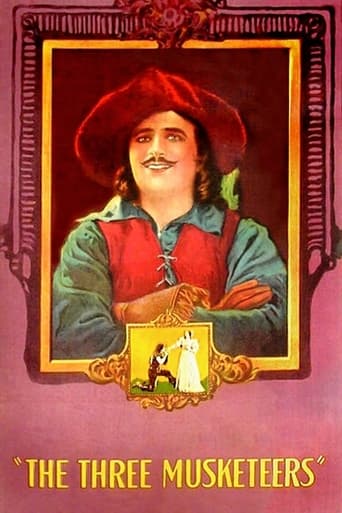
- This was a sequel to Fairbanks's highly successful 1921 film 'The Three Musketeers'
- The film's release coincided with the stock market crash of 1929, which affected its box office performance
- Marguerite De La Motte reprised her role as Constance from the 1921 film
- One of the largest sets ever constructed at Pickford-Fairbanks Studios
- Fairbanks reportedly spent $100,000 on costumes alone
- The sound version included a brief speaking sequence by Fairbanks at the beginning of the film
Awards & recognition
- Academy Award nomination for Best Art Direction (William Cameron Menzies)
Visual style
The cinematography by Henry Sharp and Tony Gaudio represents some of the most sophisticated visual work of the late silent era. The film features elaborate camera movements and compositions that enhance the storytelling, particularly in the action sequences where dynamic camera work follows Fairbanks's acrobatic movements. The lighting design creates dramatic shadows and highlights that emphasize the film's themes of secrecy and revelation. The palace scenes are shot with grandeur and scale, using wide angles to establish the opulence of the French court, while the action sequences employ tighter framing to intensify the drama. The film's visual style also incorporates German Expressionist influences in its use of shadow and contrast, particularly in scenes involving the iron mask. The cinematography effectively balances the film's epic scale with intimate character moments, using visual techniques that were cutting-edge for 1929. The dual-version filming required particular technical expertise, as the cinematography had to work for both silent and sound presentations.
Innovations
Featured several technical innovations that were for 1929. The most significant was its dual-version production, shot simultaneously for both silent and sound release, requiring innovative filming techniques and equipment. The film's special effects, particularly the scenes involving the iron mask, used advanced makeup and prosthetic techniques that were remarkably convincing for the era. The action sequences employed sophisticated stunt coordination and camera work that created a sense of realism and danger. The film's elaborate sets incorporated moving elements and trap doors that enabled complex action sequences. The sound version featured one of the earliest uses of synchronized sound effects in an action film, with carefully timed audio enhancing the sword fights and chase scenes. The film also pioneered techniques for underwater filming in the sequence where D'Artagnan escapes through a waterway. The costume and prop design, particularly the creation of the iron mask, represented advances in practical effects and materials that influenced later historical films.
Music
Two different musical presentations. The silent version was accompanied by a traditional orchestral score compiled from classical pieces and original compositions, while the sound version included a synchronized musical score composed by Hugo Riesenfeld and recorded using the Movietone system. The sound version also included sound effects for the action sequences and a brief spoken introduction by Douglas Fairbanks himself. The music emphasized the film's swashbuckling nature with bold brass fanfares during action sequences and romantic strings for the love scenes. The score incorporated elements of French baroque music to enhance the historical setting. The synchronization of music with the on-screen action was particularly sophisticated for its time, with the music carefully timed to match the rhythm of the sword fights and chase sequences. The sound version's musical score was considered innovative for its use of leitmotifs for different characters, particularly a distinctive theme associated with the mysterious man in the iron mask.
Famous quotes
All for one, and one for all!" - D'Artagnan rallying the Musketeers
A king's son must never know he has a twin." - Cardinal Richelieu
I would rather die than see you in a convent!" - D'Artagnan to Constance
Some secrets are heavier than any iron mask." - Cardinal Richelieu
The sword of justice cuts both ways." - Athos
Memorable scenes
- The spectacular sword fight between D'Artagnan and the Cardinal's guards in the palace corridors
- The dramatic revelation of the twin princes and the decision to hide one of them
- D'Artagnan's emotional farewell to Constance as she is taken to the convent
- The Musketeers' final heroic charge against overwhelming odds
- The haunting first appearance of the man in the iron mask
- The elaborate escape sequence featuring D'Artagnan's acrobatic skills
- The emotional reunion scene between the separated brothers
- The climactic battle where the Musketeers face their banishment
What audiences thought
Audiences in 1929 responded enthusiastically to 'The Iron Mask,' with many viewing it as a triumphant conclusion to Fairbanks's silent film career. Despite the economic turmoil of the Great Depression, the film drew crowds seeking the kind of escapist entertainment that Fairbanks had perfected over the previous decade. Contemporary reports from theaters described standing ovations and multiple viewings by devoted fans. The film's action sequences, particularly the sword fights, elicited strong audience reactions, with many viewers reportedly gasping and cheering during the climactic battle scenes. Modern audiences who have seen restored versions of the film continue to respond positively to its energy and spectacle, with many noting how well the film holds up nearly a century later. The film has developed a cult following among silent film enthusiasts and is frequently featured in classic film festivals, where it consistently draws large crowds and generates enthusiastic responses.
Film connections
Influenced by
- The Three Musketeers by Alexandre Dumas
- The Man in the Iron Mask by Alexandre Dumas
- Douglas Fairbanks's earlier swashbuckling films
- German Expressionist cinema
- Contemporary historical epics
- Stage adaptations of Dumas's works
This film influenced
- The Man in the Iron Mask (1939)
- The Man in the Iron Mask (1977)
- The Man in the Iron Mask (1998)
- The Three Musketeers adaptations
- Swashbuckling films of the 1930s and 1940s
- Modern action films featuring sword fighting
Film restoration
Is well-preserved with both the silent and sound versions surviving in archives. The film has been restored by several institutions including the Museum of Modern Art and the Library of Congress. A comprehensive restoration was completed in the 1990s that combined elements from the best surviving prints of both versions. The restored version features a newly recorded musical score that recreates the original 1929 soundtrack. The film is considered one of the best-preserved examples of late silent cinema, with high-quality 35mm elements available for screening. The restoration work has been praised for maintaining the film's original visual quality while ensuring its survival for future generations.
Where to watch
- The Criterion Collection Blu-ray release
- The Museum of Modern Art's film collection
- The Library of Congress's online archives
- Classic film streaming services like The Criterion Channel
- Film archives and cinematheques that screen restored classics
- Educational institutions with film studies programs
- Specialized silent film festivals and retrospectives