The Man from the Restaurant
"A Moscow waiter witnesses the fall of the old aristocracy."
Keys: Space play/pause · ←/→ 10s · F fullscreen · M mute · </> speed
About this film
During the good old days of the Russian aristocracy, that is to say, before the October Revolution, in the city of Moscow there was a fancy restaurant which catered to the appetites and egos of the rich. In one such establishment works a middle-aged waiter who is devoted to serving his bourgeoisie clients correctly. However, his life outside his job is very different: His son was killed during the Russian civil war and the waiter's wife died of grief as a result....
Cast & crew
More films like this
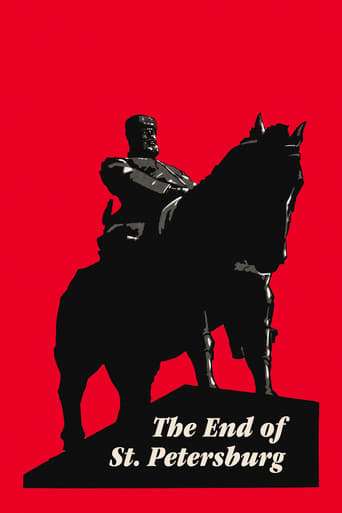
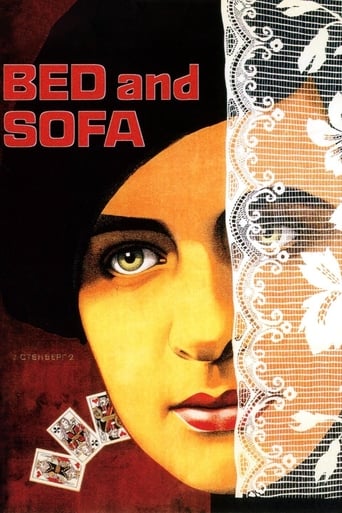
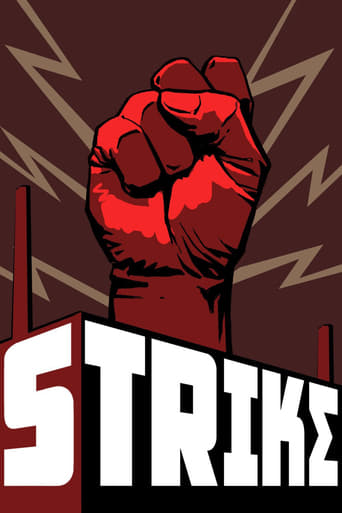
More from Yakov Protazanov
View all →


More about this film
About the production
Release dateOctober 24, 1927
Box officeUnknown - box office figures for Soviet films of the 1920s were not systematically recorded or preserved
ProductionGoskino, Mezhrabpom-Rus
Filmed inMoscow, Soviet Union
The film was based on a story by Ivan Shmelyov and was one of the few Soviet films of the 1920s that depicted pre-revolutionary Russia with relative nuance rather than pure condemnation. Director Yakov Protazanov, who had worked extensively before the revolution and temporarily emigrated, brought a unique perspective to the material. The production faced ideological challenges as it portrayed a servant character with dignity rather than as a mere victim of the old regime. The restaurant scenes were meticulously recreated to show the stark contrast between pre- and post-revolutionary dining experiences.
Themes
Class consciousness and social transformationHuman dignity in service workMemory and lossThe personal costs of revolutionAdaptation to new social orders
Themes & topics
waiterrestaurantRussian Revolutionclass struggleMoscowsilent filmsocial changefamily tragedyaristocracyworkersSoviet Union
Historical background
Contemporary documentation places The Man from the Restaurant (1927) within late silent cinema; The main role was written for Ivan Moskvin, but he was changed for Chekhov because of illness.
Why this film matters
Scholars and collectors reference The Man from the Restaurant when discussing how late silent cinema filmmakers addressed popular themes.
Making of
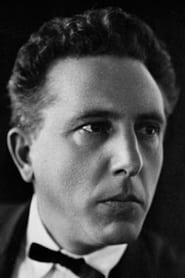
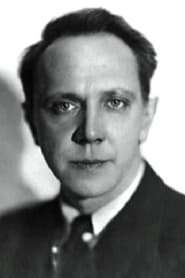
The making of 'The Man from the Restaurant' was particularly significant because director Yakov Protazanov had returned to the Soviet Union in 1923 after several years working in Europe. This gave him a unique perspective on both pre- and post-revolutionary Russia. The casting of Michael Chekhov was considered a coup, as he was already a celebrated stage actor from the Moscow Art Theatre. Chekhov brought method acting techniques to his performance, which was unusual for silent cinema of the era. The production team spent months researching authentic restaurant settings and service protocols of the pre-revolutionary era to ensure historical accuracy. The film's most challenging sequence was the revolutionary transformation scene, where the luxury restaurant is converted into a workers' canteen - this required extensive set changes that had to be filmed in continuity. The production faced scrutiny from Soviet cultural authorities who were concerned about the film's nuanced portrayal of the old regime, but Protazanov successfully argued that the film ultimately supported Soviet values by showing the superiority of the new social order.
What critics said
Later retrospectives treat The Man from the Restaurant (1927) as representative late silent cinema fare valued by archivists and genre historians.
Did you know?
- Michael Chekhov, who played the lead role of Skvortsov, was Anton Chekhov's nephew and a renowned acting teacher who later influenced Hollywood stars like Marilyn Monroe and Clint Eastwood
- Director Yakov Protazanov was one of the few prominent pre-revolutionary Russian directors who successfully continued working under the Soviet regime
- The film was based on a short story by Ivan Shmelyov, a writer who had emigrated after the revolution and was critical of the Soviet regime
- This was one of the rare Soviet films of the 1920s that portrayed pre-revolutionary life with some degree of complexity rather than simple caricature
- The restaurant set was so detailed and realistic that it became among the costliest sets built in Soviet cinema up to that point
- The film's international success helped establish Soviet cinema's reputation beyond propaganda pieces
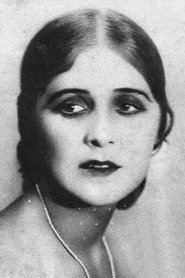
- Vera Malinovskaya, who played one of the aristocratic customers, was especially popular actresses of early Soviet cinema
- The film was temporarily banned in some regions for its supposedly sympathetic portrayal of the old regime's servants
- The transformation scenes from luxury restaurant to workers' canteen were achieved without special effects, relying entirely on set dressing and props
- The film's title became a cultural reference in Soviet Russia for someone who had served the old regime but adapted to new times
Awards & recognition
- No major awards were given to Soviet films in 1927 as the international film festival circuit was not yet established
Visual style
The cinematography by Vladimir Siversen was notable for its sophisticated use of lighting to contrast the opulent pre-revolutionary restaurant with the stark simplicity of the workers' canteen. The film employed innovative camera techniques including tracking shots that followed the waiter through the restaurant, creating a sense of continuous space and movement. Siversen used soft focus techniques to create dreamlike sequences representing the waiter's memories of his family. The film's visual style was influenced by German expressionism in its use of shadows and angles, but maintained a distinctly Russian realist approach in its depiction of social environments. The transformation sequence from luxury restaurant to workers' canteen was particularly praised for its visual storytelling without intertitles. The cinematography also made effective use of close-ups to capture the subtle emotions of Michael Chekhov's performance, a technique that was still relatively new in Soviet cinema.
Innovations
The film was notable for its sophisticated use of editing to create temporal transitions between pre- and post-revolutionary periods. The restaurant transformation sequence was achieved through innovative set design that allowed for continuous filming during the radical change in environment. The film employed early forms of montage theory, though less radically than Eisenstein's works of the same period. The production pioneered techniques for filming in confined spaces, using specially designed camera mounts to navigate the restaurant set. The film's makeup effects, particularly the aging of the main character, were considered advanced for their time. The lighting design was particularly innovative, using different color gels (tinting) to distinguish between time periods and emotional states. The film also featured some of the earliest uses of camera movement to follow a character through complex spaces, influencing later Soviet and international cinema.
Music
As a silent film, 'The Man from the Restaurant' would have been accompanied by live musical performance during its original theatrical run. The typical score would have combined classical pieces for the restaurant scenes with more revolutionary songs for the post-revolution sequences. The film's original cue sheets, if they existed, have not survived, but contemporary orchestral reconstructions have been created for modern screenings. These reconstructions typically feature works by Russian composers like Tchaikovsky and Rachmaninoff for the pre-revolutionary scenes, transitioning to Soviet composers like Prokofiev and Shostakovich for the revolutionary sequences. The contrast between the musical styles helps emphasize the film's themes of social transformation. Modern restorations have featured newly composed scores by contemporary musicians who specialize in silent film accompaniment.
Famous quotes
Service is not humiliation, but art - when done with dignity and pride
In serving others, we sometimes lose ourselves
The revolution changed the tables, but not the hunger
Even in serving, there can be mastery
The rich ate with their mouths, the poor with their eyes
Memorable scenes
- The opening sequence showing the elaborate ritual of fine dining service in the pre-revolutionary restaurant, with Skvortsov moving with practiced grace through the opulent dining room
- The heartbreaking moment when Skvortsov receives news of his son's death, his composed waiter's mask finally breaking in the kitchen
- The revolutionary transformation scene where the luxury restaurant is systematically stripped of its finery and converted into a workers' canteen
- The final scene where Skvortsov serves his new working-class clientele with the same dignity he once showed the aristocrats, suggesting the universality of human respect across social classes
What audiences thought
The film was highly popular with Soviet audiences upon its release, particularly appealing to older viewers who remembered pre-revolutionary Russia. Many viewers appreciated the film's realistic portrayal of restaurant life and its complex protagonist. The film's success at the domestic box office was significant for a Soviet production of its time. International audiences also responded positively, with the film achieving commercial success in several European countries. However, some younger Soviet viewers criticized the film for not being revolutionary enough in its approach. The film's popularity endured through the 1930s despite changing cultural policies, suggesting its themes resonated beyond its immediate historical context. Modern audiences at film festivals and retrospectives continue to respond strongly to the film's humanistic approach and technical artistry.
Film connections
Influenced by
- Works by Ivan Shmelyov
- German Expressionist cinema
- Soviet montage theory
- Pre-revolutionary Russian literature
- European realist cinema of the 1920s
This film influenced
- later Soviet films about the revolution
- international films about service workers
- movies exploring class dynamics through workplace settings
- films contrasting pre- and post-revolutionary societies
Film restoration
The film was considered partially lost for decades, with only incomplete versions surviving in Soviet archives. A major restoration effort in the 1990s by Gosfilmofond (the Russian state film archive) combined fragments from multiple sources to reconstruct the most complete version possible. The restored version premiered at the 1995 Cannes Film Festival as part of a retrospective of Soviet cinema. Digital restoration was completed in 2015, further improving image quality and stability. While some scenes remain missing, particularly from the middle section, the restored version maintains the narrative coherence and artistic impact of the original. The film is now preserved in the Russian State Archive of Film and Photo Documents and has been made available through various international film archives and streaming services specializing in classic cinema.
Where to watch
- Available on Criterion Channel
- Streaming on MUBI
- Available on DVD/Blu-ray from Flicker Alley
- Accessible through Kanopy (with library membership)
- Available on YouTube through official archive channels
- Screened occasionally at film festivals and cinematheques specializing in classic cinema
- Available through the Museum of Modern Art's film collection online