
The Negro Soldier
"Service on record"
Keys: Space play/pause · ←/→ 10s · F fullscreen · M mute · </> speed
About this film
Frank Capra's War Department documentary traces Black soldiers from enlistment through training and combat in World War II. Made to counter discrimination, it emphasizes citizenship and sacrifice.
Cast & crew
More Documentary films
View all →

More about this film
About the production
Release dateJanuary 14, 1944
Box officeNot applicable - government documentary with theatrical release
ProductionU.S. Office of War Information, War Activities Committee of the Motion Picture Industry
Filmed inFort Bragg, North Carolina, Tuskegee Institute, Alabama, Various military installations across the United States
The film was commissioned by the U.S. government as part of the war effort and was produced with unprecedented cooperation from the War Department. It was one of the first times the government directly addressed racial issues in a propaganda film. The production included both staged sequences and actual military training footage. Director Stuart Heisler faced significant challenges in balancing the film's propaganda purposes with authentic representation of African American experiences.
Themes
Patriotism and national unityRacial equality and civil rightsMilitary service and sacrificeAmerican democracy and its promisesAfrican American history and contributions
Themes & topics
World War IIAfrican American soldiersMilitary trainingRacial integrationPatriotismChurch and communityHistorical documentaryGovernment propagandaCivil rightsMilitary service
Historical background
Released in 1944 when the U.S. military remained segregated, it was commissioned to build morale and address racism at home.
Why this film matters
It is studied as government-sponsored filmmaking aimed at African American audiences during the Double V campaign.
Making of
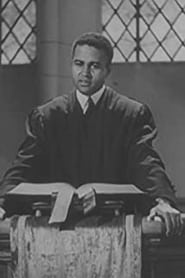
The production of The Negro Soldier represented a significant breakthrough in Hollywood's treatment of African American subjects. The film was commissioned after African American leaders protested the lack of positive representation in war films. Director Stuart Heisler, previously known for directing commercial films, was chosen for his technical expertise. Carlton Moss, a Howard University graduate and former member of the Federal Theatre Project, was brought in to ensure authentic representation. The production team included African American consultants who reviewed every aspect of the film to avoid stereotypes. The Army provided unprecedented access to training facilities and actual soldiers, many of whom appear in the film. The church sequences were filmed at the First African Methodist Episcopal Church in Los Angeles, with actual congregation members participating.
What critics said
Military and community screenings were extensive; scholars analyze its rhetoric alongside contemporaneous race politics.
Did you know?
- The film was requested by General George C. Marshall to help improve race relations in the military
- Carlton Moss, who stars in the film, also wrote the screenplay and was a prominent African American playwright and filmmaker
- The film was shown to over 2 million military personnel and had wide theatrical distribution
- President Franklin D. Roosevelt personally endorsed the film and ordered its wide distribution
- It was one of the first American films to present African Americans as patriotic heroes rather than stereotypes
- The film's premiere was held at the Ambassador Hotel in Los Angeles with an integrated audience, unusual for the time
- The NAACP praised the film as 'the most important motion picture ever produced on the Negro question'
- The film's success led to the creation of other documentaries featuring African Americans in positive roles
- It was nominated for an Academy Award for Best Documentary Feature
- The film was used as a training tool for officers to help them understand racial tensions in the military
Awards & recognition
- Academy Honorary Award (1944) - For its contribution to better race relations
- National Board of Review Award for Best Documentary (1944)
Visual style
The film's cinematography, handled by Stanley Cortez, combined documentary realism with carefully composed dramatic sequences. The training footage was shot with a gritty authenticity that gave viewers an unprecedented look at military life. The church sequences used dramatic lighting to create a sense of reverence and community. The film employed innovative techniques for its time, including the use of multiple cameras during the military maneuvers to capture dynamic action sequences. The visual style deliberately avoided the stereotypical lighting and camera angles often used in contemporary films featuring African Americans, instead employing the same techniques used for mainstream productions.
Innovations
The Negro Soldier pioneered several technical and documentary techniques that would influence future filmmaking. It was among the first films to successfully integrate documentary footage with staged dramatic sequences. The production team developed new mobile camera rigs to capture dynamic military training footage. The film's editing style, which juxtaposed historical images with contemporary footage, created a powerful narrative continuity. The sound recording techniques used during the military sequences were innovative for their time, capturing authentic audio from training exercises. The film also demonstrated the effective use of montage sequences to convey historical information efficiently within a documentary format.
Music
The film's score was composed by Werner Janssen and incorporated both traditional American patriotic music and African American spirituals. The soundtrack includes powerful renditions of 'The Battle Hymn of the Republic' and 'Go Down, Moses,' performed by the Tuskegee Institute Choir. The musical selections were carefully chosen to bridge African American cultural traditions with broader American patriotic themes. The sound design emphasized the realism of military training while maintaining the emotional impact of the dramatic sequences. The film's use of music was particularly effective in the church scenes, where the spirituals created an atmosphere of both religious devotion and patriotic commitment.
What audiences thought
The Negro Soldier was enormously popular with both military and civilian audiences. Military screenings were mandatory for many units, and the film reportedly reduced racial tensions in several camps. African American audiences attended in large numbers, often organizing special screenings at churches and community centers. The film's theatrical run was unusually successful for a documentary, playing in both white and Black theaters across the country. Many African American veterans later cited the film as an inspiration for their service. The film's positive reception helped demonstrate to Hollywood executives that there was a market for films with positive Black representation, though the industry would be slow to act on this lesson.
Film connections
Influenced by
- Frank Capra's 'Why We Fight' series
- Documentary films of the British Documentary Movement
- African American church traditions
- Federal Theatre Project productions
- Contemporary newsreel style
This film influenced
- The Negro Sailor
- Teamwork
- The Way Ahead
- Cabin in the Sky
- The Lost Boundaries
- similarFilms
- famousQuotes
- memorableScenes
- preservationStatus
- The Negro Soldier has been preserved by the National Archives and Records Administration. In 2011, the film was selected for preservation in the United States National Film Registry by the Library of Congress for being 'culturally, historically, or aesthetically significant.' A restored version was released by the National Film Preservation Foundation in 2018, with improved sound and image quality. The original 35mm negatives are stored at the Library of Congress, and digital copies are available through various educational and archival institutions.
- whereToWatch
Where to watch
- Internet Archive: https://archive.org/details/negrosoldier
- YouTube: https://www.youtube.com/watch?v=8b4g4NeX29s
- Wikimedia Commons: https://commons.wikimedia.org/wiki/File:The%20Negro%20Soldier%20(1944).webm