
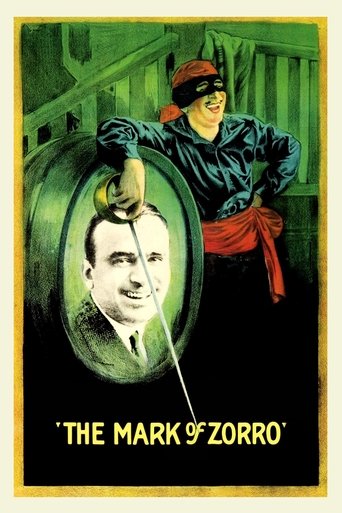
The Prisoner of Zenda
"An English lookalike wears the crown while the real king is missing"
Keys: Space play/pause · ←/→ 10s · F fullscreen · M mute · </> speed
About this film
On the eve of his coronation, the rightful king of Ruritania is drugged and kidnapped by conspirators. His distant cousin Rudolf Rassendyll, a visiting Englishman who closely resembles the monarch, agrees to impersonate him at the ceremony. While courtiers search for the captive heir, the stand-in falls in love with Princess Flavia, who believes she is pledging herself to her future king.
Cast & crew
More films like this
More Adventure films
View all →

More from Rex Ingram
View all →
More about this film
About the production
Release dateSeptember 24, 1922
Box officeCommercially successful, though exact figures not documented
ProductionMetro Pictures Corporation
Filmed inCalifornia, USA, Studio locations in Los Angeles area
Director Rex Ingram invested heavily in elaborate sets and costumes to create the fictional kingdom of Ruritania. The picture featured extensive location shooting and detailed period costumes designed to evoke 19th-century European royalty. Ingram was known for his meticulous attention to visual detail and spent considerable resources on the picture's production design. The castle sets were particularly impressive for the time, featuring multiple levels and detailed architecture.
Themes
Duty versus personal desireIdentity and deceptionHonor and chivalryPolitical intrigueSacrifice for the greater good
Themes & topics
lookalikeimpersonationkidnappingcoronationpolitical intrigueforbidden lovesword fightingroyaltydeceptionrescue missionEuropean kingdomdutysacrifice
Historical background
Rex Ingram's 1922 Metro adaptation condensed Anthony Hope's novel into a silent adventure that helped standardize swashbuckling doubles and palace-intrigue plotting for American audiences.
Why this film matters
The Prisoner of Zenda formula of royal impersonation would be remade repeatedly across decades, making this version a touchstone for star-driven costume adventure.
Making of
Rex Ingram approached this adaptation with his characteristic perfectionism, spending months in pre-production to ensure historical accuracy and visual splendor. The casting of Lewis Stone in the dual role was considered inspired, as his aristocratic bearing and dramatic intensity perfectly suited both the king and his lookalike. Ingram and his cinematographer, John F. Seitz, experimented with new lighting techniques to create the European atmosphere, using innovative methods to simulate moonlight and candlelight on indoor sets. The production faced challenges with the elaborate sword fighting sequences, requiring the actors to undergo extensive training. Alice Terry's costumes were particularly elaborate, requiring multiple changes and careful handling due to their delicate fabrics and intricate designs. the picture's success led to Ingram being given more creative freedom for his subsequent projects.
What critics said
Exhibitors booked the picture for its romance and swordplay; later critics compare it with the more famous 1937 and 1952 sound remakes while praising its silent-era pageantry.
Did you know?
- Lewis Stone later played the role of Colonel Zapt in the famous 1937 sound version of The Prisoner of Zenda, making him one of the few actors to appear in multiple adaptations of the story.
- Director Rex Ingram and star Alice Terry were married in real life, and this was one of their many collaborations.
- the picture was among the costliest productions of 1922, with lavish sets and hundreds of extras.
- This adaptation was praised for its fidelity to Anthony Hope's original novel, unlike some later versions that took more liberties.
- The sword fight sequences were particularly noted for their authenticity and choreography.
- the picture's success helped establish Metro Pictures as a major studio before it merged to become MGM.
- Rex Ingram's direction was considered groundbreaking for its use of lighting and shadow to create dramatic effect.
- the picture was shot on the same California locations that would later be used for many other European-set films.
- Alice Terry's performance as Princess Flavia was considered one of her finest roles.
- the picture's intertitles were written with particular care to maintain the literary quality of Hope's prose.
Visual style
John F. Seitz's cinematography was groundbreaking for its time, featuring innovative use of shadows and lighting to create dramatic atmosphere. the picture employed sophisticated techniques including backlighting, soft focus, and carefully composed deep-focus shots that were ahead of their time. Seitz and Ingram developed special lighting rigs to simulate the effect of candlelight and torchlight in the castle scenes, creating a remarkably authentic period atmosphere. The camera movement was unusually fluid for a 1922 production, with several tracking shots that added dynamism to the action sequences. The cinematography particularly excelled in the night scenes, using innovative lighting techniques to create depth and mystery. The visual style influenced many subsequent adventure films and helped establish the visual language of the swashbuckling genre.
Innovations
the picture was notable for its advanced use of matte paintings and miniatures to create the illusion of the fictional kingdom of Ruritania. The production employed innovative techniques for creating realistic sword fights, using specially weighted prop swords that looked authentic on camera but were safe for the actors. the picture's editing was particularly sophisticated for its time, featuring smooth transitions between scenes and effective use of cross-cutting to build tension during action sequences. The makeup effects for Lewis Stone's dual role were considered groundbreaking, allowing him to convincingly portray two distinct characters without the use of modern digital techniques. the picture also featured innovative camera angles and movements that were unusual for 1922, including several dramatic low-angle shots that emphasized the grandeur of the royal settings.
Music
As a silent film, The Prisoner of Zenda was originally accompanied by live musical performances in theaters. Most large theaters would have used a full orchestra performing specially composed scores, while smaller venues might have used a piano or organ. The original musical cues were designed to enhance the dramatic moments, with sweeping romantic themes for the love scenes and tense, rhythmic music for the action sequences. Some theaters used classical pieces that matched the picture's European setting. Modern screenings of restored versions often feature newly composed scores by silent film specialists who attempt to recreate the emotional impact of the original musical accompaniments.
Famous quotes
I have always rather liked that fellow Rassendyll. He has the good sense to know when he's beaten.
If you were king, you would do your duty, and I would do mine.
I am the king - and I shall be king until the real king returns.
In this world, you must be oh so smart, or oh so pleasant. For years I was smart. I recommend pleasant.
A king does not abdicate his responsibilities, even for love.
Memorable scenes
- The dramatic coronation scene where Rassendyll must convince the court he is the real king while maintaining his composure despite the danger.
- The sword fight between Rassendyll and Duke Michael's henchmen in the castle courtyard, showcasing impressive choreography and cinematography.
- The emotional farewell scene between Rassendyll and Princess Flavia, where they must accept their separation for the good of the kingdom.
- The midnight rescue operation where Rassendyll and his loyal followers attempt to free the real king from the castle dungeon.
- The final confrontation scene where Rassendyll must choose between his love for Flavia and his duty to restore the rightful king.
What audiences thought
the picture was a major commercial success upon its release, drawing large audiences to theaters across the United States and Europe. Moviegoers particularly responded to the romantic elements and the thrilling sword fighting sequences. The dual performance by Lewis Stone generated considerable discussion among film fans, with many considering it among the leading impressive acting achievements of the silent era. the picture's popularity led to increased interest in Anthony Hope's original novel, which saw a resurgence in sales. Audience reaction was so positive that Metro Pictures considered producing a sequel, though this never materialized. the picture's success helped establish the adventure genre as a reliable commercial draw for studios throughout the 1920s.
Film connections
Influenced by
- Anthony Hope's 1894 novel 'The Prisoner of Zenda'
- Earlier stage adaptations of the novel
- The tradition of swashbuckling literature
- European adventure stories of the 19th century
This film influenced
- The Prisoner of Zenda (1937)
- The Prisoner of Zenda (1952)
- The Prisoner of Zenda (1979)
- Numerous other films featuring lookalike plots
- Later swashbuckling adventure films
Film restoration
the picture survives in complete form and has been preserved by major film archives including the Library of Congress and the Museum of Modern Art. Several restored versions exist, with the most complete being a 35mm print held at the George Eastman Museum. the picture has been made available on DVD through various classic film distributors, ensuring its accessibility to modern audiences. Some elements of the original tinting have been preserved in the restored versions, giving modern viewers a sense of the picture's original visual presentation. The preservation status is considered good compared to many other films from the same period.
Where to watch
- Available on DVD from Warner Archive Collection
- Streaming on The Criterion Channel
- Available for digital purchase on Amazon Prime Video
- Occasionally screened at film festivals and classic cinema venues
- Accessible through some university film archives and library collections