
The School Teacher and the Waif
"Shame that sends her running"
Keys: Space play/pause · ←/→ 10s · F fullscreen · M mute · </> speed
About this film
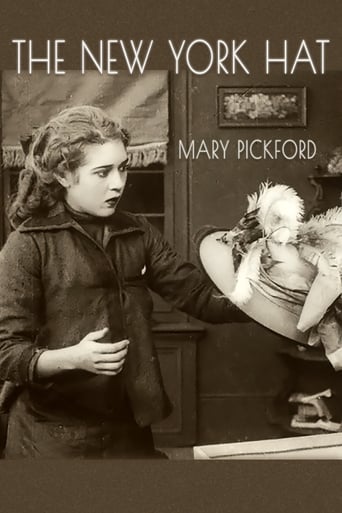
Nora, the waif, is forced to attend school. She warms to her teacher for the way that he defends her against the taunts of some of the students, but when she's made to wear a dunce cap, she flees the schoolhouse in shame.
Cast & crew
More films like this
More Drama films
View all →







More from D.W. Griffith
View all →
More about this film
About the production
Release dateJune 27, 1912
BudgetApproximately $500 - $1,000 (Estimated based on standard Biograph one-reel budgets of 1912)
ProductionBiograph Company
Filmed inCalifornia, USA (Exact location unknown, likely near Los Angeles or San Fernando)
The film was produced during Biograph's transition to California for winter filming, a move led by Griffith to take advantage of the reliable sunlight. It was shot as a one-reel short, which was the industry standard before the rise of feature-length films. The production utilized the 'Biograph 35mm spherical format' with a standard 1.33:1 aspect ratio. Notably, the film features a large ensemble of Biograph regulars, many of whom would become major stars of the silent era.
Themes
Themes & topics
schoolteacherwaiftruancydunce capalcoholic fatherhucksterforced educationrural life1910smarriage proposal
Historical background
The School Teacher and the Waif reached screens around 1912, produced in its country of origin. Silent-era houses paired such titles with live music and newsreel bills. Wartime or military themes reflected anxieties visible in contemporary programming.
Why this film matters
Researchers cite The School Teacher and the Waif when tracing screen culture of its decade.
Making of
During the production of 'The School Teacher and the Waif,' D.W. Griffith was beginning to clash with the executives at Biograph over his desire to make longer, more expensive films. While this short adhered to the one-reel format, Griffith's use of a large, talented ensemble cast (including the Pickfords, Mae Marsh, and Robert Harron) demonstrated his commitment to developing a sophisticated acting troupe. The filming in California was part of Griffith's pioneering effort to establish Hollywood as the center of the film world. The chemistry between Pickford and Griffith was professional but strained, as Pickford was increasingly aware of her own box-office power and would soon leave the company to become 'America's Sweetheart.'
What critics said
Reviewers in 1912 weighed The School Teacher and the Waif on clarity, pacing, and audience response rather than prestige status. No single canonical review dominates later reference works for the title.
Did you know?
- This film is based on the book 'M'liss' by Bret Harte, a popular Western author of the time.
- Mary Pickford was 20 years old when she played the role of Nora, despite the character being a young schoolgirl.
- It features a very young Ella Hall (15 years old) in an uncredited role as a schoolgirl, marking only her second film appearance.
- The film includes a controversial scene by modern standards involving William A. Carroll performing in blackface as the huckster's assistant.
- Biograph films in 1912 were strictly released on Mondays or Thursdays; this film followed that tradition with a Thursday release.
- The cast includes future legends Jack Pickford (Mary's brother) and Mae Marsh, both of whom were teenagers at the time.
- The film was praised by the National Board of Censors upon its release as one of the best films Biograph had ever manufactured.
- At the time of filming, D.W. Griffith was 37 years old and at the height of his creative output for Biograph.
- The film was released in the United Kingdom on August 25, 1912, just two months after its U.S. debut.
- Mary Pickford left Biograph shortly after this film's release to pursue superstardom with Famous Players.
Visual style
The cinematography by G.W. 'Billy' Bitzer is characterized by the use of natural light and deep focus, which were hallmarks of the Biograph style. The film features 13 English intertitles to guide the narrative. Bitzer's work here emphasizes the 'sweetness and freedom of country life' through wide shots of the California landscape, contrasted with the cramped, darker interiors of the schoolhouse and Nora's home.
Innovations
The film utilizes the 'Biograph 35mm spherical format.' While not technically revolutionary compared to Griffith's later epics, it demonstrates a sophisticated use of cross-cutting and character-driven editing to build tension during the final confrontation at the crossroads.
Music
As a silent film, there was no recorded soundtrack. Original screenings would have been accompanied by a live piano or organ player, often improvising based on cue sheets provided by the studio to match the 'pastoral' and 'dramatic' moods of the scenes.
Famous quotes
Title Card: Nora, the 'wild-head,' is forced to attend school.
Title Card: The schoolmaster calls the huckster's bluff.
Memorable scenes
- The Humiliation: Nora is forced to stand in front of the class wearing a dunce cap, a scene that captures the character's vulnerability and Pickford's emotive acting.
- The Crossroads Confrontation: The schoolmaster intercepts Nora and the huckster, using his wits rather than violence to save her by demanding a minister.
- The Blackface Performance: A historical artifact where the huckster's assistant plays the banjo to attract a crowd, illustrating the vaudeville influences of the era.
What audiences thought
Contemporary audiences in 1912 were captivated by Mary Pickford, who was already a major draw. The film was described as having 'interest to everybody' and played to 'fair houses' (good attendance) in both the United States and the United Kingdom. Its blend of comedy and drama was a popular formula for the nickelodeon era.
Film connections
Influenced by
- The writings of Bret Harte
- Victorian melodrama
- Early 20th-century educational reform movements
This film influenced
- M'liss (1918)
- M'liss (1936)
- Rebecca of Sunnybrook Farm (1917)
Film restoration
Preserved. A complete 35mm duplicate negative exists in the Mary Pickford Institute for Film Education collection. A 16mm preservation reduction positive is held by the Library of Congress.
Where to watch
- Available on DVD in the 'Mary Pickford Rare Shorts' collection
- Streaming via the Silent Hall of Fame website
- Archival viewing at the Library of Congress