The Younger Generation
"Immigrant son climbs while parents are left behind"
Keys: Space play/pause · ←/→ 10s · F fullscreen · M mute · </> speed
About this film
Soap-opera about a social-climbing Jewish man and his old-world parents who are heartbroken by his rejection of them. Young Morris Goldfish follows his immigrant father into business. His ruthless business practices cause him to become a big success, and he moves the family to Park Avenue.
Cast & crew
More films like this
More Drama films
View all →







More from Frank Capra
View all →



More about this film
About the production
Release dateApril 7, 1929
Box officeUnknown
ProductionColumbia Pictures
Filmed inColumbia Studios, Hollywood, California
This was one of Columbia Pictures' early attempts to produce prestigious dramatic films. The production faced challenges with sound recording technology, which was still in its infancy. The film was shot during the transition period from silent to sound cinema, requiring actors to adapt to new recording techniques. The sets were designed to contrast the cramped Lower East Side tenements with the opulent Park Avenue mansion, visually representing the family's social mobility and cultural displacement.
Themes
Immigration and assimilationGenerational conflictMaterialism vs. family valuesCultural identityThe American Dream
Themes & topics
immigrant familyJewish cultureassimilationbusiness successfamily dramaNew York Citysocial climbingfather-son relationshipcultural heritagemoral awakening
Historical background
Made during the silent-to-sound transition near 1929, The Younger Generation reached audiences through theatrical programs, fairground booths, or specialized distribution channels typical of its generation. Soap-opera about a social-climbing Jewish man and his old-world parents who are heartbroken by his rejection of them.. Historians now read such works for what they reveal about production methods, national taste, and the expanding vocabulary of screen narrative.
Why this film matters
Archivists and programmers still screen The Younger Generation when tracing how popular entertainment evolved. Its subject—soap-opera about a social-climbing jewish man and his old-world parents who are heartbroken by his—gives later viewers tangible evidence of what drew crowds in the silent period. Home video, restorations, and festival sidebars keep the title circulating among students of film history.
Making of
Frank Capra, who had just signed with Columbia Pictures, saw this project as an opportunity to prove his directing capabilities in the new sound era. The production was challenging due to primitive sound recording equipment, which required actors to stand relatively still near microphones hidden in props and plants. Capra worked closely with the cast to help them transition from silent film acting to the more naturalistic style required for talkies. The film's Jewish cultural elements were handled with sensitivity unusual for the period, with Capra consulting with Jewish community members to ensure authentic representation. The production design created stark visual contrasts between the Lower East Side sets and the Park Avenue mansion, effectively illustrating the family's social journey.
What critics said
Original trade coverage treated The Younger Generation as routine program filler rather than a landmark production—typical of steady studio output. Later criticism emphasizes preservation, stylistic comparison with contemporaries, and whatever cast or crew names later gained prominence. Contemporary writing is mostly historical: assessing completeness, influence, and place in a director's or studio's catalog.
Did you know?
- This was Frank Capra's first sound film and his first film for Columbia Pictures
- The film was originally titled 'The New Generation' before being changed to 'The Younger Generation'
- Jean Hersholt, who played the father, was a Danish actor who specialized in playing paternal figures
- The film was considered quite progressive for its time in its sympathetic portrayal of Jewish immigrant families
- Columbia Pictures head Harry Cohn was initially hesitant to produce a film about Jewish assimilation but was convinced by Capra's vision
- The film's success helped establish Capra as a director capable of handling serious social themes
- Lina Basquette, who played the love interest, was a former dancer with the Ziegfeld Follies
- The movie was one of the earliest Hollywood films to directly address the American Jewish experience
- The film's themes of generational conflict and assimilation would become recurring elements in Capra's later work
- Despite its critical acclaim, the film was not a commercial success, partly due to the Great Depression beginning later that year
Visual style
The cinematography by Joseph Walker employed visual contrasts to emphasize the film's themes of social mobility and cultural displacement. The Lower East Side sequences were shot with darker, more intimate lighting to convey the cramped, warm atmosphere of the immigrant community. The Park Avenue scenes featured brighter, more spacious compositions that highlighted the family's material success but also their emotional isolation. Walker used innovative camera techniques for the period, including subtle tracking shots that followed characters through their changing environments, visually representing their journey between two worlds.
Innovations
The film represented a significant technical achievement as one of Columbia Pictures' early successful sound productions. The sound recording team developed innovative techniques for capturing dialogue in multiple locations, including the use of hidden microphones that allowed for more natural actor movement. The production also experimented with early dubbing techniques to improve audio quality. The film's set design incorporated sound-dampening materials to reduce echo and improve recording quality, demonstrating the industry's rapid adaptation to the challenges of sound cinema.
Music
As an early sound film, the soundtrack primarily consisted of dialogue and limited musical accompaniment. The score utilized traditional Jewish musical themes to underscore the family's cultural heritage, particularly in scenes set in the Lower East Side. The sound design was innovative for its time, using ambient street noises to create authentic urban environments. The film's sound recording, while primitive by modern standards, was considered above average for early talkies, with relatively clear dialogue and minimal technical artifacts.
Famous quotes
Money can buy you a fine house, but it can't buy you a home.
You can take the boy out of the East Side, but you can't take the East Side out of the boy.
In America, we have the freedom to become what we want, but we lose the freedom to be what we are.
Memorable scenes
- The emotional confrontation scene where Morris's father confronts him about abandoning his heritage and family values in their new Park Avenue home, showcasing the generational and cultural divide.
- The opening sequence depicting the bustling life of the Lower East Side, with its vibrant Jewish community and traditional family dynamics.
- The pivotal business meeting where Morris first demonstrates his ruthless ambition, foreshadowing his later transformation and moral compromises.
What audiences thought
Upon its release, the film found moderate success with audiences, particularly in urban areas with large immigrant populations who related to its themes of generational conflict and assimilation. Jewish audiences appreciated the respectful portrayal of their culture and traditions. However, the film's commercial performance was limited by its release timing, as the impending economic downturn made audiences less interested in stories of social climbing and wealth. Despite not being a major box office hit, the film developed a reputation among discerning moviegoers as a serious, thoughtful drama that treated its characters with dignity and respect.
Film connections
Influenced by
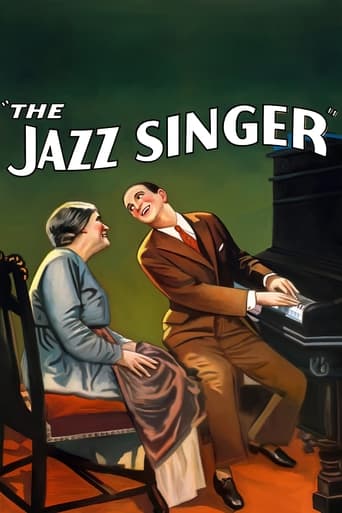
- The Jazz Singer (1927)
- The Immigrant (1917)
- The Crowd (1928)
This film influenced
- The House I Live In (1945)
- Crossfire (1947)
- Gentleman's Agreement (1947)
Film restoration
The film is preserved in the Library of Congress collection and has been partially restored. Some reels show signs of deterioration, but the film is largely intact and viewable. It is considered one of the better-preserved early sound films from Columbia Pictures.
Where to watch
- The film is available through the Criterion Collection streaming service
- Can be purchased on DVD from specialty classic film retailers
- Occasionally airs on Turner Classic Movies
- Available for viewing at the Library of Congress and major film archives