Unexpected Help
“A thrilling drama of a father's peril and his children's devotion.”
About Unexpected Help
John Bradley, a devoted family man and trusted clerk for an oil company, is tasked by his manager to transport a large sum of money to the bank. A local gambler, desperate for funds, witnesses the transaction and attempts to lure John into a trap by inviting him for a drink before the bank opens. While John successfully resists the temptation to gamble, the villainous gambler later ambushes him on a lonely road, leading to a desperate struggle for the company's funds. In a dramatic turn of events, John's young children, who had been playing in the hills, witness their father's peril and manage to summon help just in time to thwart the robbery. The film concludes with the restoration of the money and the preservation of John's reputation and safety through the 'unexpected help' of his own offspring.
Cast & crew
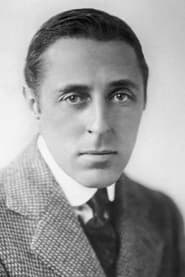
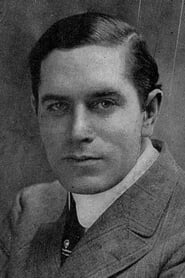
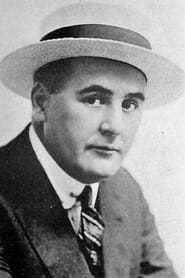
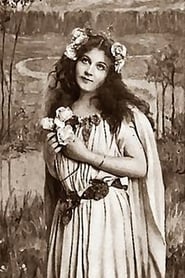

More films like this
More from D.W. Griffith
View all →
More about Unexpected Help
Production
- Release date
- August 25, 1910
- Country
- United States
- Production
- Biograph Company
- Filmed in
- Coytesville, New Jersey, Biograph Studio (11 East 14th Street, New York City)
The film was produced during D.W. Griffith's highly prolific period at Biograph, where he was refining the language of narrative cinema. It was filmed in July 1910 and released shortly thereafter. Like many Biograph shorts of this era, it was shot on a single reel of 35mm film, approximately 988 feet in length. The production utilized the natural landscapes of New Jersey to represent the 'hills' where the children play, providing a stark contrast to the interior saloon and office sets.
Themes & topics
Historical background
In 1910, the American film industry was in a state of rapid evolution, moving away from 'cinema of attractions' toward complex narrative storytelling. D.W. Griffith was the leading figure in this transition, and 'Unexpected Help' was made during the year he began to truly master the art of the 'last-minute rescue.' Historically, the film reflects the temperance movement's influence, as the saloon is depicted as a place of danger and moral testing. It also highlights the era's anxiety regarding the safety of transporting large amounts of cash before the widespread use of armored cars or sophisticated electronic banking.
Why this film matters
The film is significant for its portrayal of the nuclear family as a unit of mutual protection. It reinforced the Victorian ideal of the 'innocent child' who possesses a natural goodness capable of overcoming adult vice. Furthermore, it contributed to the development of the 'thriller' genre in American cinema, using a domestic setting to heighten the stakes of a criminal plot. It helped establish the trope of the 'accidental witness' which would become a staple of suspense cinema for decades to come.
Making of
During the production of 'Unexpected Help,' D.W. Griffith was experimenting with the psychological motivation of his characters. Rather than simple archetypes, he wanted to show the internal struggle of John Bradley when faced with the gambler's temptation. The filming in Coytesville was part of Biograph's regular excursions to New Jersey to find 'authentic' rural backgrounds that were easily accessible from their New York City headquarters. G.W. 'Billy' Bitzer, Griffith's legendary cinematographer, worked closely with the director to ensure that the outdoor action sequences were clear and dynamic, despite the limitations of the hand-cranked cameras of the time.
What critics said
At the time of its release, The New York Dramatic Mirror and The Moving Picture World praised Biograph films for their superior acting and photography. Critics noted that Griffith's films had a 'naturalness' that was missing from other contemporary productions. Modern film historians view it as a solid example of Griffith's 'apprenticeship' period, where he was perfecting the techniques that would later culminate in his feature-length epics. While not as famous as 'The Lonedale Operator,' it is respected for its tight pacing and clear narrative structure.
What audiences thought
Nickelodeon audiences of 1910 responded strongly to the film's suspenseful climax. The use of children as heroes was a popular crowd-pleaser, ensuring a positive emotional response from family audiences. The film was a reliable 'bread and butter' release for the Biograph Company, maintaining their reputation as the premier studio for quality dramatic shorts.
Visual style
Billy Bitzer utilized deep focus in the outdoor scenes to allow the audience to see the children in the background while the father was in the foreground, creating a sense of geographic continuity. The lighting in the saloon scene was designed to be slightly moodier than the bright, flat lighting of the office, emphasizing the moral 'darkness' of the gambler's world. The camera remains mostly stationary, as was the standard, but the movement of actors within the frame is choreographed to create a sense of depth.
Innovations
The film demonstrates an early mastery of continuity editing, ensuring that the spatial relationship between the home, the saloon, and the hills remained clear to the viewer. It also features effective use of the 'cut-away' to show what the children are seeing, which was a sophisticated narrative technique for 1910.
Music
As a silent film, there was no recorded soundtrack. Original screenings would have been accompanied by a live pianist or organist. Standard musical cues for 1910 would have included 'hurries' for the struggle scenes and more sentimental, light melodies for the scenes involving the children and the home.
Film restoration
The film is preserved in the Paper Print Collection at the Library of Congress. It has been transferred to safety film and is available for study by researchers.
Did you know?
- The film features Florence Barker, who was one of Griffith's most reliable leading ladies before her untimely death in 1913.
- Dell Henderson, who plays the gambler, later became a prolific director himself, directing over 200 films.
- The child actors in the film were often uncredited, as was the custom at Biograph to prevent actors from becoming too famous and demanding higher salaries.
- This film is a prime example of the 'Biograph style,' characterized by Griffith's emerging use of cross-cutting to build tension.
- The oil company setting was a contemporary touch, reflecting the industrial growth of the United States in the early 20th century.
- Arthur V. Johnson, the lead, was one of the first 'matinee idols' of the silent screen.
- The film was released on a split-reel in some territories, though it usually occupied a full reel.
- The script was likely a collaboration or an informal scenario developed by Griffith and his staff, as was common before the rise of the specialized screenwriter.
Memorable scenes
- The scene in the saloon where John Bradley visibly struggles with his conscience before refusing to join the gambling table.
- The climax in the hills where the children spot the struggle from a distance and race to find help.
- The final reunion of the family after the danger has passed, emphasizing the domestic peace that was nearly destroyed.
Influenced by
- Victorian Melodrama
- The Temperance Movement
- Early 20th-century short stories in magazines like 'The Saturday Evening Post'
This film influenced
- The Lonedale Operator (1911)
- The Adventures of Dollie (1908) - shared similar themes of child-driven plots
- Various 'Last Minute Rescue' films of the 1910s
Where else to watch
- Library of Congress (Archive)
- Museum of Modern Art (Film Department)
- Select silent film compilations on DVD/Streaming
Famous quotes
Intertitle: 'The gambler's invitation is accepted, but John resists the temptation of the game.'