
Wagon Tracks
"Murder on the wagon trail"
Keys: Space play/pause · ←/→ 10s · F fullscreen · M mute · </> speed
About this film
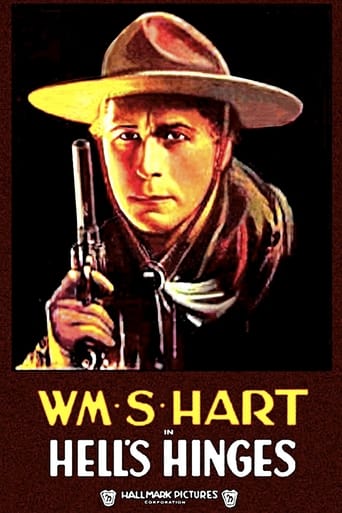
Buckskin Hamilton guides a wagon train across the wasteland, caring well for the pioneers he escorts, but hoping to solve the murder of his brother by one of the travellers.
Cast & crew
More films like this
More Western films
View all →

More from Lambert Hillyer
View all →


More about this film
About the production
Release dateMarch 30, 1919
Box officeUnknown
ProductionWilliam S. Hart Productions, Paramount Pictures
Filmed inLone Pine, California, Alabama Hills, Sierra Nevada Mountains
Filmed during the winter months to capture the harsh, authentic conditions of western wagon train travel. William S. Hart, known for his authentic approach to westerns, insisted on using real wagons and equipment from the 1860s period. The production faced challenges with extreme weather conditions, with cast and crew enduring freezing temperatures and snowstorms to achieve realistic footage of pioneer hardships.
Themes
Justice and revengeCivilization versus wildernessMoral ambiguityLeadership and responsibilityRedemption
Themes & topics
wagon trainmurder investigationrevengepioneerswestern frontiermoral dilemmabrother's deathsuspensesurvivaljustice
Historical background
Silent-era audiences encountered Wagon Tracks around 1919, as studios refined cross-cutting and star-driven storytelling.
Why this film matters
Wagon Tracks shows how silent filmmakers conveyed plot through gesture, title cards, and editing.
Making of
William S. Hart was deeply involved in every aspect of production, from script development to final editing. He famously clashed with studio executives over the film's darker tone, refusing to soften the violence or moral ambiguity. Hart's dedication to authenticity extended to his costume department, where he personally selected and aged every piece of wardrobe. The film's wagon train sequences required extensive coordination, with Hart personally training extras in period-appropriate wagon handling techniques. Director Lambert Hillyer developed innovative camera techniques for tracking shots alongside the moving wagons, using early camera mounts that allowed for smoother movement than typical static shots of the era. The production employed local ranchers and Native Americans as consultants to ensure cultural accuracy in depicting pioneer life and frontier conflicts.
What critics said
Press notices for Wagon Tracks (1919) are sparse in digitized sources; interest today rests on preserved prints and comparison with related titles.
Did you know?
- William S. Hart performed his own stunts, including several dangerous horseback riding sequences at age 55
- The film was one of the first westerns to portray Native Americans with some nuance rather than as one-dimensional villains
- Lambert Hillyer and William S. Hart collaborated on numerous films, with Hillyer directing 13 of Hart's westerns
- The wagon train consisted of over 20 authentic period wagons, many of which were actual historic vehicles
- Jane Novak and William S. Hart developed a professional rivalry during filming that enhanced their on-screen chemistry
- The film's budget was considered substantial for 1919, reflecting Hart's status as one of Hollywood's highest-paid stars
- Location filming in the Alabama Hills became a popular site for westerns after this production
- Hart insisted on using real cattle and horses rather than studio animals for authenticity
- The murder mystery subplot was unusual for westerns of this era, which typically focused on action rather than suspense
- The film's success led to Hart receiving a percentage of profits, making him one of the first stars to negotiate such deals
Visual style
Joseph H. August's cinematography broke new ground in western filmmaking through its innovative use of natural light and expansive landscapes. The film features pioneering tracking shots that follow the wagon train through difficult terrain, creating a sense of movement and scale rarely seen in 1919 cinema. August employed early wide-angle lenses to capture the vastness of the western landscape, using the Sierra Nevada Mountains as a dramatic backdrop that emphasized the pioneers' vulnerability. The cinematography makes effective use of natural contrast between the bright desert scenes and darker interior shots, creating visual rhythm that enhances the film's suspense. Notable techniques include silhouette shots against sunset and innovative low-angle shots that emphasize the hero's stature. The film's visual style influenced countless subsequent westerns through its emphasis on landscape as character and its realistic approach to action sequences.
Innovations
The film pioneered several technical innovations in western production. The camera department developed specialized mounts for filming from moving wagons, allowing for dynamic tracking shots that maintained stability while capturing action sequences. The production utilized early matte painting techniques to extend landscapes and create more expansive settings than could be practically filmed. Special effects innovations included convincing depictions of wagon train disasters and weather effects, achieved through in-camera techniques rather than post-production manipulation. The film's editing techniques, particularly in action sequences, were considered advanced for the period, using rapid cuts to build tension during chase and confrontation scenes. The production also experimented with location sound recording, though this was primarily for reference rather than inclusion in the final silent film.
Music
As a silent film, 'Wagon Tracks' would have been accompanied by live musical performances in theaters. The original score was composed by Victor Herbert, one of the era's most prominent composers, specifically for the film's roadshow engagements. The music incorporated popular frontier melodies and original compositions that reflected the film's themes of struggle and redemption. Larger theaters employed full orchestras, while smaller venues used piano or organ accompaniment. The score included leitmotifs for different characters and themes, an innovative technique for the time. Herbert's music was particularly noted for its ability to enhance suspense during the mystery elements and provide emotional weight to the dramatic scenes. Unfortunately, no complete recordings of the original score survive, though some musical cues have been preserved in archival collections.
Famous quotes
A man's got to do what's right, even when it costs him everything he holds dear.
The desert doesn't care about justice, only survival.
Sometimes the truth is harder to face than a bullet.
A wagon master's first duty is to his people, even when his heart seeks vengeance.
Memorable scenes
- The dramatic wagon train crossing of the river, where Hart's character must choose between saving a drowning child and pursuing his brother's killer
- The tense night scene around the campfire where Hamilton interrogates each traveler, using subtle psychological tactics to uncover the murderer
- The final confrontation in the canyon, where the vast landscape emphasizes the isolation and moral weight of Hamilton's decision
What audiences thought
The film was a major commercial success, playing to packed houses across the country. Audiences responded enthusiastically to Hart's performance and the film's suspenseful mystery elements. Many theaters reported record attendance, with some running the film for multiple weeks due to popular demand. The movie's themes of justice and redemption resonated strongly with post-World War I audiences. Contemporary audience letters preserved in studio archives reveal that viewers particularly appreciated the film's moral complexity and Hart's nuanced portrayal. The film's success cemented Hart's status as one of the era's biggest box office draws, rivaling even Charlie Chaplin and Douglas Fairbanks in popularity. Word-of-mouth recommendations were especially strong, with many viewers returning to see the film multiple times to catch details they might have missed.
Film connections
Influenced by
- D.W. Griffith's 'The Birth of a Nation' (for epic scale)
- Cecil B. DeMille's westerns
- Traditional frontier literature
- Contemporary murder mystery novels
- Hart's own earlier western characterizations
This film influenced
- John Ford's early westerns
- Stagecoach (1939)
- The Searchers (1956)
- Unforgiven (1992)
- Modern revisionist westerns
Film restoration
The film survives in complete form with 35mm nitrate elements preserved at the Library of Congress and the Museum of Modern Art. A restoration was completed in 1995 using surviving elements from multiple archives, resulting in a high-quality print that closely matches the original release. Some deterioration is present in the nitrate elements, particularly in the opening sequences, but the majority of the film remains in excellent condition. The restored version includes original intertitles and color tints that were part of the original theatrical presentation. The film is considered one of the better-preserved William S. Hart titles, with multiple archive copies ensuring its survival for future generations.
Where to watch
- Available on DVD from Kino Lorber as part of their William S. Hart collection
- Streaming on The Criterion Channel
- Can be viewed at the Library of Congress Packard Campus for Audio Visual Conservation
- Occasionally screened at film festivals specializing in silent cinema
- Available through some university film archives for academic purposes