1927 · Short film; exact running time unavailable

Also available on: Wikimedia
We'll Keep Our Eyes Peeled

We'll Keep Our Eyes Peeled

1927 Short film; exact running time unavailable Soviet Union

"Billed as "a cinema-propaganda poster""

Economic patriotismPolitical vigilanceState propagandaPublic mobilizationSoviet modernity

Plot

"We'll Keep Our Eyes Peeled" is a short Soviet animated propaganda film from 1927 that presents the purchase of government bonds as a patriotic response to a British trade embargo. The film frames this economic appeal as a lively public campaign, using animation to visualize abstract financial and political ideas for a broad audience. Its most distinctive feature is the dynamic mixing of newsreel footage with drawn animation, which gives the short a restless, modern energy far beyond the straightforwardness of its message. Rather than simply lecturing viewers, it stages propaganda as a fast-moving audiovisual performance that links current events, national solidarity, and practical civic action. The result is both a product of its moment and an early example of how Soviet filmmakers used experimental form in service of political persuasion.

About the Production

Release Date 1927
Production State Soviet film production entities associated with early Soviet agitprop and animated shorts
Filmed In Soviet Union

This short was made in the context of late-1920s Soviet propaganda filmmaking, when animated and mixed-media shorts were frequently used to explain political and economic campaigns to mass audiences. It is notable for combining live-action newsreel material with animation, a technique that helped make abstract policy into a visually immediate and often satirical form. The film was explicitly conceived as propaganda for the purchase of government bonds in response to a British trade embargo, so its structure is closer to a political poster in motion than to a conventional narrative cartoon. Precise production data such as budget, exact crew roles beyond the director, and original production company credits are not consistently documented in readily available sources for this title.

Historical Background

The film was made in 1927, in the middle of the Soviet Union's New Economic Policy era, when the state was still balancing revolutionary goals with practical economic pressures. Britain and the Soviet Union were in a period of tension that included trade disputes and diplomatic strain, and the film's bond-buying appeal reflects how cinema was mobilized to support state finance and economic stability. In this period, propaganda films were a crucial part of Soviet media strategy, especially short pieces that could be shown before features or in agitational settings to reach a broad public quickly. The use of animation and newsreel also fits the wider avant-garde atmosphere of 1920s Soviet cinema, when artists were actively testing montage, collage, and hybrid forms to make modern political cinema. Historically, the film matters because it shows how even a small propaganda short could participate in the evolution of cinematic language, not merely in the dissemination of ideology.

Why This Film Matters

The film is culturally significant as an example of early Soviet agitprop animation that uses formal invention to deliver a direct political message. It demonstrates how animation in the Soviet Union was not confined to fantasy or children's fare, but could be enlisted as a persuasive instrument in state campaigns. For film historians, it is valuable because it reflects the intersection of propaganda, collage aesthetics, and early documentary material in a single short work. The film also helps map the development of mixed-media cinema, anticipating later uses of montage and archival footage in political film essay forms. More broadly, it exemplifies the era's belief that cinema could educate, mobilize, and reshape public consciousness in ways other media could not.

Making Of

Very little detailed behind-the-scenes documentation survives in easily accessible sources, which is common for short Soviet propaganda films of the 1920s. What is clear is that the film was designed as an agitational tool, likely produced quickly and economically for immediate political use rather than as a prestige release. The collaboration of animation with newsreel footage suggests an intention to ground the film's message in recognizable contemporary reality while keeping the rhetoric lively and memorable. The creative challenge would have been to turn a financial campaign into an engaging cinematic object, and the solution appears to have been a brisk, collage-like structure that could hold audience attention while delivering its message. The result reflects the broader Soviet workshop culture of the period, in which artists, editors, and animators often worked across forms to support state messaging and experimentation at the same time.

Visual Style

The film's most notable visual feature is its hybrid construction: animated imagery is intercut with newsreel footage to create a dynamic, contemporary look. This combination likely produced strong contrasts between real-world documentary material and stylized graphic animation, reinforcing the connection between political reality and the film's message. As a silent-era short, its cinematography would have depended heavily on montage, pacing, and visual clarity rather than camera movement in the modern sense. The style aligns with Soviet montage principles, using editing and juxtaposition to produce meaning quickly and emphatically. The result is a visually energetic work that treats the screen like a moving poster, with rhythm and collage taking precedence over realism.

Innovations

Its key technical achievement is the integration of newsreel footage with animation in a politically purposeful short, an approach that required careful editing and visual planning. The film demonstrates an early Soviet capacity for media hybridization, using archival-like material and drawn imagery together to produce a persuasive cinematic collage. This method made complex geopolitical and economic issues legible to audiences through rapid visual contrast. The film's poster-like construction also shows how montage principles could be adapted to propaganda design, not just feature-length narrative cinema. Although not a technological breakthrough in the mechanical sense, it is notable for its inventive use of existing cinematic forms in service of state communication.

Music

No original synchronized soundtrack is documented; as a 1927 silent short, it would ordinarily have been accompanied by live music during exhibition. The exact original score, cue sheet, or performance practice is not known from the available information. In screenings of silent Soviet shorts of this type, accompaniment may have ranged from improvised piano to compiled musical programs depending on venue. Because the film functioned as propaganda, any accompaniment likely aimed to support urgency and clarity rather than subtle mood development.

Memorable Scenes

  • The film's central propaganda sequence, in which the call to buy government bonds is dramatized through animated imagery and documentary inserts, serves as its defining visual and ideological set piece.
  • The transitions between newsreel footage and animation create a striking collage effect, making the film feel like a moving political poster rather than a conventional narrative short.

Did You Know?

  • The film was described in promotional or archival language as "a cinema-propaganda poster," underscoring its function as visual advocacy rather than entertainment alone.
  • It was created during a period when Soviet filmmakers often blended animation, collage, and newsreel material to explain complex political messages to the public.
  • The short specifically promoted the purchase of government bonds as a response to a British trade embargo, tying personal finance to state economic resilience.
  • Its use of newsreel interpolation makes it stylistically more adventurous than many films of its explicitly propagandistic purpose.
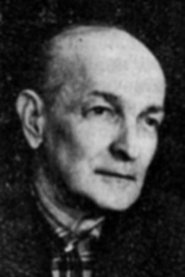
  • The director, Nikolai Khodataev, is associated with early Soviet animation and agitprop work, a field that often prioritized political urgency and formal experimentation.
  • The film belongs to the late 1920s wave of Soviet shorts that treated cinema as a tool for mass education and mobilization.
  • Because it is a short propaganda film from the silent era, detailed documentation such as original release logistics and audience statistics is scarce compared with feature films.
  • The title's phrasing, "We'll Keep Our Eyes Peeled," suggests vigilance and political watchfulness, matching the film's mobilizing tone.
  • The film is an example of how Soviet animation could serve not just children's entertainment or fairy-tale adaptation, but also direct political communication.
  • Its survival and cataloging in contemporary databases highlight growing scholarly interest in obscure agitprop animation and mixed-media experimentation.

What Critics Said

Contemporary critical response is not widely documented in surviving readily accessible sources, which is typical for a 1927 short made primarily for propaganda purposes. At the time, its value would likely have been measured less by artistic criticism than by its usefulness and reach in promoting a state economic campaign. Modern criticism and scholarship tend to view it through the lens of film history, emphasizing its hybrid form and the relative sophistication of its editing and animation. Today it is often of greatest interest to archivists and historians studying Soviet animation, agitprop cinema, and experimental uses of newsreel footage. As a result, its reputation is more academic and archival than popular, though its formal qualities may surprise viewers expecting a purely didactic artifact.

What Audiences Thought

Specific audience-response records are scarce, but as a propaganda short it was likely intended for audiences in theaters, workers' clubs, and other public venues where political information films were shown. Viewers in 1927 would have encountered it as part of a broader state communication effort encouraging participation in government bond campaigns. Its effectiveness would have depended on clarity, speed, and emotional force rather than box-office appeal in the modern sense. For contemporary audiences, the film is likely to be received less as persuasive propaganda and more as a historical curiosity and a striking example of early Soviet visual rhetoric. Modern viewers interested in animation history may find its collage energy and rapid ideological messaging surprisingly inventive.

Film Connections

Influenced By

  • Soviet propaganda posters
  • Early Soviet montage cinema
  • Agitprop theater and poster art
  • Contemporary newsreels and editorial cartoons

This Film Influenced

  • Later Soviet agitprop shorts
  • Hybrid documentary-animation works
  • Political collage films using archival footage

Film Restoration

Preservation status is uncertain in the absence of detailed archival documentation in widely available sources; the film is at least cataloged in modern film databases, suggesting that information about it survives, but a specific surviving print, restoration history, or archive holding is not clearly documented here.

Themes & Topics

propagandagovernment bondsBritish trade embargonewsreel footageanimationagitpropSoviet cinemasilent short