Wild and Woolly
"An Easterner's Wild West fantasy collides with real cowboys."
Keys: Space play/pause · ←/→ 10s · F fullscreen · M mute · </> speed
About this film
A rich Easterner who has always wanted to live in "the Wild West" plans to move to a Western town. Unknown to him, the town's "wild" days are long gone and it is an orderly and civilized place now. The townsmen, not wanting to lose a rich potential resident, contrive to make over the town to suit the young man's fantasy.
Cast & crew
More films like this
More Comedy films
View all →







More from John Emerson
View all →
More about this film
About the production
Release dateMarch 18, 1917
Box officeVery successful - one of Fairbanks' biggest hits of 1917, grossing over $500,000
ProductionFine Arts Film Company, Triangle Film Corporation
Filmed inLos Angeles, California, San Fernando Valley, California
This was one of several collaborations between Douglas Fairbanks and director John Emerson, with Anita Loos frequently contributing to the screenplays. The film featured elaborate sets designed to look both authentically Western and comically exaggerated. Fairbanks performed many of his own stunts, including several dangerous falls and acrobatic sequences that became his trademark. The production utilized both studio sets and outdoor locations to create the contrast between the 'real' civilized town and the 'staged' wild west atmosphere.
Themes
American identity and myth-makingEast vs. West cultural tensionsReality vs. fantasyThe commercialization of the American WestSelf-discovery and personal growth
Themes & topics
Western comedyEasterner in the WestMistaken identityStaged scenariosBank robberyGunfighterSmall townWealthy protagonistRomanceDeceptionSelf-aware humorAction sequencesStuntsFrontier lifeUrban vs. rural
Historical background
Wild and Woolly (1917) survives in catalogs and archives as a record of the silent era.
Why this film matters
Scholars and collectors reference Wild and Woolly when discussing how the silent era filmmakers addressed popular themes.
Making of
The production of 'Wild and Woolly' was marked by the intense creative partnership between Douglas Fairbanks, director John Emerson, and writer Anita Loos. Fairbanks, who was already becoming one of Hollywood's biggest stars, was deeply involved in every aspect of production, from script development to stunt choreography. The film was made during Fairbanks' contract with Triangle Film Corporation, among the leading prestigious studios of the era. The famous 'staged gunfight' sequence required extensive rehearsals and coordination among dozens of extras. Fairbanks insisted on performing his own stunts, much to the concern of the studio's insurance carriers. The film's success was such that it led to Fairbanks forming his own production company the following year, giving him complete creative control over his films. The chemistry between Fairbanks and co-star Eileen Percy was so well-received that they were paired in several subsequent films.
What critics said
Trade coverage around 1917 discussed Wild and Woolly in terms of craft and audience appeal rather than blockbuster scale.
Did you know?
- This film was one of Douglas Fairbanks' most popular early comedies and helped establish his signature persona as the athletic, optimistic American hero.
- The screenplay was co-written by Anita Loos, who would later become famous for writing 'Gentlemen Prefer Blondes'.
- Fairbanks' character's name was changed from 'Jeff Hillington' in the original story to 'Jeff' in some releases, creating confusion among film historians.
- The film's success led to several sequels and imitations, though none matched the original's charm or box office performance.
- A young Buster Keaton reportedly worked as an extra on this film before becoming a star himself.
- The movie was shot in just three weeks, remarkably fast even by 1917 standards.
- Fairbanks performed a dangerous stunt where he swung from a chandelier, a sequence that had to be filmed multiple times.
- The film's theme of Eastern fantasies versus Western reality resonated strongly with post-World War I American audiences.
- One of the first films to satirize the Western genre while still celebrating its core values.
- The original nitrate prints were considered lost for decades until a complete copy was discovered in the Czech Republic in the 1990s.
Awards & recognition
- No major awards were given for this film in 1917, as the first Academy Awards would not be presented until 1929
Visual style
The cinematography by Victor Fleming and William C. McGann employed innovative techniques for its time, including dynamic camera movement during action sequences and careful composition to highlight Fairbanks' athletic abilities. The film utilized both interior studio sets and exterior locations to create visual contrasts between the 'civilized' and 'wild' versions of the town. The cinematographers experimented with lighting to create different moods for the various scenes, using harsher light for the 'staged' Western sequences and softer lighting for romantic moments. The film featured several impressive tracking shots, particularly during chase sequences, which were technically challenging for the era. The visual style balanced realistic Western landscapes with exaggerated, almost theatrical compositions that enhanced the film's satirical elements.
Innovations
The film featured several technical innovations for its time, particularly in its use of moving camera shots during action sequences. The production employed advanced matte painting techniques to create the illusion of expansive Western landscapes. The film's editing, particularly during the climactic sequences, was notably sophisticated for 1917, using cross-cutting and parallel action to build tension. The stunt work and special effects, while primitive by modern standards, were considered groundbreaking in their execution and integration into the narrative. The film also demonstrated early uses of process photography for certain composite shots. The production's ability to seamlessly blend studio sets with location footage was technically impressive for the period and contributed to the film's visual continuity.
Music
As a silent film, 'Wild and Woolly' was originally accompanied by live musical performances in theaters. The typical score would have included popular songs of the era, classical pieces, and specially composed mood music. The film's action sequences would have been accompanied by lively ragtime or marches, while romantic scenes featured waltzes and ballads. Many theaters used compiled cue sheets provided by the studio, which suggested appropriate music for each scene. The score likely included popular songs like 'I'm Always Chasing Rainbows' and other contemporary hits. Modern restorations have been accompanied by newly composed scores that attempt to capture the spirit of the original accompaniments while utilizing contemporary musical sensibilities.
Famous quotes
I'm going West! Where men are men and the women are glad of it!
You can't keep a good man down, especially when he's got a six-shooter and a dream!
This town needs a little wildness in its life!
I've read all about the West - the gunfights, the bank robberies, the beautiful señoritas!
A man's got to do what a man's got to do, even if he has to fake it first!
Memorable scenes
- The opening sequence where Fairbanks' character enthusiastically practices quick-draw techniques in his Eastern mansion, surrounded by Western memorabilia and completely missing the mark every time.
- The elaborate staged bank robbery where the townspeople attempt to convince Fairbanks they're dangerous outlaws, resulting in comically inept 'criminal' behavior.
- The transformation scene where the civilized town is rapidly converted to look like a lawless Western settlement, with signs changed and actors hired to play roughnecks.
- The climactic sequence where real outlaws arrive and Fairbanks must use his 'practiced' Western skills to actually save the day.
- The romantic scene where Fairbanks attempts to woo Eileen Percy using his imagined Western charm, resulting in both comedy and genuine connection.
What audiences thought
Audiences in 1917 embraced 'Wild and Woolly' enthusiastically, making it one of the biggest box office hits of the year. The film played to packed houses across the country and was held over in many theaters due to popular demand. Contemporary accounts describe audiences laughing uproariously at the staged Western sequences and cheering during Fairbanks' athletic stunts. The movie's appeal crossed demographic lines, attracting both the working-class audiences who loved action films and the middle-class viewers who appreciated its sophisticated humor. The film's success was particularly notable given that it was released during the tense period leading up to America's entry into World War I, suggesting that audiences sought escapist entertainment during uncertain times. Modern audiences rediscovering the film through restorations and special screenings have responded positively to its timeless humor and Fairbanks' charismatic performance.
Film connections
Influenced by
- Dime novel Westerns
- Stage melodramas
- Earlier Fairbanks comedies
- Contemporary newspaper serials
- Buffalo Bill's Wild West Shows
- Theatrical traditions of the American West
- Silent era slapstick comedy
- Literary Western romances
This film influenced
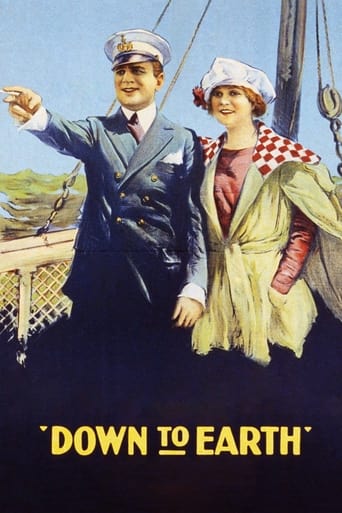
- Down to Earth (1917)
- A Modern Musketeer (1917)
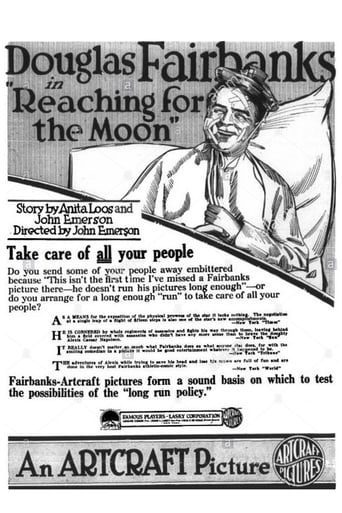
- Reaching for the Moon (1917)
- The Man from Painted Post (1917)
- Later Fairbanks adventure comedies
- Blazing Saddles (1974)
- City Slickers (1991)
- The Three Amigos (1986)
Film restoration
The film was believed lost for many years but a complete 35mm nitrate print was discovered in the Czech National Film Archive in the 1990s. This print has since been preserved and restored by film archives. The restoration revealed that the film was remarkably complete with only minor deterioration. The restored version has been shown at film festivals and special screenings worldwide. The film is now preserved in several archives including the Library of Congress, the Museum of Modern Art, and the UCLA Film & Television Archive. The discovery and preservation of this film represents a significant victory for silent film conservation efforts.
Where to watch
- Available on DVD from Kino Lorber as part of their Douglas Fairbanks collection
- Streaming on The Criterion Channel (periodically)
- Available for digital rental or purchase on Amazon Prime Video
- Can be viewed on YouTube through official archive channels
- Screened occasionally at film festivals and special events
- Available through some university film archives and library collections
- Included in the Flicker Alley silent film streaming service