Wings
"First Oscar Best Picture — in the air"
Keys: Space play/pause · ←/→ 10s · F fullscreen · M mute · </> speed
About this film
Jack Powell and David Armstrong enlist as WWI pilots, rivals for Sylvia but brothers-in-arms aloft until misunderstanding kills David; Mary Preston's love finally reaches Jack at home. William Wellman's Wings won the first Best Picture Oscar.
Cast & crew
More films like this


More Drama films
View all →







More from William A. Wellman
View all →

More about this film
About the production
Release dateAugust 12, 1927
Budget$2,000,000 (equivalent to approximately $33 million in 2023)
Box office$3,800,000 (making it one of the highest-grossing films of 1927)
ProductionParamount Pictures, Famous Players-Lasky Corporation
Filmed inKelly Field, San Antonio, Texas, Harriman, New York, Paramount Studios, Hollywood, California
The production required unprecedented cooperation from the U.S. Army Air Corps, who provided 300 pilots, 3,500 infantrymen, and numerous WWI-era aircraft. The aerial sequences were filmed without modern safety equipment, with stunt pilots performing dangerous maneuvers while cameras were mounted to the planes. Director William A. Wellman, a former WWI pilot, personally flew many of the aerial shots. The film's production took nearly a year to complete, with the aerial photography alone requiring five months of filming.
Themes
Friendship and brotherhood formed in combatThe dehumanizing effects of warUnrequited love and romantic miscommunicationThe glory and tragedy of aviationClass differences and their impact on relationships
Themes & topics
World War IAviationLove triangleFriendshipWarFighter pilotsSacrificeSilent filmAcademy Award winnerAerial combatComing of ageRomanceActionDramaHistorical drama
Historical background
Wings (1927) premiered as Hollywood invested record budgets in aviation spectacle after Lindbergh's flight captured imaginations.
Why this film matters
Its realistic dogfight photography and male friendship storyline shaped war aviation cinema for decades.
Making of
The making of Wings was an enormous undertaking that pushed the boundaries of film technology and safety. Director William A. Wellman, a decorated WWI pilot with the Lafayette Flying Corps, insisted on absolute authenticity for the aerial sequences. He secured unprecedented cooperation from the U.S. Army, gaining access to Kelly Field in Texas and hundreds of military personnel. The aerial photography was revolutionary for its time, with cameras mounted directly onto aircraft, sometimes operated by the pilots themselves during flight. Stunt pilots performed death-defying maneuvers, often without parachutes, to capture the thrilling dogfight sequences. The ground sequences were equally ambitious, with the production building full-scale replicas of French villages and utilizing thousands of extras for the battle scenes. The casting process was notable for Clara Bow's involvement; she was Paramount's biggest star but was initially reluctant to take what she perceived as a supporting role. The film's production coincided with the transition to sound, making it one of the last great silent epics and contributing to its historical significance as a bridge between two eras of cinema.
What critics said
Critics praised scale; Academy voters honored it as Outstanding Picture alongside engineering-effects award.
Did you know?
- Wings was the first film to win the Academy Award for Best Picture (then called 'Outstanding Picture') at the first Academy Awards ceremony in 1929
- It remains the only silent film to win Best Picture until The Artist won in 2011, 84 years later
- Gary Cooper appears in a small role as Cadet White early in his career before becoming a major star
- The film features one of the first appearances of a two-strip Technicolor sequence in a feature film
- Clara Bow was at the height of her 'It Girl' fame and received top billing, though her role is relatively small compared to the male leads
- Director William A. Wellman was a former WWI pilot and insisted on authentic aerial sequences, refusing to use miniatures for the flying scenes
- The production used over 3,500 extras for the battlefield sequences, making it one of the largest-scale productions of the silent era
- During filming, one stunt pilot was killed and another seriously injured performing aerial maneuvers for the camera
- The film's success helped establish Paramount Pictures as a major Hollywood studio and proved the commercial viability of expensive war epics
- The famous scene where Rogers and Arlen share a drunken kiss was controversial for its time but was meant to show the intense bond between soldiers
- The film's original running time was 149 minutes, but several minutes were cut for subsequent releases
Awards & recognition
- Academy Award for Best Picture (Outstanding Picture) - 1st Academy Awards (1929)
- Academy Award for Best Engineering Effects - 1st Academy Awards (1929)
Visual style
The cinematography of Wings, primarily by Harry Perry, was revolutionary for its time and remains impressive even by modern standards. The aerial sequences employed innovative camera mounting techniques developed specifically for the production, including cameras attached to the wings, fuselage, and landing gear of aircraft. Perry and his team devised a system where pilots could trigger cameras while flying, allowing for unprecedented dynamic shots of aerial combat. The ground-level cinematography was equally sophisticated, utilizing sweeping camera movements and complex tracking shots that were technically challenging in the silent era. The film also features a notable two-strip Technicolor sequence depicting a Parisian nightclub, one of the early uses of color in a feature film. The cinematography effectively contrasts the beauty and freedom of flight with the horror of war, using both intimate close-ups and epic wide shots to create emotional impact. The battle sequences employ multiple cameras and angles to create a sense of chaos and scale that influenced war films for decades.
Innovations
Wings pioneered numerous technical achievements that would influence filmmaking for decades. The aerial cinematography was groundbreaking, requiring the development of specialized camera mounts that could withstand the stresses of flight while maintaining stable images. The production team created a system of synchronized cameras that could capture multiple angles of the same aerial maneuver, allowing for dynamic editing of dogfight sequences. The film utilized large-scale miniature effects for certain explosion sequences, though most flying scenes used real aircraft. The battlefield sequences employed innovative techniques for simulating artillery fire and explosions, using coordinated detonations and smoke effects. The film's two-strip Technicolor sequence, though brief, demonstrated the potential of color cinema. The editing of the aerial sequences was particularly sophisticated for its time, creating tension and excitement through rapid cutting between multiple perspectives. The production also developed new safety protocols for filming dangerous aerial stunts, many of which became industry standards. The film's sound design, though created for a silent film, included innovative techniques for creating realistic sound effects during theatrical presentations.
Music
As a silent film, Wings was originally presented with live musical accompaniment that varied by theater. The official score was composed by J.S. Zamecnik, especially prolific composers of silent film music, who created a comprehensive compilation of classical and original pieces synchronized to the on-screen action. The score included adaptations of works by composers like Wagner, Tchaikovsky, and Beethoven, interspersed with Zamecnik's original compositions. Different theaters had varying approaches to presentation, from solo piano accompaniment to full orchestras. The film's restoration includes a newly recorded orchestral score based on Zamecnik's original cue sheets, performed by the Mont Alto Motion Picture Orchestra. The music effectively enhances the emotional journey of the characters, with romantic themes for the love story, martial music for the training sequences, and dramatic compositions for the combat scenes. The soundtrack plays a crucial role in conveying the film's emotional depth, particularly during the silent medium's inability to use dialogue or natural sound effects.
Famous quotes
Intertitle: 'We're in the Army now... and the air service is the cream of the Army!'
Intertitle: 'Goodbye, Mary. If I don't come back - remember me.'
Intertitle: 'The sky is our battlefield now.'
Intertitle: 'In the air, they're not Germans or Americans - they're just men fighting for their lives.'
Intertitle: 'War is hell, but flying is heaven.'
Intertitle: 'We came as strangers - we leave as brothers.'
Memorable scenes
- The opening sequence featuring Jack's wild car ride and his subsequent meeting with Mary Preston
- The training montage showing the pilots learning to fly and their early mishaps
- The drunken celebration scene in Paris where Jack and David's friendship is solidified
- The intense dogfight sequences featuring actual aerial combat with real planes
- The tragic final combat scene where Jack accidentally shoots down David
- The emotional hospital scene where Jack realizes his mistake
- The final scene where Jack returns to Mary and finally recognizes her love
- The Technicolor sequence in the Paris nightclub, one of the early uses of color in film
- The massive battle sequences with thousands of extras and realistic explosions
- The scene where Jack visits David's grieving parents to tell them of his death
What audiences thought
Wings was a tremendous commercial success upon its release, becoming one of the highest-grossing films of 1927 and 1928. Audiences were captivated by its thrilling aerial sequences and emotional storyline, with many theaters reporting sell-out crowds for weeks. The film's appeal crossed demographic lines, attracting both young audiences drawn to the action and older viewers who had lived through WWI. Contemporary accounts describe audiences gasping during the dogfight scenes and weeping during the emotional conclusion. The film's success made stars of Charles 'Buddy' Rogers and Richard Arlen, though Clara Bow was already a major attraction. The movie's popularity extended internationally, particularly in countries that had participated in WWI. Despite the transition to sound films occurring soon after its release, Wings continued to draw audiences well into 1929, proving that compelling storytelling and spectacle could transcend technological changes in the medium.
Film connections
Influenced by
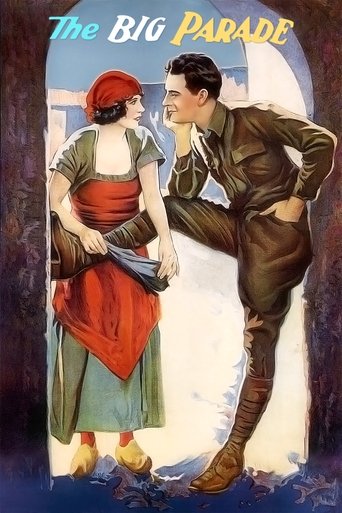
- The Big Parade (1925) - established conventions for WWI films
- What Price Glory? (1926) - influenced the portrayal of military camaraderie
- The Dawn Patrol (1930) - followed similar aerial combat themes
- German expressionist cinema - influenced visual style and dramatic lighting
- Literary war narratives - including works by Erich Maria Remarque and Wilfred Owen
This film influenced
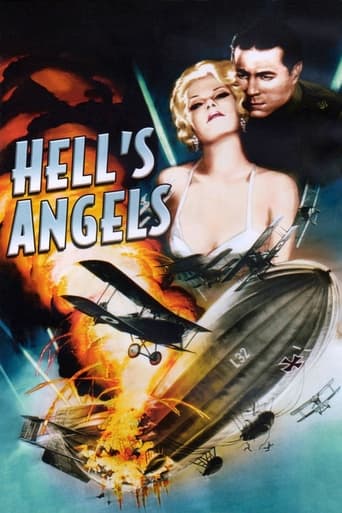
- Hell's Angels (1930) - Howard Hughes' aviation epic
- The Dawn Patrol (1930) - similar WWI aerial combat theme
- A Farewell to Arms (1932) - WWI romance and tragedy
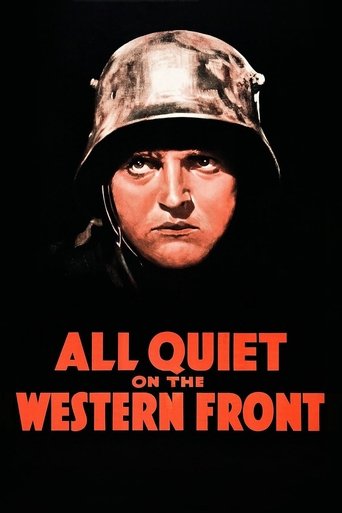
- All Quiet on the Western Front (1930) - anti-war themes
- Top Gun (1986) - aerial combat and pilot camaraderie
- Saving Private Ryan (1998) - realistic combat sequences
- Pearl Harbor (2001) - aerial combat sequences
- Flyboys (2006) - WWI aviation theme
- The Artist (2011) - tribute to silent cinema era
Film restoration
Wings has been remarkably well-preserved for a film of its age. In 1997, the film was selected for preservation in the United States National Film Registry by the Library of Congress for being 'culturally, historically, or aesthetically significant.' A major restoration was undertaken by Paramount Pictures in 2012 for the film's 85th anniversary, utilizing original nitrate materials and incorporating the two-strip Technicolor sequence that had been missing from most prints. The restored version premiered at the 2012 Cannes Film Festival and has since been released on Blu-ray and DVD. The restoration work was particularly challenging due to the deterioration of the original negative and the need to reconstruct missing scenes from various sources. The film's preservation status is considered excellent, with multiple archives holding quality prints, including the Library of Congress, the UCLA Film and Television Archive, and the Academy Film Archive.
Where to watch
- Paramount+ (streaming)
- The Criterion Channel (streaming)
- Amazon Prime Video (for rent or purchase)
- Apple TV/iTunes (for rent or purchase)
- Google Play Movies (for rent or purchase)
- YouTube Movies (for rent or purchase)
- Blu-ray/DVD from Paramount Home Entertainment
- Various public domain sites (though quality may vary)
- Film archives and museums during special screenings
- TCM (Turner Classic Movies) during scheduled broadcasts