

A Lady's Morals
"Jenny Lind's voice and scandalous affairs"
Keys: Space play/pause · ←/→ 10s · F fullscreen · M mute · </> speed
About this film
Romantic biography of Swedish opera singer Jenny Lind and her famous affairs.
Cast & crew
More films like this
More Drama films
View all →







More from Sidney Franklin
View all →
More about this film
About the production
Release dateNovember 8, 1930
BudgetApproximately $900,000 (Estimated)
Box officeA box office failure; it did not recoup its production costs during its initial run.
ProductionMetro-Goldwyn-Mayer (MGM)
Filmed inMGM Studios, Culver City, California, USA
The film was a prestige project for MGM, intended to showcase the Metropolitan Opera star Grace Moore in her motion picture debut. Producer Irving Thalberg spared no expense on the production, employing top-tier talent like director Sidney Franklin and cinematographer George Barnes. To maximize international profits, MGM simultaneously produced a French-language version titled 'Jenny Lind' (1932), also starring Moore. Despite the high production values, the film's title was heavily criticized by marketing experts of the era; some felt 'A Lady's Morals' sounded too scandalous, while others felt it sounded too preachy, leading to confusion among potential audiences.
Themes
The conflict between career and personal happinessThe burden of fameSacrifice and devotionThe redemptive power of musicMoral integrity vs. public perception
Themes & topics
Opera singerJenny LindP.T. BarnumBlindness19th CenturyFictionalized biographySwedish NightingaleRomantic drama
Historical background
Made during the silent-to-sound transition near 1930, A Lady's Morals reached audiences through theatrical programs, fairground booths, or specialized distribution channels typical of its generation. Romantic biography of Swedish opera singer Jenny Lind and her famous. Historians now read such works for what they reveal about production methods, national taste, and the expanding vocabulary of screen narrative.
Why this film matters
Archivists and programmers still screen A Lady's Morals when tracing how popular entertainment evolved. Its subject—romantic biography of swedish opera singer jenny lind and her famous—gives later viewers tangible evidence of what drew crowds in its day. Home video, restorations, and festival sidebars keep the title circulating among students of film history.
Making of
The production was part of MGM's 'Grand Opera' initiative, which sought to bring high-culture vocalists to the masses following the advent of synchronized sound. Director Sidney Franklin, known for his meticulous and tasteful style, worked closely with Grace Moore to transition her stage-acting techniques to the more intimate requirements of the camera. The sets were designed by the Cedric Gibbons to evoke a lavish 19th-century European atmosphere. One of the primary challenges was recording Moore's powerful operatic voice with the primitive sound equipment of 1930, which often struggled with high frequencies and wide dynamic ranges. To compensate, the sound engineers had to innovate microphone placement techniques that would later become standard for musical films.
What critics said
Original trade coverage treated A Lady's Morals as routine program filler rather than a landmark production—typical of steady studio output. Later criticism emphasizes preservation, stylistic comparison with contemporaries, and whatever cast or crew names later gained prominence. Contemporary writing is mostly historical: assessing completeness, influence, and place in a director's or studio's catalog.
Did you know?
- This film marked the motion picture debut of Metropolitan Opera soprano Grace Moore.
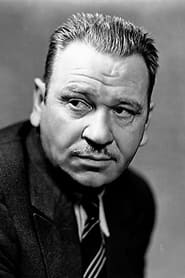
- Wallace Beery plays P.T. Barnum in this film; he would reprise the role of the famous showman four years later in 'The Mighty Barnum' (1934).
- The film is notorious for its historical inaccuracies, including the creation of the fictional love interest Paul Brandt.
- Grace Moore was nicknamed the 'Tennessee Nightingale,' a direct nod to Jenny Lind's nickname, the 'Swedish Nightingale.'
- The film features Moore performing actual operatic arias, including 'Casta Diva' from Bellini's Norma.
- A French-language version was filmed concurrently to appeal to European markets, a common practice during the early sound era.
- The film includes a scene where Lind loses her voice during a performance, a plot point that mirrored real-life vocal struggles Moore had faced.
- Despite being a musical biopic, MGM executives reportedly ordered the number of songs to be kept to a minimum based on market research suggesting audiences were tiring of early 'all-singing' films.
- The screenplay was adapted from a story by Dorothy Farnum, who was a prominent scenario writer of the silent and early sound eras.
Visual style
The film features the work of George Barnes, a master of the 'soft focus' style. The cinematography is characterized by lush, high-key lighting and elaborate camera movements that were quite advanced for 1930. Barnes used shadows and framing to emphasize the emotional isolation of the blind Paul Brandt and the ethereal beauty of Lind on stage.
Innovations
The film is noted for its early use of multi-track recording concepts to capture operatic vocals. It also utilized sophisticated set extensions and matte paintings to recreate 19th-century New York and various European capitals on the MGM backlot.
Music
The soundtrack is a mix of classical opera and original songs written specifically for the film. Notable pieces include 'Casta Diva' from Bellini's Norma and 'Rataplan' from Donizetti's La Fille du Régiment. Original songs were composed by Oscar Straus and Herbert Stothart, with lyrics by Clifford Grey, including 'It Is Destiny' and 'I Hear Your Voice.'
Famous quotes
Jenny Lind: 'My voice is not mine alone; it belongs to the world that listens.' (Context: Lind discussing her duty to her audience over her personal desires.)
P.T. Barnum: 'I don't just sell a voice, Miss Lind. I sell a miracle!' (Context: Barnum trying to convince Lind to tour America.)
Memorable scenes
- The American Debut: A lavishly staged sequence showing Jenny Lind's first performance at Castle Garden in New York, capturing the 'Lind Mania' of the era.
- The Loss of Voice: A dramatic scene where Lind experiences a vocal crisis on stage, highlighting the fragility of her talent.
- The Final Reunion: The emotional climax where Lind finds the blind Paul Brandt playing music on the street, leading to their reconciliation.
What audiences thought
Audiences of 1930 largely stayed away, leading to the film becoming a significant financial loss for MGM. The public found the operatic content somewhat inaccessible compared to the popular jazz and 'crooner' musicals of the time. However, it did establish a small, dedicated following for Grace Moore, which eventually exploded into superstardom when she moved to Columbia Pictures a few years later.
Film connections
Influenced by
- The real-life career of Jenny Lind
- The tradition of European operetta
- MGM's previous success with 'The Rogue Song' (1930)
This film influenced
- One Night of Love (1934)
- The Mighty Barnum (1934)
- The Great Ziegfeld (1936)
- The Greatest Showman (2017)
Film restoration
The film is preserved and exists in the archives of Turner Entertainment and the Library of Congress. It has been aired on Turner Classic Movies (TCM) as part of their 'Vault' series.
Where to watch
- Turner Classic Movies (Periodic television airings)
- Warner Archive Collection (Available on DVD-R/MOD)
- Select film archives and university libraries