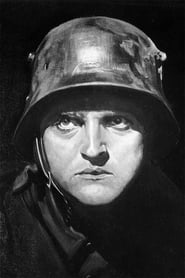

All Quiet on the Western Front
"1930 film directed by Lewis Milestone"
Keys: Space play/pause · ←/→ 10s · F fullscreen · M mute · </> speed
About this film
Opened to wide acclaim in the United States. Considered a realistic and harrowing account of warfare in World War I, it made the American Film Institute's first 100 Years..100 Movies list in 1997. A decade later, after the same organization polled over 1,501 workers in the creative community, All Quiet on the Western Front was ranked the seventh-best American epic film. In 1990, it was selected and preserved by the United States Library of Congress' National Film Registry, being deemed "culturally, historically, or aesthetically significant". The film was the first to win the Academy Awards fo…
Cast & crew
More films like this
More Drama films
View all →







More from Lewis Milestone
View all →
More about this film
About the production
Release dateApril 21, 1930
Budget$1.25 million - $1.5 million
Box office$3 million (worldwide rentals)
ProductionUniversal Pictures
Filmed inIrvine Ranch, Santa Ana, California, Universal Studios Backlot, Hollywood, California, Lake Sherwood, Ventura County, California, Balboa, California
The production was an enormous undertaking for 1930, utilizing over 20 acres of California ranch land to recreate the battlefields of France. Director Lewis Milestone employed more than 2,000 extras, many of whom were actual German Army veterans living in Los Angeles at the time, to ensure the authenticity of the military maneuvers and trench life. The film was shot simultaneously in two versions: a 'talkie' with synchronized sound and an 'International Sound Version' (essentially a silent film with a synchronized score and sound effects) for theaters not yet equipped for sound. The famous final shot of the hand reaching for a butterfly was actually filmed during post-production; because Lew Ayres was unavailable, the hand seen on screen belongs to director Lewis Milestone.
Themes
The futility of warThe loss of innocenceThe betrayal of youth by the older generationThe dehumanization of the enemyComradeship and survival
Themes & topics
Historical background
All Quiet on the Western Front (1930) circulated in studio-era and wartime programming. The film opened to wide acclaim in the United States. Contemporary trade papers and later preservation notes document its place among theatrical and archive releases.
Why this film matters
All Quiet on the Western Front remains accessible to researchers and viewers as a screen title in museum, archive, and streaming collections. Considered a realistic and harrowing account of warfare in World War I, it made the American Film Institute's first 100 Years...100 Movies list in 1997.
Making of
The production was marked by Lewis Milestone's insistence on realism and technical innovation. To capture the chaos of the battlefield, Milestone utilized a massive mobile crane—the first of its kind for a sound film—allowing for sweeping, dynamic tracking shots across the trenches. Because the early sound equipment was bulky and noisy, these complex camera movements had to be filmed silently, with the sound effects and dialogue meticulously synced in post-production. The crew faced significant challenges in managing the thousands of extras and the extensive pyrotechnics required for the bombardment scenes. Milestone's collaborative approach included hiring German veterans as technical advisors to ensure that every detail, from the uniforms to the way soldiers held their rifles, was historically accurate.
What critics said
Retrospective writing highlights All Quiet on the Western Front for its craft and historical interest. The film opened to wide acclaim in the United States.
Did you know?
- The film was the first to win the Academy Award for both Best Picture and Best Director.
- Lew Ayres was so deeply affected by his role that he became a conscientious objector during World War II.
- The Nazi party in Germany, led by Joseph Goebbels, organized riots to disrupt screenings of the film, eventually leading to its ban in Germany in 1930.
- Future Academy Award-winning director Fred Zinnemann appears in the film as an uncredited extra.
- Director Lewis Milestone used his own hand for the iconic final shot of the butterfly because the lead actor had already left the production.
- The film was banned in several countries for decades, including France (until 1963) and Austria (until the 1980s), due to its pacifist message.
- The sets were so large and detailed that they were later reused for other Universal classics, including the 1931 'Frankenstein'.
- It was the first Best Picture winner based on a novel.
- The film entered the public domain in the United States on January 1, 2026.
Awards & recognition
- Academy Award for Best Picture (Outstanding Production) - 1930
- Academy Award for Best Director (Lewis Milestone) - 1930
- Kinema Junpo Award for Best Foreign Language Film - 1931
- National Board of Review - Top Ten Films - 1930
Visual style
The cinematography by Arthur Edeson (with uncredited work by Karl Freund) was revolutionary. The film is famous for its long, fluid tracking shots that follow soldiers through the trenches, a technique that was incredibly difficult to achieve with the primitive sound-era camera equipment. The use of deep focus and stark, high-contrast lighting added to the film's gritty, documentary-like feel, capturing the desolation of No Man's Land with haunting clarity.
Innovations
The film pioneered the use of the 'giant mobile crane' in sound cinema, overcoming the 'blimping' restrictions that typically kept early talkie cameras stationary. It also featured some of the most advanced sound synchronization of its time, particularly in the complex battle sequences where audio was layered in post-production. The production's ability to coordinate large-scale pyrotechnics with hundreds of extras in real-time set a new standard for cinematic spectacle.
Music
The film is notable for its sparse use of music, relying instead on a sophisticated and terrifying sound design. Director Lewis Milestone chose to emphasize the 'symphony' of war—the whistling of incoming shells, the rhythmic thud of machine guns, and the screams of the wounded—to immerse the audience in the environment. The lack of a traditional melodramatic score makes the sudden bursts of violence and the long silences in the trenches even more impactful.
Famous quotes
Professor Kantorek: 'Dulce et decorum est pro patria mori.' (It is sweet and fitting to die for one's country.)
Paul Bäumer: 'We live in the trenches out there. We fight. We try not to be killed, but sometimes we are. That's all.'
Katczinsky: 'Give 'em all the same grub and all the same pay and the war would be over and done with in a day.'
Paul Bäumer: 'I am young, I am twenty years old; yet I know nothing of life but despair, death, fear, and fatuous superficiality cast over an abyss of sorrow.'
Memorable scenes
- The Butterfly Scene: The final shot of the film where Paul reaches out from the trench to touch a butterfly, only to be killed by a sniper's bullet.
- The French Girl Scene: Paul and his friends swim across a river at night to visit three French women, a rare moment of humanity and intimacy amidst the carnage.
- The Classroom Scene: The opening where the professor's fiery patriotic speech contrasts sharply with the grim reality the boys are about to face.
- The Shell Hole Scene: Paul is trapped in a crater with a dying French soldier he has stabbed, leading to a profound moment of guilt and realization that the 'enemy' is a human being just like him.
What audiences thought
The film was a massive commercial success in the U.S., drawing large crowds moved by its visceral realism. However, international audiences had a more polarized experience. In Germany, screenings were met with smoke bombs and stink bombs thrown by Nazi supporters, while in other countries, the film was embraced by peace movements. Despite the controversy, it remains one of the few early sound films that continues to be watched and studied by general audiences today.
Film connections
Influenced by
- The Big Parade (1925)
- Wings (1927)
- The novel by Erich Maria Remarque
This film influenced
- Paths of Glory (1957)
- Platoon (1986)
- Saving Private Ryan (1998)
- Full Metal Jacket (1987)
- 1917 (2019)
Film restoration
The film is fully preserved and was one of the first 25 films selected for the National Film Registry in 1990. A major restoration was completed by the Library of Congress and Academy Film Archive to return the film to its original 1930 length and visual quality.
Where to watch
- Amazon Prime Video (Rent/Buy)
- Apple TV (Rent/Buy)
- Google Play Movies
- YouTube (Public Domain)
- Physical Media (Criterion Collection / Universal Blu-ray)