


Captain Blood
"Captain Blood (1924)"
Keys: Space play/pause · ←/→ 10s · F fullscreen · M mute · </> speed
About this film
Young Irish physician Peter Blood is exiled as a slave to Barbados, where he and his friend Jeremy are purchased by Colonel Bishop at the behest of his niece Arabella. With other slaves he captures a Spanish galleon and becomes the terror of the Caribbean privateers until offered a commission in the English Navy. He defeats the French at Port Royal, and as a reward he is named governor of Jamaica and marries Arabella.
Cast & crew
More films like this
More War films
View all →


More from David Smith
View all →
More about this film
About the production
Release dateDecember 1, 1924
Box officeUnknown
ProductionVitagraph Company of America
Filmed inCalifornia, USA
This was one of Vitagraph's major productions of 1924, featuring extensive maritime sequences and location shooting. The film utilized full-scale ship replicas and employed hundreds of extras for the battle scenes. Special attention was given to historical accuracy in costumes and set design, reflecting the 17th century Caribbean setting.
Themes
Redemption and forgivenessRebellion against injusticeHonor and dutyLove across social boundariesTransformation and identity
Themes & topics
piratesslaveryrebellionromancenaval battlesCaribbean17th centuryexiletreasureadventureswashbucklerbetrayalredemptiongovernorSpanish Main
Historical background
Captain Blood (1924) emerged during late silent cinema and the transition toward sound, when exhibition habits and national film industries were still taking shape.
Why this film matters
Captain Blood remains accessible through digital archives, giving modern viewers a direct link to 1924 screen culture.
Making of
The production of 'Captain Blood' was a major undertaking for Vitagraph, representing one of their most expensive silent features. The studio constructed elaborate sets at their California studios, including detailed reproductions of Caribbean ports and ship interiors. Director David Smith, known for his ability to handle large-scale productions, coordinated complex action sequences involving hundreds of extras. The maritime scenes presented particular challenges, requiring the use of full-scale sailing ships filmed off the California coast. Special effects techniques of the era, including miniatures and matte paintings, were employed to create the illusion of naval battles. The cast underwent extensive training for their roles, particularly for the sword-fighting sequences. J. Warren Kerrigan, despite being a major star, insisted on performing many of his own stunts, much to the concern of the studio's insurance carriers.
What critics said
Modern write-ups on Captain Blood (1924) tend to focus on preservation status, stylistic choices, and placement within director or studio filmographies.
Did you know?
- This was the first film adaptation of Rafael Sabatini's 1922 novel 'Captain Blood: His Odyssey'
- The film is now considered lost, with no known surviving copies in any film archive
- J. Warren Kerrigan was one of the highest-paid silent film stars of the early 1920s
- Director David Smith was the brother of Vitagraph founder Albert E. Smith
- The film featured elaborate naval battle sequences that were considered technically advanced for their time
- Charlotte Merriam, who played Arabella Bishop, was a former Ziegfeld Follies girl
- The production reportedly used three full-size sailing ships for the maritime scenes
- This adaptation predates the famous 1935 Errol Flynn version by 11 years
- Vitagraph invested heavily in the production, considering it their prestige film for 1924
- The film's success led to several other pirate-themed productions by Vitagraph in the mid-1920s
Visual style
The cinematography by Robert Martin utilized the full potential of silent era visual storytelling. The film employed extensive location photography for the maritime sequences, capturing the drama of sailing ships on the open sea. Studio shots featured dramatic lighting to enhance the romantic and adventurous elements of the story. The battle sequences utilized multiple camera angles and dynamic movement to create excitement and tension. Close-ups were used effectively to convey emotion, particularly in romantic scenes between Blood and Arabella. The film also made use of tinting techniques, with blue tones for night scenes and amber for daylight sequences, adding visual variety and emotional depth to the narrative.
Innovations
The film featured several technical innovations for its time, particularly in its maritime sequences. The production team developed specialized camera rigs for filming on moving ships, allowing for dynamic shots that were unusual in 1924. The battle sequences employed sophisticated miniature work combined with full-scale footage, creating seamless illusions of naval combat. The film's editing techniques, particularly in action sequences, were considered advanced for the period, using rapid cutting to build excitement. The production also utilized early forms of process photography for certain composite shots. The set design incorporated moving elements and practical effects to enhance the realism of the shipboard scenes.
Music
As a silent film, 'Captain Blood' would have been accompanied by live musical performance in theaters. The original score was likely compiled from classical pieces and popular music of the era, with specific themes composed for key dramatic moments. Large theaters would have employed full orchestras, while smaller venues might have used a piano or organ. The musical accompaniment would have emphasized the swashbuckling action sequences with dramatic, rhythmic pieces, while using more romantic melodies for the love scenes. Unfortunately, no specific information about the original musical arrangements survives, as was common for silent film scores of the period.
Famous quotes
A man who is not afraid of the sea will soon be afraid of nothing.
Better to be a live pirate than a dead hero.
I am a physician, not a politician, yet I find myself caught in the tides of both.
In the Caribbean, a man can make his own laws, provided he has the courage to enforce them.
Love, like the sea, knows no master but its own tides.
Memorable scenes
- The dramatic slave revolt aboard the Spanish galleon, where Blood and his comrades seize control of the ship
- The final naval battle at Port Royal, featuring spectacular ship-to-ship combat
- The initial trial scene where Dr. Blood is sentenced to transportation, establishing his character's nobility
- The romantic meeting between Blood and Arabella Bishop in the Caribbean setting
- The sword fight sequence between Blood and Colonel Bishop's men during the escape
What audiences thought
The film was reportedly successful with audiences upon its release in late 1924, particularly drawing fans of adventure films and J. Warren Kerrigan's work. Movie theaters reported good attendance, especially in urban areas where pirate films had a strong following. Audience response to Kerrigan's portrayal of Blood was generally positive, though some found his interpretation more restrained than later versions. The film's maritime sequences and battle scenes were particularly popular with viewers. Despite its initial success, the film's legacy was largely eclipsed by the sound era and the 1935 remake, leading to its current obscurity among general audiences.
Film connections
Influenced by
- The Sea Hawk (1924 novel)
- Rafael Sabatini's literary works
- Douglas Fairbanks' swashbuckling films
- Earlier pirate films of the silent era
This film influenced
- Captain Blood (1935)
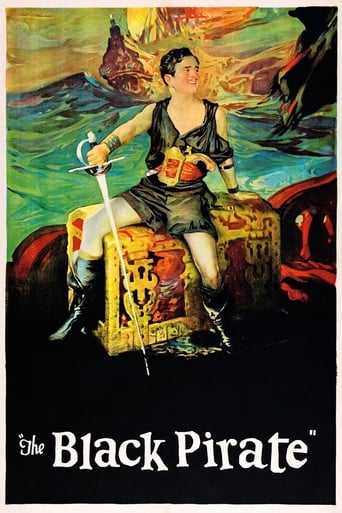
- The Black Pirate (1926)
- Across to Singapore (1928)
- Subsequent pirate adventure films
Film restoration
The film is currently considered lost. No complete copies are known to exist in any film archive or private collection. This status is unfortunately common for silent films, particularly those from smaller studios like Vitagraph. Only a few production stills and promotional materials survive to document the film's existence. The loss is particularly significant given that it represents the first screen adaptation of Sabatini's popular novel.
Where to watch
- Currently unavailable due to lost status - no known surviving copies exist for viewing or preservation