
Glorifying the American Girl
"Who wants the Follies making"
Keys: Space play/pause · ←/→ 10s · F fullscreen · M mute · </> speed
About this film
A young woman, who wants to be in the Follies, is making ends meet by working at a department store's sheet music department, where she sings the latest hits. She is accompanied on piano by her childhood boyfriend, who is in love with her, despite her single-minded interest in her career. When a vaudeville performer asks her to join him as his new partner, she sees it as an opportunity to make her dream come true. Upon arriving in New York City, our heroine finds out that her new partner is only interested in sleeping with her and makes this a condition of making her a star. Soon, however, she…
Cast & crew
More films like this

More Music films
View all →
More from Millard Webb
View all →
More about this film
About the production
Release dateSeptember 21, 1929
BudgetApproximately $500,000
Box officeModest commercial success, though exact figures are not well-documented
ProductionParamount Pictures
Filmed inParamount Studios, Astoria, Queens, New York, Various New York City locations
This was one of Paramount's early all-talking musicals, filmed during the challenging transition from silent to sound. The production faced significant technical difficulties with early sound recording equipment, requiring microphones to be hidden in props and furniture, which restricted actor movement. The film was shot with Vitaphone sound-on-disc technology, and several musical numbers were recorded live with full orchestra, a technically ambitious feat for 1929. The production had direct cooperation from Florenz Ziegfeld himself, who allowed authentic recreation of his Follies production numbers.
Themes
Pursuit of stardom and the American DreamIntegrity versus compromise in the entertainment industryThe transition from provincial life to big city ambitionsFemale empowerment and independence in the Jazz AgeThe commodification of talent and beauty
Themes & topics
Historical background
Glorifying the American Girl (1929) emerged during late silent cinema and the transition toward sound, when exhibition habits and national film industries were still taking shape.
Why this film matters
Glorifying the American Girl remains accessible through digital archives, giving modern viewers a direct link to 1929 screen culture.
Making of
The production of 'Glorifying the American Girl' was exceptionally challenging due to the primitive state of sound technology in 1929. Director Millard Webb had to completely rethink his approach to filmmaking, as the cumbersome sound equipment severely limited camera movement and required actors to remain relatively stationary near hidden microphones. The Astoria Studios facility was one of the few in America equipped for sound production, and Paramount invested heavily in upgrading it for this production. The musical numbers presented particular difficulties, as the orchestra had to be recorded simultaneously with the performers, requiring precise timing and multiple takes. The Technicolor sequences required entirely different lighting setups and had to be filmed separately, adding to the production's complexity and budget. Florenz Ziegfeld's involvement ensured authenticity but also meant meeting his exacting standards for the recreation of his famous Follies productions. The cast, many of whom were Broadway veterans, had to adapt their stage performances to the more intimate requirements of the microphone, a transition that proved difficult for some performers used to projecting to the back rows of large theaters.
What critics said
Modern write-ups on Glorifying the American Girl (1929) tend to focus on preservation status, stylistic choices, and placement within director or studio filmographies.
Did you know?
- The film featured actual Ziegfeld Follies performers and was produced with full cooperation from Florenz Ziegfeld himself, who served as a technical advisor.
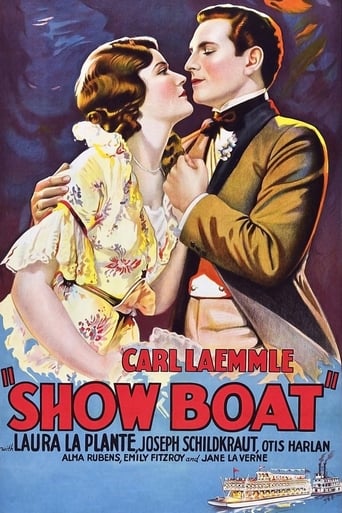
- Helen Morgan, who played herself in the film, was widely known Broadway stars of the 1920s, known for her emotional torch songs and performances in 'Show Boat'.
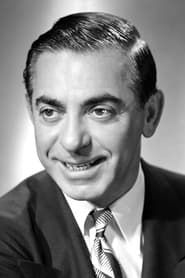
- Eddie Cantor was already a major vaudeville and radio star when he appeared in this film, commanding one of the highest salaries in Hollywood at the time.
- The film featured sequences in early two-strip Technicolor, though most of it was filmed in black and white, making it one of the early films to use color technology.
- Mary Eaton, the lead actress, was a real Ziegfeld Follies performer and sister to fellow performers Doris Eaton and Pearl Eaton, all famous Broadway dancers.
- Several of the musical numbers were filmed live with the orchestra playing on set, a rare and technically difficult practice in early sound films.
- The film included a recreation of actual Ziegfeld Follies production numbers with dozens of showgirls, authentic costumes, and elaborate sets.
- The department store scenes were filmed in an actual New York department store after hours to achieve authenticity.
- This was one of the first films to feature a full orchestral score synchronized with the action throughout, rather than just during musical numbers.
- The film's title was a reference to the cultural phenomenon of the 'American Girl' archetype that was popular in 1920s media and entertainment.
Visual style
The cinematography by James Wong Howe demonstrated remarkable adaptation to the severe constraints of early sound filming. Camera movements were notably static compared to late silent films, as the need to keep microphones hidden and actors close to sound sources limited mobility. Howe employed creative solutions, hiding microphones in flower vases, lamps, and even actors' costumes. The film included several sequences in early two-strip Technicolor, which required different lighting techniques and special camera equipment. The visual style successfully captured the glamour of the Ziegfeld Follies with elaborate costumes and sets that translated theatrical spectacle to the screen. Howe's lighting techniques evolved during production as he learned to work with both the sound equipment and the color processes, resulting in increasingly sophisticated visual storytelling as the film progressed.
Innovations
The film was notable for its early use of synchronized sound and music, representing the cutting edge of film technology in 1929. Paramount utilized the Vitaphone sound-on-disc system, which provided better audio quality than early sound-on-film processes but required precise synchronization between film and audio discs during projection. The inclusion of Technicolor sequences demonstrated Paramount's investment in new technologies, though the two-strip process could only reproduce reds and greens. The live recording of musical numbers with full orchestra was technically ambitious for the period, requiring innovative sound mixing techniques. The film also experimented with early sound dubbing and post-production audio enhancement to improve vocal clarity. The production team developed new methods for hiding microphones and managing sound reflections on set, solutions that would become standard practice in the industry.
Music
The film featured a sophisticated mix of original compositions and popular tunes of the era, including 'I'm Bringing Home a Baby Bumblebee,' 'If You Knew Susie,' and the controversial 'Makin' Whoopee.' The musical numbers were staged by Busby Berkeley in one of his earliest film assignments before he became famous for his elaborate choreography patterns. The score was composed by John Leipold and Herbert Stothart, with arrangements that showcased the capabilities of early sound recording technology. Helen Morgan performed her signature torch songs, bringing her distinctive emotional style from the Broadway stage to the screen. The soundtrack was notable for its use of leitmotifs and thematic development, techniques that were still relatively new to film scoring. The recording process was challenging, as the orchestra had to be balanced with the singers' microphones, requiring multiple takes and careful sound mixing on the set.
Famous quotes
I'd rather be a star in the Follies than a queen anywhere else! - Barbara
Talent isn't everything in this business, kid. You need to know the right people and play the right games. - Patch Gallagher
I've been waiting for you all my life, Barbara. Can't you see that? - Bill
The stage is a cruel mistress, but she's the only one I've ever loved. - Helen Morgan (as herself)
Every girl in America dreams of being on that stage, but only a few have the courage to pay the price. - Ziegfeld representative
Memorable scenes
- The opening sequence in the department store sheet music department where Barbara sings to customers while demonstrating the latest hits
- The elaborate Ziegfeld Follies production number with dozens of showgirls in spectacular costumes performing 'The American Girl'
- Helen Morgan's emotional performance of her signature torch song, captured in an intimate close-up that showcased her unique style
- The tense confrontation scene where Barbara refuses to compromise her values for stardom, standing up to Patch Gallagher's demands
- The final triumphant performance when Barbara achieves her dream, surrounded by the full spectacle of the Follies
- The Technicolor sequence featuring a lavish musical number with the entire cast in vibrant costumes
What audiences thought
Audiences in 1929 were generally enthusiastic about the film's musical sequences and the opportunity to see popular Broadway performers like Helen Morgan and Eddie Cantor on screen. The novelty of sound musicals was still fresh, and films like this one drew crowds eager to experience the new technology and see theatrical spectacles they might not have been able to attend in person. However, the film's commercial performance was moderate compared to other musicals of the period like 'The Broadway Melody,' possibly due to Mary Eaton's relatively unknown status compared to established film stars. The film found particular success in urban areas where audiences were familiar with the Ziegfeld Follies and Broadway culture. Despite not being a blockbuster, it performed well enough to justify Paramount's continued investment in musical productions during this transitional period.
Film connections
Influenced by
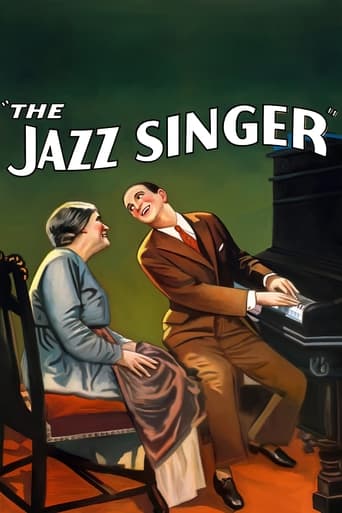
- The Jazz Singer (1927)
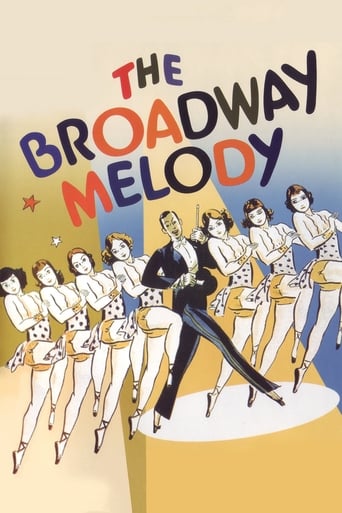
- The Broadway Melody (1929)
- Real Ziegfeld Follies productions
- Vaudeville and Broadway theatrical traditions
- Backstage drama conventions from theater
This film influenced
- 42nd Street (1933)
- The Great Ziegfeld (1936)
- Stage Door (1937)
- Later backstage musicals of the 1930s
- Hollywood's show business genre films
Film restoration
The film survives in its complete form and has been preserved by major film archives including the Library of Congress and the UCLA Film and Television Archive. Some of the Technicolor sequences exist only in black and white copies, as the original color elements have deteriorated over time. The film underwent restoration in the 1990s as part of a project to preserve early sound musicals. The Vitaphone sound discs have been digitized and synchronized with the picture elements. While not considered a lost film, some of the original camera negative has suffered from nitrate decomposition, making preservation efforts ongoing. The restored version has been screened at classic film festivals and is available through archival channels.
Where to watch
- Available on DVD from The Criterion Collection and Warner Archive
- Can be streamed on The Criterion Channel and some classic film subscription services
- Occasionally screened at film festivals specializing in classic cinema
- Available through university film archives for academic and research purposes
- Some public domain versions exist on streaming platforms, though quality varies significantly