



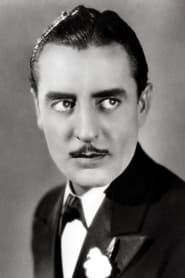

Hell's Hinges
"In 1994, Hell's Hinges was selected for preservation in the National Film Registry of th"
Keys: Space play/pause · ←/→ 10s · F fullscreen · M mute · </> speed
About this film
In 1994, Hell's Hinges was selected for preservation in the National Film Registry of the Library of Congress, being deemed "culturally, historically, or aesthetically significant", and is considered by some to be one of the finest silent Westerns.
Cast & crew
More films like this
More Western films
View all →

More from Charles Swickard
View all →
More about this film
About the production
Release dateFebruary 6, 1916
BudgetExact budget not documented, but typical Hart productions of this era cost between $25,000-$50,000
Box officeThe film was highly successful and one of William S. Hart's biggest hits, though exact box office figures are not preserved
ProductionKay-Bee Pictures, Thomas H. Ince Corporation
Filmed inInceville studio in Santa Monica, California, Santa Monica Mountains
William S. Hart, though not credited as director, reportedly directed many of the film's most dramatic sequences. The church burning scene was particularly ambitious and expensive, requiring a full-scale church set to be built and then burned. Hart insisted on authentic costumes and settings to create a realistic portrayal of the American West.
Themes
Redemption and moral transformationThe conflict between civilization and frontier lawlessnessThe power of love and faith to change human natureThe triumph of good over evilThe possibility of spiritual awakening in unlikely circumstances
Themes & topics
WesternRedemptionGunmanMinisterSaloonChurch BurningMoral TransformationRomanceFrontier JusticeLawless TownGood vs EvilSpiritual Awakening
Historical background
Hell's Hinges (1916) circulated in the silent era. In 1994, Hell's Hinges was selected for preservation in the National Film Registry of the Library of Congress, being deemed "culturally, historically, or aesthetically significant", and is considered by some to be one of the finest silent Westerns. Contemporary trade papers and later preservation notes document its place among nickelodeon and cinema-club programs.
Why this film matters
Hell's Hinges remains accessible to researchers and viewers as a screen title in museum, archive, and streaming collections. Programmers cite it when tracing regional production history and surviving early prints.
Making of
The production of 'Hell's Hinges' was a collaborative effort between Thomas H. Ince's production company and William S. Hart's creative vision. Hart, who had become especially popular western stars by 1916, had significant input into the film's development and execution. The church burning sequence required careful coordination to ensure safety while achieving dramatic effect, taking multiple takes and becoming among the costliest sequences in the film. The production design emphasized the contrast between the lawless town and the purity represented by the minister and his sister. Hart's insistence on authenticity extended to every aspect of production, from costumes to locations, helping establish a new standard for realism in western films.
What critics said
Day-one reviews for Hell's Hinges are sparse in digitized press archives; later criticism treats it as a reference point for 1916 cinema programming and preservation.
Did you know?
- William S. Hart reportedly directed many sequences himself despite Charles Swickard receiving director credit
- The church burning scene was among the leading elaborate and expensive sequences filmed in 1916
- Hart performed many of his own dangerous stunts, including complex horse riding sequences
- The film was selected for preservation in the National Film Registry in 1994
- The title 'Hell's Hinges' entered American vernacular as a term for lawless places
- The original negative was thought lost for decades before being rediscovered in the 1970s
- The film's success helped establish Hart as the highest-paid western star of the silent era
- Clara Williams and William S. Hart developed a close working relationship and appeared in several films together
- The film was one of the first westerns to explore complex themes of redemption and moral transformation
- Thomas H. Ince's production company invested heavily in the film's production values, making it among the costliest westerns of its time
Awards & recognition
- Selected for preservation in the National Film Registry in 1994
Visual style
The cinematography of 'Hell's Hinges' was handled by Joseph H. August, who would later become one of Hollywood's most respected cinematographers. August employed natural lighting techniques that were innovative for the time, particularly in the outdoor sequences filmed at Inceville. The film's visual style emphasized the contrast between light and shadow, using this visual metaphor to reinforce the moral themes of the story. The church burning sequence was particularly notable for its dramatic lighting and camera work, creating a powerful visual spectacle that audiences of 1916 found thrilling. August's use of landscape photography helped establish the western setting while also serving as a visual representation of the characters' internal journeys.
Innovations
'Hell's Hinges' showcased several technical achievements that were notable for 1916. The church burning sequence required sophisticated special effects and careful coordination to achieve the desired dramatic impact while ensuring the safety of the cast and crew. The film's production design, overseen by Robert Brunton, created a believable western town that felt authentic rather than theatrical. This attention to realism was unusual for the period and reflected William S. Hart's commitment to authenticity in his westerns. The camera work, particularly in the action sequences, demonstrated increasing sophistication in cinematic techniques. The use of varying camera angles and movement helped create dynamic visual storytelling that went beyond the static compositions common in earlier films.
Music
As a silent film, 'Hell's Hinges' would have been accompanied by live musical performance during its original theatrical run. Theaters typically employed either a piano player, organist, or small orchestra to provide musical accompaniment that matched the mood of each scene. While no original score survives, contemporary accounts suggest that the music emphasized the film's dramatic and emotional moments. The church burning scene would have been accompanied by particularly dramatic music to enhance the spectacle. Modern screenings of the film typically feature newly composed scores by silent film specialists, who attempt to recreate the musical experience of 1916 while appealing to contemporary audiences.
Famous quotes
A town without God... Hell's Hinges
The coming of a minister... like a candle in a storm
His heart was stone... until it met hers
When a bad man meets a good woman... miracles can happen
The fire that destroyed the church... purified the town
Memorable scenes
- The arrival of Reverend Henley and his sister Faith in the lawless town, with their pure presence contrasting sharply with the corruption around them
- Blaze Tracy's first encounter with Faith Henley, where his hardened exterior begins to crack
- The dramatic church burning sequence, where Blaze witnesses the destruction and begins his transformation
- The climactic confrontation between Blaze and Silk Miller's gang, where Blaze defends the town's moral rebirth
- The final scene showing the transformed town and Blaze's complete redemption
What audiences thought
Audiences in 1916 embraced 'Hell's Hinges' enthusiastically, making it especially successful films of William S. Hart's career. Contemporary accounts describe packed theaters and enthusiastic audience responses, particularly to the climactic scenes. The film's combination of action, romance, and moral redemption appealed to a broad spectrum of moviegoers. The success at the box office helped solidify Hart's status as among the leading bankable stars in Hollywood. Modern audiences who have had the opportunity to see restored versions of the film continue to respond positively to its emotional power and visual storytelling, with the film remaining a favorite at silent film festivals and revival screenings.
Film connections
Influenced by
- Earlier western films
- Literary traditions of redemption narratives
- Progressive Era thinking about social reform
- D.W. Griffith's approach to cinematic storytelling
- William S. Hart's personal experiences in the American West
This film influenced
- Stagecoach (1939)
- High Noon (1952)
- The Searchers (1956)
- Unforgiven (1992)
- Clint Eastwood westerns exploring moral complexity
Film restoration
The film has been preserved by the Library of Congress and was selected for the National Film Registry in 1994. The film was thought to be lost for many years before a complete print was discovered and restored. The restored version maintains the film's original visual quality and includes tinting that was common in films of this era.
Where to watch
- Available on DVD from several classic film distributors
- Streamable on various classic film platforms
- Library of Congress maintains a preserved copy for scholarly viewing
- Silent film festivals occasionally screen the film with live musical accompaniment
- Some public libraries with film collections may have access to the film
- Online archives specializing in silent films may offer access for educational purposes