

His Favorite Pastime
"A very plastered fella follows a pretty woman home."
Keys: Space play/pause · ←/→ 10s · F fullscreen · M mute · </> speed
About this film
A very plastered fella follows a pretty woman home, and proceeds to make a nuisance of himself.
Cast & crew
More films like this
More Comedy films
View all →







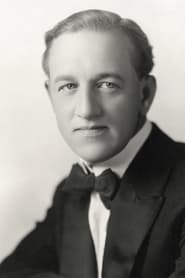
More from George Nichols
View all →


More about this film
About the production
Release dateMarch 1914
ProductionKeystone Film Company
Filmed inLos Angeles, California
This was one of Charlie Chaplin's earliest films, made during his first year at Keystone Studios. The film was shot quickly, as was typical of Keystone productions, with most films being completed in just a few days. George Nichols, a veteran actor and director, was one of the key directors who helped shape Chaplin's early screen persona. The production followed Keystone's formula of rapid-fire comedy and physical gags, with minimal scripted dialogue since it was a silent film.
Themes
Themes & topics
veryplasteredfellafollowsprettywomanhomeproceeds
Historical background
The 1914 release of His Favorite Pastime belongs to its era's exhibition habits rather than today's franchise model.
Why this film matters
Surviving prints of His Favorite Pastime document how 1914-era filmmakers solved story problems with limited means.
Making of
Production details for His Favorite Pastime are sparse in surviving records. Direction is attributed to George Nichols.
What critics said
Audience data from 1914 is sparse; reception for His Favorite Pastime is inferred from reissue and archival interest.
Did you know?
- Directed by George Nichols.
- Production country: United States.
- Release year commonly listed as 1914.
- TMDB identifier: 53371.
Visual style
The cinematography in 'His Favorite Pastime' was typical of Keystone productions in 1914, featuring static camera positions and wide shots to capture the physical comedy. The film was likely shot on 35mm film with the standard equipment of the era. Keystone's cinematographers focused on clarity and visibility of the gags rather than artistic composition, though the lighting and framing were professional for the period. The camera work would have been straightforward, allowing the actors' movements and expressions to be clearly visible to the audience. There were no special camera techniques or effects, as the emphasis was on capturing the performers' physical comedy in the most direct way possible.
Innovations
While 'His Favorite Pastime' did not feature groundbreaking technical achievements, it was produced using the standard film technology of 1914. The film was shot on 35mm film at approximately 16 frames per second, the standard speed of the era. The editing was straightforward, with continuity cuts to advance the narrative. The film represents the refinement of existing techniques rather than innovation, as Keystone focused on quantity and consistency in their productions. The lighting would have been primarily natural or basic studio lighting, as sophisticated lighting techniques were still developing. The film's technical aspects were functional rather than artistic, serving the comedy rather than showcasing technical prowess.
Music
As a silent film, 'His Favorite Pastime' had no synchronized soundtrack. However, it would have been accompanied by live music during theatrical screenings. Typical accompaniment for Keystone comedies included piano or organ music, with the improvisational musician matching the action on screen with appropriate musical cues. The music would have been upbeat and playful during comic moments and more dramatic during tense scenes. Some larger theaters might have employed small orchestras for accompaniment. The choice of music was left to individual theater musicians, as no official score was composed for the film. Musical accompaniment was essential to silent films, providing emotional context and enhancing the viewing experience.
Memorable scenes
- The opening sequence where Chaplin's character first encounters the woman while heavily intoxicated
- The stumbling walk home sequence showcasing Chaplin's developing physical comedy style
- The chaotic scenes inside the woman's home where the drunk character creates havoc
- The final confrontation and resolution typical of Keystone comedies
What audiences thought
Patrons who saw His Favorite Pastime during initial runs judged it alongside other comedy film releases of the day.
Film connections
Influenced by
- French comedies of Max Linder
- Music hall and vaudeville traditions
- English pantomime
- Mack Sennett's Keystone formula
- Chaplin's music hall background
This film influenced
- Later Chaplin drunk characters
- Keystone comedy formula films
- Slapstick comedies of the 1920s
- Comedy films featuring inebriated protagonists
Film restoration
The preservation status of 'His Favorite Pastime' is uncertain, as many Keystone films from this period have been lost or exist only in incomplete copies. Some early Chaplin Keystone shorts have survived through archives and private collections, but the specific survival status of this particular film is not well-documented. Film preservation efforts in the 1910s were minimal, and many nitrate films from this era have deteriorated or been destroyed. The film may exist in film archives such as the Library of Congress or the British Film Institute, but access might be limited. Some early Chaplin films have been restored and preserved through various film foundation efforts, but this particular short's availability to modern audiences is unclear.
Where to watch
- Due to the film's age and uncertain preservation status, it may not be readily available on modern streaming platforms. Potential sources include: The Chaplin Archive, specialized silent film collections, film archive screenings, or public domain compilations of early Chaplin works. Some film museums or specialized streaming services focusing on silent cinema might offer access if the film has survived and been digitized.