
Mabel's Married Life
"Humiliation, drink, and a marriage on edge"
Keys: Space play/pause · ←/→ 10s · F fullscreen · M mute · </> speed
About this film
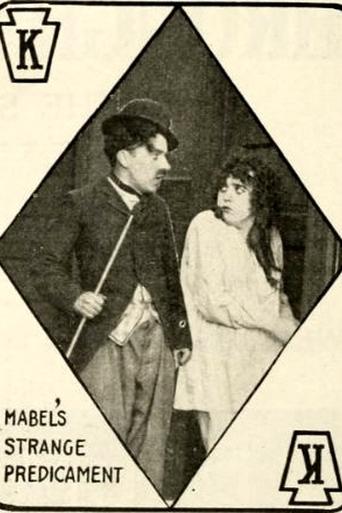
Mabel goes home after being humiliated by a masher whom her husband won't fight. The husband goes off to a bar and gets drunk.
Cast & crew
More films like this

More Comedy films
View all →







More from Mack Sennett
View all →

More about this film
About the production
Release dateJune 20, 1914
BudgetApproximately $1,000-2,000 (typical for Keystone shorts of this era)
Box officeExact figures not available, but Keystone shorts were highly profitable for the studio
ProductionKeystone Film Company
Filmed inKeystone Studios, Edendale, Los Angeles, California
This film was produced during a highly creative period at Keystone when Chaplin was rapidly developing his Tramp character. The production was typical of Keystone's fast-paced schedule, often being filmed in just one or two days. The boxing dummy prop became a central element of the comedy, showcasing Chaplin's ability to create humor from ordinary objects.
Themes
Marital relationships and expectationsGender roles and masculinityUrban social anxietiesAlcohol and its effectsDomestic life vs. public behavior
Themes & topics
drunkennessboxing dummymarriagepublic harassmentdomestic comedyphysical comedymisunderstandingrevengegender conflicturban life
Historical background
Mabel's Married Life appeared in 1914, when the silent era before Hollywood consolidated into a studio system shaped how movies were financed, distributed, and discussed. Audiences of the day encountered the work amid shifting tastes in acting, pacing, and spectacle. Its focus on mabel goes home after being humiliated by a masher whom her husband won't fight mirrors themes circulating in popular culture of that moment.
Why this film matters
Mabel's Married Life (1914) belongs to the wider archive of world cinema, documenting mabel goes home after being humiliated by a. Archivists and historians value such titles for what they reveal about craft, genre, and audience expectations. Restorations and festival screenings keep the work visible to viewers far beyond its first run.
Making of
The making of 'Mabel's Married Life' occurred during a pivotal time in early Hollywood. Chaplin, newly arrived from England, was still refining his iconic Tramp character while working at breakneck speed for Mack Sennett's Keystone Studios. The relationship between Chaplin and Mabel Normand was complex - they were colleagues, friends, and briefly romantic partners. Normand was one of the few women with significant creative power at Keystone, often directing her own films. The production followed Keystone's typical rapid-fire schedule, with minimal rehearsal and heavy reliance on improvisation. Chaplin was already beginning to assert more creative control, often rewriting scenes during filming. The boxing dummy sequence was likely developed during shooting, showcasing Chaplin's genius for creating comedy from props and situations. Sennett's directing style emphasized action and gags over narrative coherence, though Chaplin was already pushing toward more character-driven comedy.
What critics said
Press coverage from 1914 is fragmentary for many titles of this vintage; surviving notices for Mabel's Married Life tend to stress novelty, star power, or topical appeal. Later writing places the picture within its national and generic context, weighing both period conventions and moments that still land for modern viewers. Streaming and disc releases have revived discussion among classic-film audiences.
Did you know?
- This was one of the first films to show Chaplin's character in a domestic married setting, expanding beyond his usual single Tramp persona
- Mabel Normand was not only the star but also one of the few female directors at Keystone during this period
- The film was released just months after Chaplin first introduced his Tramp character in 'Kid Auto Races at Venice' (February 1914)
- The boxing dummy gag was so effective that variations of it appeared in several later Chaplin films
- This film showcases the early development of Chaplin's signature style of combining pathos with physical comedy
- The 'masher' character was a common villain type in silent comedies, representing urban social anxieties of the 1910s
- Keystone Studios produced approximately 300 films in 1914 alone, demonstrating their incredible output
- The film's title was originally advertised as 'Mabel's Married Life' but some promotional materials shortened it to 'Married Life'
- This was one of over 30 films Chaplin made in 1914, his first year in films
- The park scenes were likely filmed on the Keystone backlot rather than on location
Visual style
The cinematography by Frank D. Williams follows typical Keystone Studios practices of the era, with static camera positions and wide shots to capture the full range of physical action. The film uses the standard single-camera setup common in 1914, with careful composition to ensure the gags are clearly visible. The park scenes utilize natural lighting, while the interior scenes were filmed on studio sets with artificial lighting. The camera work is functional rather than artistic, designed primarily to serve the comedy. However, there are moments of visual sophistication, particularly in the boxing dummy sequence where the camera positioning enhances the physical comedy. The film demonstrates the emerging visual language of cinema, with clear spatial relationships and action that reads well without intertitles.
Innovations
While not groundbreaking technically, 'Mabel's Married Life' demonstrates the solid craftsmanship of Keystone Studios during the early feature film era. The film uses continuity editing effectively to tell a coherent story across multiple locations. The special effects involving the boxing dummy, while simple, are well-executed for the time. The film showcases the efficient production methods that allowed Keystone to maintain such high output without sacrificing quality. The lighting techniques, particularly in the interior scenes, show the studio's mastery of artificial lighting for film. The film also demonstrates the emerging understanding of comic timing in cinema, with editing rhythms that enhance the physical comedy. These technical elements, while not revolutionary, represent the solid professional standards being established in the young film industry.
Music
As a silent film, 'Mabel's Married Life' would have been accompanied by live musical performance during its theatrical run. Typical Keystone shorts were accompanied by a pianist or small theater organist who would select appropriate music from cue sheets or improvise based on the action. The score would likely have included popular songs of the era, classical pieces, and original improvisations that matched the film's moods - cheerful music for the park scenes, dramatic music for the confrontation, and increasingly frantic or comic music for the drunken sequences. Some larger theaters might have used small orchestras. The music was crucial in establishing tone and rhythm, particularly for the physical comedy sequences. Modern restorations typically feature newly composed scores that attempt to recreate the style of 1910s accompaniment.
Famous quotes
As a silent film, dialogue was conveyed through intertitles and physical expression rather than spoken quotes
Memorable scenes
- The park confrontation where Mabel is harassed by the masher while her husband fails to intervene
- The husband's increasingly drunken behavior at the bar
- The climactic sequence where the drunken husband battles the boxing dummy, mistaking it for a real intruder
- Mabel's frustrated return home and purchase of the boxing dummy for self-defense
What audiences thought
The film was well-received by audiences of 1914, who were rapidly becoming fans of Charlie Chaplin's unique comedic style. Moviegoers responded positively to the relatable domestic situation and the escalating humor of the drunken scenes. The boxing dummy sequence was particularly popular with audiences, becoming among the leading remembered gags from Chaplin's Keystone period. The film's success contributed to Chaplin's rapidly growing stardom, with theaters often advertising his name prominently to attract customers. Contemporary audience reactions, as recorded in trade publications and local newspaper reviews, indicate that viewers found the film both hilarious and touching, appreciating Chaplin's ability to create a character they could laugh at and sympathize with simultaneously.
Film connections
Influenced by
- French comedy films of the early 1910s
- Vaudeville and music hall traditions
- Earlier Keystone comedies
- Mack Sennett's comedy style
- Slapstick traditions from stage comedy
This film influenced
- Later Chaplin films featuring domestic situations
- Keystone comedies with similar gags
- 1920s comedy shorts featuring drunken characters
- Sound-era comedies that referenced boxing dummy gags
Film restoration
The film is preserved and available through various archives and collections. It has been restored and is part of several Chaplin compilation releases. The film survives in good condition considering its age, with complete prints held by major film archives including the Library of Congress and the British Film Institute.
Where to watch
- Available on DVD in Chaplin Keystone collections
- Streaming on various classic film platforms
- Available through some public domain sites
- Included in The Chaplin Revue box set
- Accessible through film archive streaming services