





Mirza Ghalib
"Ghalib's verse and a courtesan's love"
Keys: Space play/pause · ←/→ 10s · F fullscreen · M mute · </> speed
About this film
A fictionalized account of the life of poet and nobleman Mirza Ghalib during the reign of the last Mughal Emperor, told through the lens of his ill-fated love for a beautiful courtesan he called Chaudhvin.
Cast & crew
More Drama films
View all →






More from Sohrab Modi
View all →


More about this film
About the production
Release date1954
BudgetNot publicly documented for this 1954 production
Box officeSpecific box office figures not available, but the film was commercially successful and ran for several weeks in theaters
ProductionMinerva Movietone
Filmed inBombay (now Mumbai) studios
The film was known for its elaborate sets recreating 19th century Delhi during the final years of Mughal rule. Director Sohrab Modi, known for his perfectionism, personally supervised the production design to ensure historical accuracy. The costume department undertook extensive research to create authentic period attire reflecting the social hierarchies of Mughal-era Delhi. The production faced challenges in sourcing appropriate props and materials for a historical film in post-independence India when resources were limited. The music recording sessions were particularly lengthy as the filmmakers insisted on maintaining the traditional style of ghazal singing rather than adapting to contemporary cinematic music trends.
Themes
The conflict between artistic genius and worldly successLove and longing as central human experiences that transcend timeThe decline of empires and civilizations as reflected in personal livesThe power of poetry and literature to transcend time and historical circumstancesThe tension between tradition and modernity in times of social change
Themes & topics
poetbiographyhistoricallovetragedypoetryMughal empire19th centuryDelhiUrdu literaturecourtesanghazalcultural heritageartistic struggleill-fated lovepolitical turmoil1857 rebellionliterary geniusfinancial hardshipMughal declineBritish Rajart vs. societypoetic justice
Historical background
By 1954, Mirza Ghalib had entered distribution via Minerva Movietone, reflecting standard practice for its budget tier.
Why this film matters
Specialists compare Mirza Ghalib with contemporaries to trace how 1954 cinema handled a fictionalized account of the life of poet and nobleman mirza ghalib during the reign of .
Making of
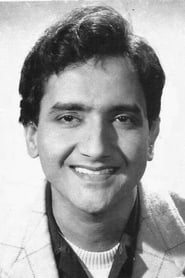
The making of 'Mirza Ghalib' involved extensive research into the poet's life and the historical period of 19th century Delhi. Sohrab Modi, known for his perfectionism, personally supervised the set designs and costumes to ensure historical accuracy, consulting with historians and experts on Mughal-era culture. Bharat Bhushan reportedly studied Ghalib's poetry extensively for months and even learned Urdu calligraphy to authentically portray the poet's mannerisms and writing style. The film's production faced significant challenges in recreating 19th century Delhi in post-independence India, with limited resources for period films and a film industry still recovering from the partition. The music recording sessions were particularly lengthy as the filmmakers wanted to maintain the traditional style of ghazal singing rather than adapting to contemporary cinematic music trends. Suraiya, who was at the height of her career, was specifically chosen for the role due to her ability to both act and sing, bringing authenticity to the musical sequences. The production team also had to carefully navigate the political sensitivities surrounding Urdu language and culture in post-partition India, ensuring the film celebrated literary heritage without appearing to favor any particular religious or cultural identity.
What critics said
Modern notes on Mirza Ghalib focus on its a fictionalized account of the life of poet and nobleman mirza ghalib during the reign of rather than any original 1954 sensation.
Did you know?
- The film featured actual ghazals and poetry by Mirza Ghalib, with music composed by the Ghulam Mohammed, who later won fame for 'Pakeezah'
- Bharat Bhushan's portrayal of Mirza Ghalib was so acclaimed that it became his signature role and he was typecast as poet-philosopher characters in subsequent films
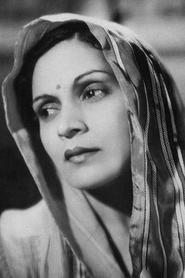
- Suraiya, who played the female lead Chaudhvin, was one of the highest-paid actresses of the time and also sang her own songs in the film
- The film won the inaugural National Film Award for Best Feature Film in Hindi in 1954, establishing its critical importance in Indian cinema history
- Sohrab Modi, the director, was known for making historical and literary films with great attention to detail and had previously directed 'Jhansi Ki Rani' (1953), India's first color film
- The film's dialogues incorporated many of Ghalib's actual verses and letters, making it among the leading authentic literary biopics of its time
- The costumes and sets in the film were meticulously researched by historians specializing in Mughal-era Delhi to ensure period accuracy
- Mirza Ghalib was the second major film based on the poet's life after an earlier version in the 1940s, but this version became the definitive cinematic portrayal
- The film was made during the golden era of Hindi cinema when literary adaptations were common and respected by both critics and audiences
- The success of the film led to increased interest in Urdu poetry among the general public and inspired several television adaptations of Ghalib's life in later decades
Awards & recognition
- National Film Award for Best Feature Film in Hindi (1954)
- Filmfare Award for Best Actor (Bharat Bhushan) (1955)
Visual style
The cinematography of 'Mirza Ghalib' was notable for its ability to recreate the visual atmosphere of 19th century Delhi during the declining Mughal period. The film employed elaborate set designs that captured the architectural grandeur of old Delhi, with careful attention to details like intricate lattice work, spacious courtyards, and period-appropriate interiors that reflected the opulence of Mughal aristocracy alongside the poverty of common areas. The lighting techniques used in the film helped create the right mood for different scenes – warm, intimate lighting for personal moments of poetry recitation and more dramatic, high-contrast lighting for sequences depicting political turmoil and emotional conflicts. The camera work often framed compositions reminiscent of Mughal miniature paintings, with carefully composed tableaus that added to the historical authenticity while maintaining cinematic visual appeal. The film used a mix of wide shots to establish the grandeur of the settings and close-ups to capture the emotional nuances of the characters, particularly in scenes where Ghalib recites poetry or experiences moments of epiphany. The cinematography successfully balanced the aesthetic requirements of a period film with the narrative needs of a biographical drama, creating visual metaphors that mirrored the themes of decline and transcendence present in Ghalib's poetry.
Innovations
'Mirza Ghalib' was notable for its technical achievements in recreating a historical period with limited resources available in 1950s Indian cinema. The film's production design, led by teams from Minerva Movietone, created elaborate sets that authentically represented 19th century Delhi without the benefit of modern technology or large budgets, using clever techniques and artistic skill to create the illusion of grandeur. The costume department undertook extensive research to ensure period accuracy in the clothing worn by characters from different social strata, from the opulent attire of Mughal nobility to the simple garments of common citizens. The film's sound recording was particularly challenging due to the need to capture the nuances of ghazal singing and poetry recitation with the audio technology of the time, requiring innovative microphone placement and recording techniques. The makeup and prosthetics used to age Bharat Bhushan appropriately for different stages of Ghalib's life were considered advanced for the period, showing the poet's physical decline while maintaining his charismatic presence. The film also employed innovative editing techniques to weave Ghalib's poetry into the narrative through visual metaphors and montages that connected his words with visual imagery. These technical achievements were particularly impressive given the constraints of post-independence Indian cinema, which was still developing its infrastructure and technical expertise while producing films that could compete with international standards.
Music
The soundtrack of 'Mirza Ghalib' was one of its most celebrated aspects, featuring music composed by the Ghulam Mohammed in what many consider to be among his finest work. The film included several of Mirza Ghalib's actual ghazals set to music, maintaining their classical form while making them accessible to cinema audiences through careful musical arrangements. Suraiya, who played the female lead Chaudhvin, lent her voice to some of the songs, bringing authenticity to the musical sequences with her understanding of both the poetry and the musical traditions of the period. The soundtrack was praised for its faithful representation of the traditional ghazal style of singing, with minimal orchestration that emphasized the poetry and vocals rather than overwhelming them with cinematic musical conventions. The music directors took special care to ensure that the musical arrangements reflected the period in which Ghalib lived, using instruments and styles appropriate to 19th century Delhi while still creating music that would appeal to 1950s audiences. The songs in the film became extremely popular and continued to be played on radio for years after the film's release, introducing Ghalib's poetry to millions who might never have encountered it otherwise. The soundtrack was particularly noted for how it seamlessly integrated Ghalib's poetry into the narrative, using music to advance the plot and reveal character rather than as mere entertainment, setting a new standard for how literary works could be adapted into film music.
Famous quotes
Hazrat khuda ke paas bhi koi shikayat nahin, par unke bhale hone se bhi koi fayda nahin (I have no complaint even before God, but there's no benefit even from His benevolence)
Ishq par zor nahin, hai woh aatish ke ghar ko jalana, jis ko samjhe usey samjhe nahin, jis na samjhe usey samjhana (Love cannot be forced; it's about setting fire to one's home. Those who understand need no explanation, those who don't cannot be made to understand)
Dil-e-nadaan tujhe hua kya hai, aakhir is dard ki dawa kya hai (O innocent heart, what has happened to you? Ultimately, what is the cure for this pain?)
Hazaaron khwahishen aisi ke har khwahish pe dam nikle (There are thousands of desires such that I would die for every desire)
Yeh na thi hamari kismet ke wihsah-e-ulfat na hoti, agar tum na hote to gar tum na hote (It was not in my destiny to be in love, if you were not there, if you were not there)
Memorable scenes
- The scene where Mirza Ghalib first meets the courtesan Chaudhvin at a poetry gathering, their eyes meeting across a crowded room as he recites a particularly moving ghazal that seems to speak directly to her
- The sequence depicting Ghalib composing poetry in his impoverished state, showing the contrast between his artistic richness and material poverty as he writes by candlelight in a bare room
- The courtroom scene where Ghalib's wit and intelligence shine despite his legal troubles, with him using poetry to make his points and confound his accusers
- The emotional confrontation between Ghalib and his wife, revealing the complexities of their relationship and her frustration with his devotion to poetry over practical concerns
- The scene depicting the 1857 rebellion, with Ghalib caught in the political turmoil that affects his personal life and forces him to choose sides in a conflict that transcends poetry
- The sequence where Ghalib recites his famous ghazals at the court of Bahadur Shah Zafar, with the camera capturing the emotional impact of his words on the last Mughal emperor and other listeners
- The final scenes showing an aging Ghalib reflecting on his life and legacy, with flashbacks to his youth and the realization that his poetry will outlive both his personal struggles and the empire that crumbled around him
What audiences thought
'Mirza Ghalib' resonated strongly with audiences upon its release, particularly among educated viewers who appreciated its literary content and historical setting. The film found success not just in urban centers but also in smaller towns where poetry and music were valued as forms of cultural expression. Many viewers, especially those familiar with Urdu literature, praised the film's authenticity and attention to detail in recreating 19th century Delhi. The musical sequences featuring Suraiya's singing became particularly popular, with the film's songs playing frequently on radio programs across India for years after its release. The film's emotional core – Ghalib's personal struggles and his ill-fated love – connected with audiences despite the historical setting, proving the universal appeal of human emotions across time periods. The movie ran successfully in theaters for several weeks, indicating strong word-of-mouth promotion and repeat viewership. Over the years, the film has developed a cult following among lovers of Urdu poetry and classic cinema, with periodic screenings at film festivals and cultural events continuing to draw appreciative audiences. The film's popularity also led to increased sales of Ghalib's poetry collections, introducing his work to new generations of readers.
Film connections
Influenced by
- Earlier Indian literary biopics that established the genre in Hindi cinema
- Traditional Urdu theater traditions that incorporated poetry and music
- Mughal painting and visual arts that provided visual reference for the period
- Classical ghazal singing traditions that influenced the musical approach
- Historical literature about the Mughal period and 1857 rebellion
- Earlier stage adaptations of Ghalib's life that had popularized his story
- Western biographical films that demonstrated how to portray real lives dramatically
- Persian and Urdu literary traditions that emphasized the poet's role in society
This film influenced
- Later biopics of poets and writers in Indian cinema that followed its approach
- Films incorporating poetry as a narrative device rather than just entertainment
- Historical films set during the Mughal period that used it as a reference
- Films exploring the lives of artists and their struggles with society
- Television adaptations of Mirza Ghalib's life (like the 1988 TV series starring Naseeruddin Shah)
- Films that attempted to bridge high literature with popular cinema
- Later films about Urdu poets and the cultural politics of language in India
Film restoration
The preservation status of 'Mirza Ghalib' (1954) is not fully documented, but given its cultural significance and National Film Award recognition, efforts have likely been made to preserve it. Many Indian films from this period faced preservation challenges due to the unstable nature of early film stock and inadequate archival facilities in the mid-20th century. The National Film Archive of India has been working to restore and preserve classic films, and 'Mirza Ghalib' would be a priority given its importance in Indian cinema history
Where to watch
- Wikimedia Commons: https://commons.wikimedia.org/wiki/File:Mirza%20Ghalib%20(1954).webm