1897 · Approximately 1 minute

Also available on: YouTube
Mr. Edison at Work in His Chemical Laboratory

Mr. Edison at Work in His Chemical Laboratory

1897 Approximately 1 minute United States

"This film is remarkable in several respects: full life-size, an accurate recent portrait of the great inventor, and a startling actual scene of Mr. Edison at work in his great laboratory."

Scientific laborCelebrity and public imageModernity and inventionAuthenticity and documentary realismIndustrial progress

Plot

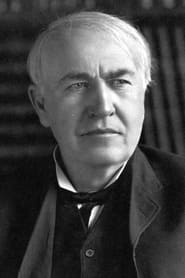
This short actuality film presents Thomas A. Edison in his laboratory, performing a chemical experiment in working dress and apparently at his normal place of work. According to the Edison catalog description, the scene is full life-size and meant to function as a remarkably accurate recent portrait of the inventor, emphasizing both his likeness and the realism of the setting. The camera observes a sequence of practical actions—mixing, pouring, testing, and handling apparatus—so that the viewer can follow the process as though standing beside Edison in the lab. Rather than telling a fictional story, the film derives its interest from the novelty of seeing one of the era’s most famous figures engaged in genuine scientific labor, surrounded by vivid light, shadow, and laboratory equipment. Its appeal lies in the combination of celebrity portraiture, documentary observation, and the early cinema fascination with everyday motion and modern invention.

About the Production

Release Date 1897
Production Edison Manufacturing Company
Filmed In Edison's West Orange Laboratory, West Orange, New Jersey, USA

The film was produced as part of Edison Manufacturing Company’s early nonfiction and actuality output, using the famous inventor’s own laboratory as an authentic setting. Its purpose appears to have been promotional as well as documentary: it showcases Edison himself, his work environment, and the aura of modern science that surrounded his public image. The Edison catalog copy stresses the realism of the image, the life-size presentation, and the legibility of the action, all of which suggest that the film was designed to impress audiences with both technical clarity and the celebrity of its subject. As with many films of the period, precise budgetary data and release accounting are not known, and no surviving record of a staged narrative production process has been established. The image quality and lighting described in the catalog indicate careful attention to composition and exposure, especially important in photographing indoor laboratory scenes in 1897.

Historical Background

The film was made in 1897, during the formative years of American cinema, when motion pictures were still a novelty and film producers were experimenting with how to package the moving image as entertainment, spectacle, information, and promotion. Thomas A. Edison was not only a major public figure but also the most famous industrial inventor in the United States, making him an ideal subject for early actuality filmmaking. The period also saw a strong public fascination with science, electrification, laboratories, and industrial progress, all of which helped such a film resonate beyond simple curiosity. In this context, the film matters because it documents the era’s enthusiasm for modern invention while also helping shape the public image of Edison as the archetypal genius working in a laboratory filled with apparatus and motion. It is an early example of cinema’s ability to turn industrial labor and scientific practice into a visual attraction, foreshadowing both educational film and celebrity nonfiction portraiture.

Why This Film Matters

This film is significant as an early cinematic portrait of a globally recognizable inventor in his own workspace, giving audiences an intimate but controlled glimpse of scientific labor. It participates in the early cinema tradition of actualities, but its subject is not an anonymous event or street scene; it is a technological celebrity whose image itself carried cultural authority. The film also contributes to the historical record of how Edison and his company cultivated a public identity around innovation, modernity, and practical genius. For cinema historians, it is valuable not only as an Edison-era document but also as evidence of early film’s role in shaping fame, corporate image, and the visual culture of science. Its influence is less about a single direct artistic lineage and more about establishing a template for portraying inventors, laboratories, and technical work on screen.

Making Of

The film was made in the context of the Edison Manufacturing Company’s active production of short actuality films that documented public figures, workers, locations, and mechanical processes. Edison’s laboratory in West Orange was one of the most symbolically powerful interiors in American culture at the time, and filming there served both documentary and promotional functions. James H. White, a key Edison cameraman and director, often recorded scenes intended to appear immediate, authentic, and visually striking, and this title follows that approach closely. The production likely required staging Edison in a naturally readable pose while still preserving the impression of spontaneity, a common balancing act in early nonfiction cinema. Since indoor cinematography in the 1890s was technically demanding, the visual effect of the film’s “vivid lights and shadows” would have been an achievement worth highlighting in the catalog copy.

Visual Style

The cinematography is characteristic of late-1890s actuality filmmaking: a fixed camera, a frontal view, and a composition designed to make the action clearly legible. The laboratory interior would have required strong illumination and careful staging so that Edison’s movements and the apparatus remained visible against the background. The Edison catalog specifically praises the vivid lights and shadows, implying that the image was notable for its contrast and for the dimensionality created by the lab environment. The life-size presentation mentioned in the description suggests an effort to create a strong sense of presence and immediacy, with Edison appearing almost at human scale rather than as a distant figure. The result is a visually grounded, observational image that prioritizes clarity of action over camera movement or montage.

Innovations

The film’s main technical achievement lies in making a complex indoor laboratory scene legible under the lighting constraints of 1897 filmmaking. Capturing Edison at work with enough visual clarity for the viewer to follow mixing, pouring, and testing was itself a notable accomplishment, especially with early film stock and fixed-camera equipment. The catalog’s emphasis on the image being full life-size and showing vivid light and shadow suggests that the production achieved a strong sense of depth and realism uncommon in many early short subjects. It also demonstrates early cinema’s capacity to record motion within highly detailed interiors, not just outdoor views or performance scenes. As a historical document, it is technically important because it records scientific apparatus and working methods in a way few other media of the time could.

Music

The film is silent, as all motion pictures of this period were, and no original synchronized soundtrack is known to survive. In 1897, exhibition music would typically have been supplied live by a pianist, organist, or small ensemble at the screening venue, depending on the theater or vaudeville house. Any music used would have been improvised or selected by exhibitors rather than officially recorded as part of the production. No authoritative original cue sheet is known for this title.

Famous Quotes

This film is remarkable in several respects. In the first place, it is full life-size.
The scene is an actual one, showing Mr. Edison in working dress engaged in an interesting chemical experiment in his great Laboratory.
There is sufficient movement to lead the spectator through the several processes of mixing, pouring, testing, etc. as if he were side by side with the principal.
The lights and shadows are vivid, and the apparatus and other accessories complete a startling picture that will appeal to every beholder.

Memorable Scenes

  • Edison standing at work in his laboratory, framed as a vivid, life-size portrait of the inventor in action.
  • The sequence of mixing, pouring, and testing that allows viewers to follow a real scientific process step by step.
  • The overall tableau of the laboratory interior, with its apparatus and shadows creating the impression of modern invention captured on film.

Did You Know?

  • The film is notable for showing Thomas A. Edison himself on screen rather than an actor portraying him.
  • Edison catalog copy described the film as a full life-size image, a selling point meant to emphasize proximity and realism for viewers.
  • It is one of a number of early Edison films that blurred the line between documentary observation and corporate self-presentation.
  • The laboratory setting gives historians a rare visual record of Edison’s working environment during the late 1890s.
  • The film was photographed indoors, a challenge for early cinema because of the limited sensitivity of film stock and the need for strong illumination.
  • The description in the Edison catalog emphasizes movement through mixing, pouring, and testing, showing that action detail mattered even in very brief early nonfiction films.
  • Because it is so short and early, the film likely played as part of a mixed program with other actualities, views, and novelty items.
  • The film survives primarily in catalog descriptions and archival references; many researchers know it through paper records even when studying extant prints of Edison-era films.
  • The title reflects the period’s habit of treating notable people and places as attractions in their own right.
  • Its existence demonstrates how early cinema captured industrial modernity, science, and celebrity at the same time.

What Critics Said

Contemporary reception is not widely preserved in the way later feature films were reviewed, but Edison catalog language shows that exhibitors and catalog readers were encouraged to regard the film as both instructive and visually impressive. At the time, such films were generally appreciated for their novelty, immediacy, and recognizable subject matter, especially when they featured famous individuals. Modern critics and historians tend to value the film as a primary-source artifact of early American cinema, Edison mythology, and industrial history rather than as a dramatic work. It is often discussed in archival and scholarly contexts for its documentary authenticity, its promotional use of Edison’s persona, and its place within the evolving nonfiction film form. Because it is so short and early, its critical reputation is tied more to historical importance than to aesthetic evaluation in the later sense.

What Audiences Thought

Audiences in the late 1890s were likely drawn to the opportunity to see Thomas A. Edison moving and working on screen, especially because motion pictures were still a relatively new attraction. The catalog’s emphasis on realism, vivid light and shadow, and life-size presentation suggests that exhibitors expected the film to provoke fascination and delight. Viewers of the era often responded strongly to films that showed familiar public figures, technically interesting processes, or intimate glimpses of places otherwise inaccessible to them. While there is no detailed box-office record for the film itself, it would have functioned as a crowd-pleasing novelty within a broader program of short subjects. Modern audiences encountering it today typically do so through archives or curated historical screenings and tend to experience it as a rare, revealing window into both Edison’s persona and early cinema’s visual language.

Film Connections

Influenced By

  • The actuality film tradition of the Lumière brothers
  • Early Edison nonfiction films of workplaces, processes, and famous figures
  • Late-19th-century illustrated scientific and industrial journalism

This Film Influenced

  • Early industrial process films
  • Celebrity documentary portraits
  • Educational science films
  • Corporate actuality films

Film Restoration

The film is documented in contemporary Edison catalog descriptions and modern archival references; its survival status is not fully clear from the available information here, and it may be extant only in incomplete or archival form rather than widely available in general circulation.

Themes & Topics