


One Romantic Night
"Princess between tutor and prince"
Keys: Space play/pause · ←/→ 10s · F fullscreen · M mute · </> speed
About this film
Princess must choose between tutor and prince in musical romantic triangle. One Romantic Night (1930) is early talkie operetta adaptation with Lillian Gish in sound debut.
Cast & crew
More films like this

More Romance films
View all →




More from Paul L. Stein
View all →
More about this film
About the production
Release dateMay 3, 1930
BudgetApproximately $900,000
Box officeModest success; failed to recoup high production costs
ProductionFeature Productions, United Artists
Filmed inUnited Artists Studios, Hollywood, Los Angeles, California, USA
The film was a troubled production intended to transition silent icon Lillian Gish into the sound era. Original director Harry d'Abbadie d'Arrast was reportedly replaced by Paul L. Stein, and some sources suggest George Fitzmaurice performed uncredited reshoots to polish the final product. The film was adapted from Ferenc Molnár's 1920 play 'The Swan,' which had previously been filmed as a silent in 1925. Gish was famously unhappy during the shoot, expressing deep frustration with the technical limitations of early sound recording equipment and the 'lead-footed' direction of Stein.
Themes
Duty vs. DesireClass ConflictRoyal TraditionThe Illusion of RomanceMother-Daughter Dynamics
Themes & topics
Historical background
One Romantic Night (1930) belongs to Hollywood's rush to sound operettas starring silent legends.
Why this film matters
Gish's sound transition fascinated critics measuring silent grace against microphone constraints.
Making of
The production was characterized by the 'growing pains' of early sound cinema. Microphones were often hidden in flower vases or behind furniture, restricting the actors' movements and resulting in a 'stiff' and 'stage-bound' visual style. Lillian Gish, accustomed to the fluid and expressive acting of silent masterpieces like 'The Wind,' found the dialogue-heavy script and static camera setups stifling. There was significant tension on set regarding the direction; while Paul L. Stein is the credited director, the studio brought in George Fitzmaurice to reshoot several sequences in an attempt to save the film's pacing. Gish later recalled that the production felt like 'acting in a tin box' compared to the artistic freedom she enjoyed under D.W. Griffith.
What critics said
Mixed reviews on Gish singing; historians note it in silent-star talkie survival study.
Did you know?
- the production marked the 'talkie' debut of Lillian Gish, one of the greatest stars of the silent era.
- Lillian Gish was so dissatisfied with the film and the transition to sound that she left Hollywood for nearly a decade to return to the Broadway stage.
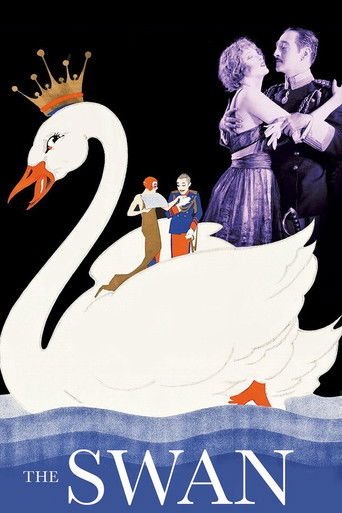
- The film is the first sound adaptation of the play 'The Swan'; it was later famously remade in 1956 starring Grace Kelly.
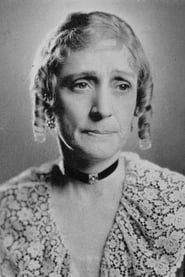
- Marie Dressler, who plays the mother, was a major box-office draw at the time and received better reviews than the lead actors.
- Lillian Gish famously criticized director Paul L. Stein, stating he lacked 'talent and taste' and only possessed 'temerity.'
- Unlike the 1956 version where the Princess chooses duty, this 1930 version features a different ending where Alexandra and the Prince elope.
- Rod La Rocque, who plays Prince Albert, was a major silent star whose career struggled significantly after the transition to sound.
- The New York Times review noted that the sound recording was 'boisterous' and often too loud, a common issue in 1930.
- Variety referred to the film as Lillian Gish's 'first talker' rather than 'talkie.'
- The film was produced by Joseph M. Schenck, a titan of early Hollywood and co-founder of United Artists.
Visual style
The film was shot by the Karl Struss, a pioneer of cinematography who won the first-ever Academy Award for Cinematography for 'Sunrise' (1927). Despite his talent, the visual style of 'One Romantic Night' is hampered by early sound technology, which required the camera to be housed in a soundproof 'icebox' booth, severely limiting movement and resulting in many flat, medium-shot compositions.
Innovations
While not innovative in a positive sense, the film is a textbook example of the 'Western Electric' sound-on-film system's early limitations. It demonstrates the transition from the expressive pantomime of the 1920s to the dialogue-centric 'proscenium' style of the early 1930s.
Music
The musical score was composed by Hugo Riesenfeld, though he remained uncredited. As an early talkie, the film features a mix of diegetic music (music occurring within the scene, such as at the gala) and a sparse orchestral underscore. The sound quality was a point of contention, with contemporary reviewers noting that the volume levels were inconsistent and often too loud.
Famous quotes
Princess Beatrice: 'A swan must never walk on land. On land, a swan is a clumsy bird. But on the water, she is a queen.' (Context: Explaining the dignity required of a princess).
Dr. Nicholas Haller: 'I am only a tutor, but even a tutor has a heart that can be broken by a princess.'
Princess Alexandra: 'Is it my duty to be happy, or only to be a Princess?'
Memorable scenes
- The Gala Confrontation: A tense sequence where the hidden feelings between Alexandra and Nicholas are exposed in front of the Prince and the royal court, breaking the rigid social decorum of the palace.
- The 'Swan' Metaphor Scene: A poignant dialogue where the Princess is compared to a swan—regal and beautiful while floating in her element, but awkward and vulnerable when stepping into the 'real' world of commoners.
What audiences thought
The film saw a lukewarm response from the public. While there was significant curiosity to hear Lillian Gish speak for the first time, the film's slow pacing and theatrical nature didn't resonate with younger audiences who were beginning to favor the faster-paced, more cynical 'Pre-Code' dramas and musicals. It was a modest success but did not achieve the blockbuster status United Artists had hoped for.
Film connections
Influenced by
- The Swan (1920 play by Ferenc Molnár)
- The Swan (1925 silent film)
- Ruritanian romances like 'The Prisoner of Zenda'
This film influenced
- The Swan (1956 remake starring Grace Kelly)
- The Princess Diaries (thematic similarities regarding royal duty)
Film restoration
The film is preserved and exists in its entirety. It was released on DVD as part of the Warner Archive Collection (Manufactured-on-Demand) and is occasionally screened at film festivals focusing on early sound cinema or Lillian Gish's career.
Where to watch
- Warner Archive Collection (DVD)
- Turner Classic Movies (TCM) occasional broadcasts
- Rare film archives and specialized classic cinema streaming services