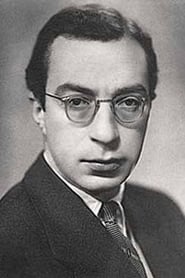
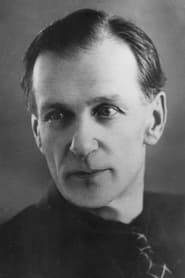
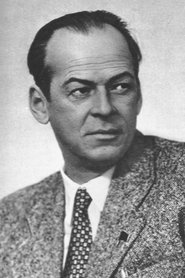
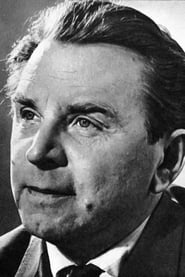
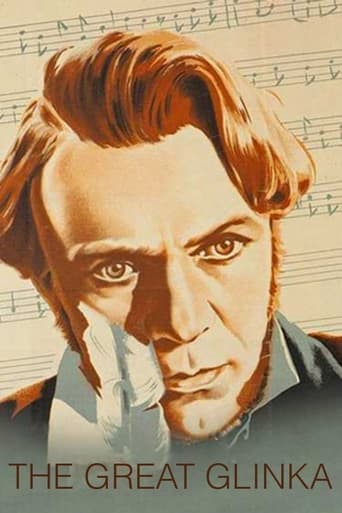
Rimsky-Korsakov
"Soviet portrait of Rimsky-Korsakov"
Keys: Space play/pause · ←/→ 10s · F fullscreen · M mute · </> speed
About this film
Soviet biopic covering the final two decades of composer Nikolai Rimsky-Korsakov in postwar costume-drama style.
Cast & crew
More films like this
More Music films
View all →
More from Grigoriy Roshal
View all →
More about this film
About the production
Release dateMarch 17, 1952
ProductionMosfilm Studio
Filmed inMoscow, USSR
The film was produced during the final years of Stalin's rule, a period when Soviet biographical films were expected to emphasize the revolutionary and progressive aspects of historical figures. Director Grigoriy Roshal was known for his biographical films about cultural figures, having previously made films about Lenin and other Soviet heroes. The production faced the challenge of authentically recreating late 19th and early 20th century Russia, including detailed period costumes, sets, and musical performances.
Themes
Artistic integrity versus political pressureThe role of the artist in societyMentorship and the passing of cultural legacyRussian cultural identity and nationalismThe tension between tradition and innovation in art
Themes & topics
composerbiographyclassical music19th centuryRussiaconservatorypolitical persecutionmentorshipoperaorchestraSt. Petersburgcultural heritageartistic strugglehistorical dramamusical genius
Historical background
Released in 1952, Rimsky-Korsakov arrived during the postwar, when audiences were hungry for new screen experiences. The film portrays the life of the Russian composer Nikolai Rimsky-Korsakov. The film was shot in Sovcolor.
Why this film matters
Rimsky-Korsakov remains a reference point for scholars tracing how postwar filmmaking handled plot, performance, and audience expectation. Rimsky-Korsakov (Russian: Римский-Корсаков) is a 1953 Soviet biopic directed by Gennadi Kazansky and Grigori Roshal and starring Grigori Belov, Nikolai Cherkasov and Aleksandr Borisov.
Making of
The making of 'Rimsky-Korsakov' was a significant undertaking for Mosfilm, requiring extensive historical research and musical preparation. Director Grigoriy Roshal worked closely with musicologists to ensure the accurate portrayal of the composer's creative process and the historical context of his works. The film's musical performances were recorded over several months with the USSR State Symphony Orchestra, requiring multiple takes to achieve the desired quality. Nikolai Cherkasov underwent extensive preparation for the role, studying Rimsky-Korsakov's mannerisms, conducting style, and even learning to play basic piano pieces to appear authentic in performance scenes. The costume department created over 200 period-accurate costumes, while the set design team meticulously recreated the interiors of 19th-century Russian aristocratic homes and the St. Petersburg Conservatory. The film's production coincided with the Zhdanov Doctrine era, which imposed strict ideological requirements on Soviet arts, requiring the filmmakers to emphasize the 'people's' and 'progressive' aspects of Rimsky-Korsakov's legacy while downplaying any elements that might be considered bourgeois.
What critics said
Modern silent- and classic-film writers often revisit Rimsky-Korsakov for its place in the postwar lineup rather than for blockbuster status.
Did you know?
- The film was part of a series of Soviet biographical films about cultural figures produced in the late 1940s and early 1950s, following the state's emphasis on promoting Russian cultural heritage
- Nikolai Cherkasov, who plays Rimsky-Korsakov, was widely praised actors in Soviet cinema, famous for his roles as Lenin and Ivan the Terrible
- The film features extensive musical performances of Rimsky-Korsakov's compositions, performed by the USSR State Symphony Orchestra
- Director Grigoriy Roshal was married to actress Vera Maretskaya, who appears in the film as Nadezhda Rimskaya-Korsakova, the composer's wife
- The film's release coincided with the 44th anniversary of Rimsky-Korsakov's death
- The production team consulted with musicologists and historians to ensure historical accuracy in depicting the composer's life and works
- The film was shot in color using the Sovcolor process, which was relatively new for Soviet cinema at the time
- Many of the conservatory scenes were filmed on location at the Moscow Conservatory, which stood in for the St. Petersburg Conservatory
- The film's portrayal of Rimsky-Korsakov's political troubles was carefully handled to align with Soviet ideological requirements of the time
- The musical arrangements in the film were supervised by conductor Gennady Rozhdestvensky, who would become one of the Soviet Union's most prominent conductors
Awards & recognition
- Stalin Prize (1953) - Second degree for Director Grigoriy Roshal and the production team
- Vasilyev Brothers State Prize of the RSFSR (1953) - For Nikolai Cherkasov's performance as Rimsky-Korsakov
Visual style
The film's cinematography, handled by Vladimir Nikolaev, employed the relatively new Sovcolor process to create rich, period-appropriate visuals that captured the opulence of late 19th-century Russian aristocratic life. The camera work combines sweeping, epic shots of St. Petersburg landscapes with intimate close-ups during musical performance scenes, emphasizing both the grandeur of the historical setting and the personal nature of artistic creation. The film uses lighting techniques that contrast the warm, golden tones of creative moments with the harsher, more shadowed lighting of political confrontation scenes. The conservatory sequences feature carefully choreographed camera movements that follow the flow of musical performances, creating a visual rhythm that complements the musical content. The color palette emphasizes deep reds, golds, and rich browns to evoke the historical period while maintaining visual interest throughout the film's runtime.
Innovations
The film represented several technical achievements for Soviet cinema of the early 1950s. Its use of the Sovcolor process demonstrated the maturation of color film technology in the Soviet Union, with particularly successful results in capturing the rich textures of period costumes and the warm glow of candlelit scenes. The recording techniques for the musical performances were innovative for their time, using multiple microphones and recording equipment to capture the full dynamic range of orchestral performances. The film's editing successfully synchronized musical performances with visual elements, creating a seamless integration between sound and image that enhanced the viewing experience. The production also developed new techniques for recreating historical musical instruments and performance practices, contributing to the authenticity of the musical sequences. The film's special effects, particularly in scenes depicting operatic performances, used rear projection and matte painting techniques that were advanced for Soviet cinema of the period.
Music
The film's soundtrack features extensive selections from Rimsky-Korsakov's musical catalog, including excerpts from his most famous operas 'Sadko,' 'The Snow Maiden,' 'The Tale of Tsar Saltan,' and 'The Golden Cockerel.' The musical performances were recorded by the USSR State Symphony Orchestra under the direction of conductor Gennady Rozhdestvensky, ensuring authentic interpretations of the composer's works. The film's score weaves these pieces into the narrative, using them both as diegetic music within scenes and as underscoring to enhance emotional moments. The sound design emphasizes the acoustic properties of different performance spaces, from intimate salon settings to grand concert halls, creating a realistic auditory experience. The soundtrack album released in conjunction with the film became especially popular classical recordings in the Soviet Union, introducing many listeners to Rimsky-Korsakov's music for the first time.
Famous quotes
Music is the art of thinking with sounds.
Without music, life would be a mistake.
The purpose of art is to lay bare the secrets of the human heart.
A composer's music should express his own life and experiences.
Teaching is the highest form of learning.
Memorable scenes
- The opening scene showing Rimsky-Korsakov conducting one of his compositions with the St. Petersburg orchestra, establishing both his musical genius and his position in Russian cultural life
- The tense confrontation at the conservatory where Rimsky-Korsakov defends his students against political authorities, demonstrating his moral courage and commitment to artistic freedom
- The intimate scene where the composer works late into the night on 'The Golden Cockerel,' revealing his creative process and dedication to his art
- The emotional farewell scene at the conservatory after his dismissal, showing the impact of his teaching on his students
- The final scene depicting his funeral procession through St. Petersburg, symbolizing the passing of an era in Russian music
What audiences thought
The film was well received by Soviet audiences upon its release, particularly among educated viewers and music lovers who appreciated its attention to musical detail and historical authenticity. The film's musical performances were especially popular, with many viewers requesting recordings of the orchestral pieces featured in the movie. The film ran successfully in Soviet theaters for several months and was later re-released periodically, becoming a standard part of the Soviet cultural education curriculum. Among international audiences, the film found limited distribution but was appreciated by classical music enthusiasts and those interested in Russian culture. The film's popularity contributed to a renewed interest in Rimsky-Korsakov's works within the Soviet Union, leading to increased performances of his operas and orchestral pieces in concert halls across the country.
Film connections
Influenced by
- Earlier Soviet biographical films about cultural figures
- The tradition of literary adaptations in Russian cinema
- Soviet socialist realist aesthetic principles
- 19th-century Russian literary traditions
- European biographical film conventions of the 1940s
This film influenced
- Subsequent Soviet biographical films about composers
- Later Russian films about artistic figures
- Soviet musical biopics of the 1960s and 1970s
Film restoration
The film has been preserved in the Gosfilmofond of Russia, the state film archive, and has undergone digital restoration as part of efforts to preserve classic Soviet cinema. Original negatives and prints are maintained in climate-controlled facilities, and the film has been transferred to modern digital formats for preservation and access. The restored version was released on DVD in the 2000s as part of a collection of classic Soviet biographical films.
Where to watch
- Available on Russian streaming platforms such as KinoPoisk HD
- Released on DVD in Russia as part of Mosfilm classic collections
- Occasionally screened at film festivals specializing in classic cinema
- Available in some university film archives and library collections
- Accessible through specialized streaming services focusing on international classic cinema