
Romola
"Caught between stranger and himself"
Keys: Space play/pause · ←/→ 10s · F fullscreen · M mute · </> speed
About this film
In Renaissance Florence, a Florentine trader meets a shipwrecked stranger, who introduces himself as Tito Melema, a young Italianate-Greek scholar. Tito becomes acquainted with several other Florentines, including Nello the barber and a young girl named Tessa. He is also introduced to a blind scholar named Bardo de' Bardi, and his daughter Romola. As Tito becomes settled in Florence, assisting Bardo with classical studies, he falls in love with Romola.
Cast & crew
More films like this
More Drama films
View all →







More from Henry King
View all →
More about this film
About the production
Release dateDecember 1, 1924
Budget$500,000 (considered a lavish budget for 1924)
Box officeModest commercial success, though not as profitable as expected given the high production costs
ProductionInspiration Pictures, Metro-Goldwyn Pictures
Filmed inHollywood, California, Italy (some second unit footage)
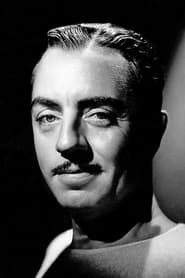
The film was among the costliest productions of 1924, featuring elaborate Renaissance-era sets and costumes. Production was challenging due to the detailed historical recreations required. The Gish sisters, who were major stars at the time, had significant creative input. William Powell, who would later become a major sound era star, was relatively early in his career but delivered a notable performance as the morally ambiguous Tito.
Themes
Moral ambiguity and ethical compromiseFemale empowerment and independencePolitical corruption and revolutionThe conflict between personal desire and social responsibilityRedemption and spiritual awakening
Themes & topics
Renaissance FlorenceLiterary adaptationHistorical dramaMoral dilemmaBetrayalLove trianglePolitical intrigueFamily dramaScholarship and learningCultural revolution
Historical background
Romola (1924) emerged during late silent cinema and the transition toward sound, when exhibition habits and national film industries were still taking shape.
Why this film matters
Romola remains accessible through digital archives, giving modern viewers a direct link to 1924 screen culture.
Making of
The production of 'Romola' was a massive undertaking for Inspiration Pictures, with extensive research conducted to ensure historical accuracy of the Renaissance setting. Director Henry King worked closely with art directors to create authentic Florentine streets, buildings, and interiors. The Gish sisters were deeply involved in the creative process, with Lillian reportedly suggesting changes to better capture the spirit of George Eliot's novel. The relationship between the sisters on set was reportedly professional but strained at times, as both were strong-willed performers with definite ideas about their characters. William Powell's performance as Tito was so compelling that it helped establish him as a leading man, though the film's overall commercial disappointment temporarily stalled his upward career trajectory. The production faced numerous challenges including the construction of massive sets, coordination of thousands of extras, and the technical difficulties of filming the elaborate period costumes and props.
What critics said
Retrospective notes on Romola emphasize its value as a transitional sound-era artifact rather than blockbuster reception.
Did you know?
- This was the first film adaptation of George Eliot's 1862-1863 novel 'Romola'
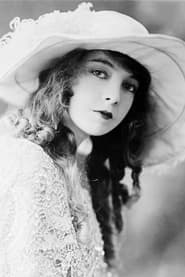
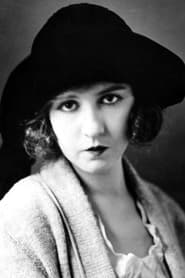
- Lillian and Dorothy Gish, real-life sisters, played Romola and Tessa respectively
- The film's elaborate Renaissance costumes were designed by Adrian, who would later become one of Hollywood's most famous costume designers
- William Powell considered this role a breakthrough in his career, though he was still primarily a supporting actor at this point
- The film was shot on some of the largest sets ever constructed at the time, recreating 15th century Florence
- Director Henry King and Lillian Gish had previously worked together on 'The White Sister' (1923)
- The film's failure to achieve major box office success contributed to the decline of the expensive literary adaptation trend in Hollywood
- Some scenes were filmed on location in Italy, unusual for American productions of the era
- The original negative was believed lost for decades before being rediscovered and restored
- The film featured over 3,000 extras in various crowd scenes depicting Renaissance Florence
Awards & recognition
- No major awards were received, as the Academy Awards had not yet been established
Visual style
The cinematography by Roy Overbaugh was praised for its sophisticated use of light and shadow to create the Renaissance atmosphere. Overbaugh employed innovative techniques including dramatic backlighting, carefully composed groupings of characters in architectural spaces, and moving camera shots that were relatively advanced for 1924. The film features numerous wide shots that showcase the elaborate sets and create a sense of scale appropriate to the epic story. Close-ups are used sparingly but effectively, particularly in scenes featuring Lillian Gish, whose expressive face was perfectly suited to the intimacy of silent film close-ups. The cinematography successfully balances the grand scale of the historical setting with intimate character moments, creating visual variety throughout the lengthy narrative.
Innovations
The film featured innovative set design techniques that allowed for the creation of convincing Renaissance Florence environments on studio backlots. The production pioneered new methods for lighting large interior sets to create period-appropriate atmosphere while ensuring adequate illumination for filming. The costume department developed new techniques for creating historically accurate Renaissance costumes that were both authentic and practical for filming. The film also employed advanced matte painting techniques to extend the physical sets and create the illusion of larger cityscapes. These technical innovations influenced subsequent historical epics and helped establish new standards for period film production.
Music
As a silent film, 'Romola' was originally accompanied by a musical score performed live in theaters. The original score was composed by Cecil B. DeMille's regular composer, William Axt, who created a lush orchestral score that incorporated Renaissance musical elements to enhance the historical setting. The score featured themes for each major character and musical motifs that corresponded to the film's emotional arcs. Modern screenings of the restored version typically feature newly composed scores or carefully selected classical music that complements the film's Renaissance setting. Some contemporary screenings have used authentic Renaissance music and instruments to create an historically appropriate accompaniment.
Famous quotes
Tito: 'In Florence, even the stones speak of history and greatness.' (spoken in intertitle)
Romola: 'I have learned that the greatest wisdom is knowing when to forgive and when to forget.' (intertitle)
Bardo: 'Books are the windows through which we see the souls of those who came before us.' (intertitle)
Tessa: 'Love is not always wise, but it is always true.' (intertitle)
Memorable scenes
- The opening sequence establishing Renaissance Florence with sweeping shots of the reconstructed city and thousands of extras
- Romola's emotional confrontation with Tito after discovering his betrayal of both her and Tessa
- The dramatic scene of political upheaval in Florence as the Medici return to power
- Tito's final downfall on the scaffold, culminating his moral decay
- Romola's spiritual awakening scene where she finds purpose beyond personal relationships
What audiences thought
Audience reception in 1924 was mixed, with many viewers finding the film's intellectual themes and moral ambiguity less accessible than typical Hollywood fare of the period. The lengthy runtime and serious tone may have limited its popular appeal, contributing to its modest commercial performance despite its star power and production values. However, educated audiences and literary enthusiasts appreciated the film's faithfulness to George Eliot's work and its sophisticated treatment of complex moral questions. Modern audiences who have seen the restored version generally respond more positively, with many expressing surprise at the film's artistic quality and the strength of the performances. The film has developed a cult following among silent film enthusiasts and those interested in literary adaptations.
Film connections
Influenced by
- George Eliot's 1862-1863 novel 'Romola'
- Italian Renaissance art and architecture
- Historical epics of the early 1920s
- Victorian literature adaptations
- German expressionist cinema (for visual style)
This film influenced
- Subsequent adaptations of George Eliot's works
- Historical epics of the late 1920s
- Costume dramas featuring strong female protagonists
- Literary adaptations emphasizing moral complexity
Film restoration
The film was considered lost for many years but a complete copy was discovered and preserved by the Museum of Modern Art. It has been restored and is available for archival screenings. The restoration involved reconstructing missing scenes from production stills and repairing damage to the surviving film elements. The restored version maintains the original tinting and toning that was characteristic of prestige productions of the era.
Where to watch
- Available on DVD from specialty silent film distributors
- Occasionally screened at film festivals and cinematheques
- Accessible through some streaming services specializing in classic cinema
- Available for viewing at film archives and libraries with special collections