

Say It with Songs
"Airwaves, jealousy, prison"
Keys: Space play/pause · ←/→ 10s · F fullscreen · M mute · </> speed
About this film
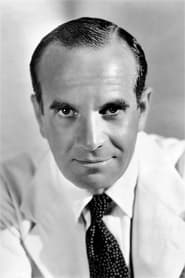
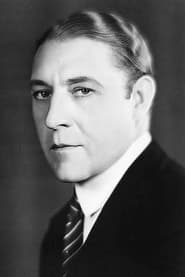
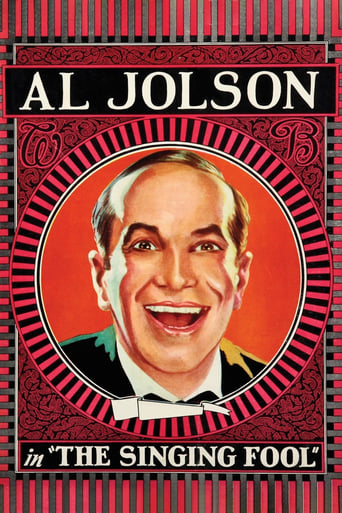
Joe Lane, radio entertainer and songwriter, learns that the manager of the studio, Arthur Phillips, has made improper advances to his wife, Katherine. Infuriated, Lane engages him in a fight, and the encounter results in Phillips' accidental death.
Cast & crew
More films like this
More Music films
View all →
More from Lloyd Bacon
View all →


More about this film
About the production
Release dateOctober 6, 1929
Budget$423,000
Box office$1,100,000 (domestic)
ProductionThe Vitaphone Corporation, Warner Bros. Pictures
Filmed inWarner Brothers Burbank Studios, Burbank, California
This was one of the first films to use the Vitaphone sound-on-disc system with synchronized musical sequences. The production faced challenges with early sound recording technology, requiring actors to remain relatively stationary near microphones during dialogue scenes. The film was rushed into production to capitalize on Jolson's success in 'The Jazz Singer' and 'The Singing Fool'. The prison scenes were filmed on newly constructed sets that represented significant investment by Warner Bros. for realistic production design.
Themes
Father-son relationshipsRedemption and second chancesThe price of violenceFamily separation and reunionSocial stigma of imprisonment
Themes & topics
radio entertainerimprisonmentfamily dramamusical numbersaccidental deathfather-son relationshipredemptionseparationreunionmelodrama
Historical background
Say It with Songs reached screens around 1929, produced in its country of origin. Silent-era houses paired such titles with live music and newsreel bills.
Why this film matters
Researchers cite Say It with Songs when tracing screen culture of its decade.
Making of
The production of 'Say It with Songs' took place during a critical transition period in Hollywood when studios were still adapting to sound technology. Director Lloyd Bacon had to work within the technical limitations of early sound recording, which required actors to speak directly into hidden microphones and limited camera movement. Al Jolson, already an established stage star, brought his theatrical background to the film but had to adjust his performance style for the camera. The emotional scenes between Jolson and child actor Davey Lee reportedly took multiple takes as the young actor struggled with the heavy dramatic material. The film's musical numbers were pre-recorded using the Vitaphone system, and Jolson would lip-sync to his own recordings during filming. This process was time-consuming but allowed for better audio quality than live recording. The prison sequences were particularly challenging to film due to the echoing acoustics of the set, requiring innovative sound dampening techniques.
What critics said
Reviewers in 1929 weighed Say It with Songs on clarity, pacing, and audience response rather than prestige status. No single canonical review dominates later reference works for the title.
Did you know?
- This was Al Jolson's third film for Warner Bros. following his breakthrough in 'The Jazz Singer' (1927) and 'The Singing Fool' (1928).
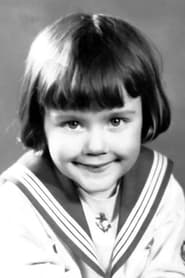
- Davey Lee, who played Little Pal, was discovered by a talent scout at a movie theater and became one of the first major child stars of the sound era.
- The film was originally titled 'The Song Writer' before being changed to 'Say It with Songs' to better market Jolson's musical performances.
- The prison scenes were considered unusually realistic for their time, leading to some controversy about whether they were too grim for audiences.
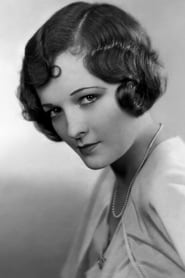
- Marian Nixon was reportedly cast after Jolson personally recommended her for the role of Katherine.
- The film featured the hit song 'Little Pal', which became one of Jolson's most popular recordings of 1929.
- This was one of the last films released before the stock market crash of October 1929, making it part of the final wave of pre-Depression extravagance.
- The movie's success helped establish the 'musical drama' as a viable film genre during the early sound era.
- The film's title became a popular catchphrase in 1929, appearing in advertisements and everyday conversation.
- The production used over 2,000 extras for various scenes, a significant number for an early sound film.
Awards & recognition
- None
Visual style
The cinematography by Devereux Jennings reflects the technical constraints of early sound filming, with relatively static camera positions to accommodate microphone placement. The film uses careful lighting techniques to create emotional depth, particularly in the prison scenes where shadows and contrast emphasize the protagonist's isolation. The musical sequences feature more elaborate camera work and lighting design, highlighting the contrast between the dramatic and musical elements. Jennings employed innovative techniques for the time, including soft focus for emotional moments and careful composition to maintain visual interest despite limited camera movement.
Innovations
The film represents an important step in the evolution of sound cinema, utilizing the Vitaphone system to achieve relatively high-quality audio for its time. The production pioneered techniques for integrating musical numbers into dramatic narratives without disrupting the story's flow. The film also demonstrated early methods of sound mixing, balancing dialogue, music, and effects in a way that was technically advanced for 1929. The prison sequences featured innovative use of sound design to create atmosphere, including the use of echo and reverb to emphasize the institutional setting. These technical achievements helped establish standards that would influence subsequent sound film productions.
Music
The film's music was composed by Louis Silvers, with lyrics by Buddy DeSylva and Ray Gilbert. The soundtrack includes several original songs performed by Al Jolson, with 'Little Pal' becoming the most successful and enduring number from the film. The musical numbers were recorded using the Vitaphone sound-on-disc system, which provided superior audio quality for the time but required precise synchronization during filming. The score also includes incidental music that underscores the dramatic scenes, a relatively innovative approach for early sound films. The soundtrack was released as a series of 78-rpm records, which became popular purchases for fans of Jolson.
Famous quotes
Little Pal, you're the only thing that matters to me in this whole world.
I may have made mistakes, but I never stopped loving you.
A man can lose everything, but he can never lose his music.
Sometimes the hardest songs to sing are the ones from the heart.
Memorable scenes
- The emotional reunion between Joe and his son Little Pal at the boarding school, where the boy begs his father to run away together
- The prison yard scene where Joe sings 'Little Pal' while thinking of his son
- The confrontation scene between Joe and Phillips that leads to the accidental death
- The final musical number where Joe performs for an audience including his son
What audiences thought
The film was a commercial success, earning over $1 million domestically despite its relatively modest budget. Audiences responded enthusiastically to Jolson's musical numbers, particularly 'Little Pal,' which became a hit record. The emotional father-son storyline resonated strongly with viewers of the era, leading to sold-out theaters in major cities. However, the film's darker themes and prison sequences proved controversial with some audience members who expected lighter entertainment from a Jolson musical. The movie's release timing just before the stock market crash meant that it was one of the last films to benefit from pre-Depression movie-going habits.
Film connections
Influenced by
- The Jazz Singer (1927)
- The Singing Fool (1928)
- Broadway melodramas of the 1920s
- Vaudeville performance traditions
This film influenced
- The Jazz Singer (remake)
- Various early 1930s musical dramas
- Later films featuring child actors in dramatic roles
Film restoration
The film is preserved in the Warner Bros. archive and has been restored for home video release. Complete 35mm prints exist in several film archives, including the Library of Congress and the UCLA Film & Television Archive. The Vitaphone discs for the soundtrack have also been preserved, allowing for complete restoration of the original audio quality.
Where to watch
- Warner Archive Collection DVD/Blu-ray
- Classic movie streaming services (availability varies)
- Film archive screenings
- TCM (Turner Classic Movies) periodic broadcasts