Sisters of the Gion
"Sisters divided in Gion"
Keys: Space play/pause · ←/→ 10s · F fullscreen · M mute · </> speed
About this film
Geisha sisters Umekichi and Omocha disagree over supporting bankrupt lover Furusawa versus exploiting wealthy clients in Kyoto's Gion district. Kenji Mizoguchi's 1936 drama contrasts compassionate and pragmatic survival strategies.
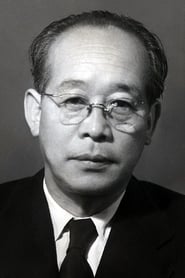
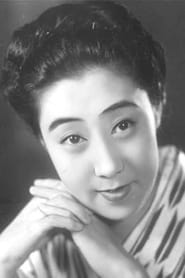
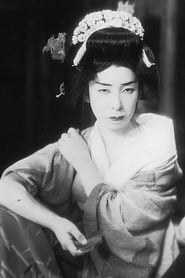
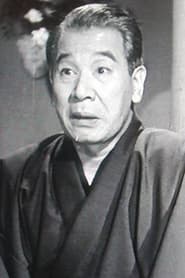
Cast & crew
More films like this
More Drama films
View all →







More from Kenji Mizoguchi
View all →
More about this film
About the production
Release dateOctober 15, 1936 (Japan)
Box officeBox office records from 1936 Japan are not reliably documented
ProductionDaiichi Eiga Company
Filmed inKyoto, Japan (Gion district)
Mizoguchi filmed on location in the actual Gion geisha district, lending authenticity to the setting. The production faced challenges from Japanese censorship authorities who were concerned about the film's critical portrayal of the geisha system and its implicit criticism of traditional gender roles. The director employed his signature long takes and tracking shots, which required extensive rehearsal and coordination among actors and crew. Isuzu Yamada's performance was so compelling that it established her as one of Japan's most respected actresses and led to her collaboration with Mizoguchi on several subsequent films.
Themes
Female solidarity and sisterhoodEconomic exploitation of womenTraditional versus modern valuesClass struggle and social mobilityThe commodification of women's bodies and emotions
Themes & topics
geishasistersKyotopovertyprostitutionfamily conflictsocial criticismgender roleseconomic hardshipmanipulationtradition versus modernityfemale empowermentclass struggleromantic betrayalsurvival
Historical background
Sisters of the Gion appeared as Japan militarized; Mizoguchi's critique of patriarchy and poverty drew on his own childhood memories.
Why this film matters
'Sisters of the Gion' represents a watershed moment in Japanese cinema, establishing Kenji Mizoguchi as a master filmmaker and cementing his reputation as a cinematic poet of women's struggles. The film's unflinching examination of the limited options available to women in pre-war Japan challenged prevailing social norms and helped establish the 'women's film' as a legitimate genre in Japanese cinema. Its visual style, characterized by long takes, fluid camera movements, and careful composition, influenced countless filmmakers both in Japan and internationally, including directors like Akira Kurosawa and Yasujirō Ozu. The movie's preservation of authentic geisha culture and language provides invaluable documentation of a rapidly disappearing aspect of Japanese traditional life. Internationally, the film helped introduce global audiences to the sophistication of Japanese cinema, paving the way for the post-war international acclaim of Japanese filmmakers. Its selection for the National Film Registry underscores its enduring importance as both a work of art and a historical document, while its themes of female solidarity and resistance against patriarchal oppression continue to resonate with contemporary audiences and feminist film scholars.
Making of
Kenji Mizoguchi, known for his feminist sympathies, channeled personal experiences into this production, particularly his sister's time as a geisha and the family's resulting poverty. The director demanded extraordinary dedication from his cast, requiring Isuzu Yamada and Yōko Umemura to spend months observing geishas in Kyoto's Gion district to master their mannerisms, speech patterns, and movements. Mizoguchi's notorious perfectionism extended to technical aspects as well; he pioneered the use of long tracking shots that followed characters through entire scenes, creating an immersive observational style that would influence generations of filmmakers. The production faced significant interference from Japanese censors who demanded changes to soften the film's social criticism, though Mizoguchi managed to preserve much of his intended message through subtle visual storytelling. The director's relationship with his actors was famously difficult, with multiple reports of his harsh treatment during rehearsals, though this approach often yielded performances of remarkable depth and authenticity that defined his films' lasting impact.
What critics said
Japanese critics recognized its social edge; today it is a key Mizoguchi work alongside Osaka Elegy of the same year.
Did you know?
- The film was selected for preservation in the National Film Registry in 2022 by the Library of Congress for being 'culturally, historically, or aesthetically significant.'
- Director Kenji Mizoguchi drew inspiration from his sister's experiences as a geisha, bringing personal authenticity to the story.
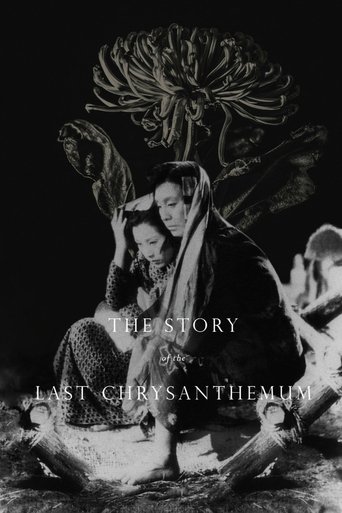
- The film was part of a trilogy of Mizoguchi's works focusing on the lives of women in Japanese society, alongside 'Osaka Elegy' (1936) and 'The Story of the Last Chrysanthemum' (1939).
- Isuzu Yamada, who played Omocha, would later become one of the first Japanese actresses to gain international recognition, particularly for her work with Akira Kurosawa.
- The film's original Japanese title 'Gion no shimai' literally translates to 'Sisters of Gion,' referring to the famous geisha district in Kyoto.
- Mizoguchi used only 247 shots in the entire film, an unusually low number that demonstrates his preference for long, continuous takes.
- The film was initially banned in some parts of Japan due to its perceived criticism of traditional Japanese values and the geisha system.
- Contemporary critics noted that the film's realistic portrayal of geisha life was unprecedented in Japanese cinema at the time.
- The movie's success helped establish the 'women's film' as a legitimate genre in Japanese cinema.
- Mizoguchi reportedly required his actresses to study actual geishas for weeks before filming to ensure authentic portrayals.
Awards & recognition
- Kinema Junpo Award for Best Film of the Year (1936)
- Selected for preservation in the National Film Registry (2022)
Visual style
The cinematography of 'Sisters of the Gion,' credited to Minoru Miki, represents a pinnacle of visual storytelling in 1930s Japanese cinema. Mizoguchi and Miki employed a revolutionary approach using long, fluid tracking shots that follow characters through entire scenes, creating an immersive observational style that puts viewers in the position of witnesses rather than participants. The camera often maintains a respectful distance from its subjects, particularly during moments of emotional intensity, emphasizing the isolation of the characters within their social environment. The film's visual composition carefully frames characters within architectural spaces, using doorways, windows, and traditional Japanese screens to create visual metaphors for social confinement and limited options. The lighting technique, particularly in interior scenes, uses natural light sources to create authentic atmosphere while highlighting the contrast between traditional and modern elements in the characters' lives. The cinematography also makes sophisticated use of depth of field, with background and foreground elements often carrying equal thematic weight, creating rich visual textures that reward repeated viewing.
Innovations
'Sisters of the Gion' showcased several technical innovations that were notable for mid-1930s cinema. The film's extensive use of long takes, some lasting several minutes, required extraordinary coordination between actors, camera operators, and sound technicians, pushing the boundaries of what was technically possible in early sound cinema. Mizoguchi and his team developed advanced tracking shot techniques that allowed the camera to move fluidly through complex interior spaces, following characters through multiple rooms and even up and down stairs without cutting. The sound recording system employed was particularly sophisticated for its time, capturing both dialogue and ambient environmental sounds with remarkable clarity. The film's lighting techniques, which combined natural and artificial sources to create authentic period atmosphere, represented a significant advance in Japanese cinematography. The production also pioneered location shooting techniques in Japan, using real Kyoto locations rather than studio sets to achieve unprecedented visual authenticity. These technical achievements not only served the film's artistic vision but also influenced the broader development of cinematic techniques in Japan and internationally.
Music
The film's soundtrack, composed by Senji Inoue, represents the sophisticated use of music in early Japanese sound cinema. The score incorporates traditional Japanese instruments and melodies, particularly shamisen music associated with geisha entertainment, creating authentic period atmosphere while also serving dramatic functions. The sound design carefully balances diegetic music (music within the story world) with non-diegetic scoring, using the former to establish the geisha environment and the latter to emphasize emotional moments and thematic concerns. The film makes particularly effective use of silence during crucial scenes, allowing the visual storytelling and performances to carry emotional weight without musical accompaniment. The sound recording quality was advanced for its time, capturing subtle ambient sounds of the Gion district that contribute to the film's documentary-like authenticity. The musical themes recur throughout the film, developing in complexity as the characters' situations evolve, creating a sophisticated musical narrative that parallels the visual storytelling.
Famous quotes
A geisha must be prepared to be abandoned. It's part of our profession.
You're too sentimental, sister. In this world, sentiment is a luxury we can't afford.
Why should I sacrifice myself for a man who would never do the same for me?
We are like flowers in a vase - beautiful to look at, but our roots have been cut.
The only power we have is the power men give us, and they can take it away anytime.
You call it betrayal, I call it survival. There's a difference.
In Gion, we sell dreams, but we can never afford to dream ourselves.
Your loyalty is admirable, sister, but it won't pay for our rice.
Memorable scenes
- The opening sequence where the camera follows the sisters through the narrow streets of Gion at night, establishing both the setting and their contrasting personalities through their interactions with passersby.
- The tense confrontation scene between the sisters in their shared room, where Omocha tries to convince Umekichi to abandon her bankrupt patron, showcasing their opposing worldviews through increasingly heated dialogue.
- The meticulously choreographed tea ceremony scene where Omocha manipulates her wealthy new patron, using traditional feminine arts as tools for economic advancement rather than cultural expression.
- The heartbreaking final scene where Umekichi walks alone through the Gion district after her sister's scheme has collapsed, the long tracking shot emphasizing her isolation and the cyclical nature of their situation.
- The scene where Omocha deliberately damages Furusawa's belongings to drive him away, using subtle psychological manipulation rather than direct confrontation to achieve her goals.
What audiences thought
Contemporary Japanese audiences responded positively to 'Sisters of the Gion,' with the film performing well at the domestic box office despite its serious themes and social criticism. Many viewers, particularly women, found the film's realistic portrayal of geisha life and its examination of limited female options both compelling and relatable. The movie generated significant discussion in Japanese media about the changing role of women in modern Japanese society and the future of traditional institutions like the geisha system. International audiences had limited exposure to the film until decades after its release, but as it became available through art house screenings and film festivals, it developed a devoted following among cinephiles and those interested in Japanese culture. Modern audiences continue to discover the film through restoration screenings and home video releases, with many noting its surprisingly contemporary relevance regarding gender politics and economic inequality. The film's emotional power and visual beauty have helped it transcend its historical context, making it accessible and meaningful to viewers unfamiliar with 1930s Japanese society.
Film connections
Influenced by
- German Expressionist cinema (visual style and social criticism)
- Soviet montage theory (though Mizoguchi developed his own approach)
- Traditional Japanese theater (particularly Kabuki and Noh)
- Japanese literary naturalism
- Contemporary Japanese social realist literature
- Western realist cinema of the 1930s
This film influenced
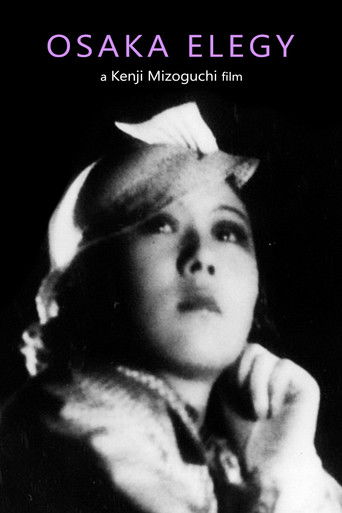
- Osaka Elegy (1936) - Mizoguchi's companion piece from the same year
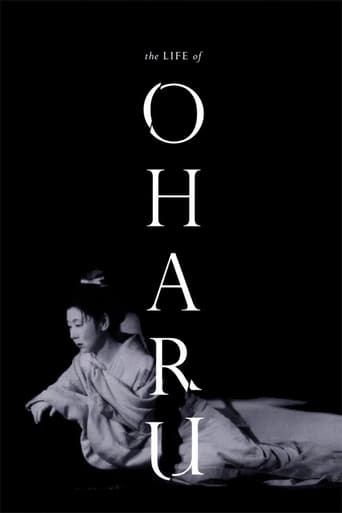
- The Life of Oharu (1952) - Mizoguchi's later masterpiece on similar themes
- Ugetsu (1953) - Mizoguchi's work showing refined visual techniques
- Rashomon (1950) - Akira Kurosawa's film featuring Isuzu Yamada
- Floating Clouds (1955) - Mikio Naruse's work on similar themes of female struggle
- In the Realm of the Senses (1976) - Nagisa Oshima's exploration of female sexuality
- Memoirs of a Geisha (2005) - Hollywood's portrayal of similar subject matter
Film restoration
The film is well-preserved and has undergone multiple restorations. The original negative is stored at the National Film Center of the National Museum of Modern Art, Tokyo. A major restoration was completed in the 1980s by the Kawakita Memorial Film Institute, with subsequent digital restorations undertaken by Criterion Collection and various film archives. The film was selected for preservation in the United States National Film Registry in 2022, ensuring its continued availability for future generations. Multiple high-quality versions exist in various film archives worldwide, including the British Film Institute, Cinémathèque Française, and the Museum of Modern Art's film collection.
Where to watch
- The Criterion Channel (streaming)
- Criterion Collection Blu-ray/DVD (with English subtitles)
- Janus Films streaming platform
- Kanopy (with library membership)
- MUBI (periodic availability)
- Film Movement streaming service
- Various film archive screenings (check local museums and cinematheques)
- Home video releases through BFI and Masters of Cinema