

The Criminal Code
"From convict to the warden’s driver"
Keys: Space play/pause · ←/→ 10s · F fullscreen · M mute · </> speed
About this film
After young Robert Graham commits a murder while drunk and defending his girlfriend, he is prosecuted by ambitious Mark Brady and sentenced to 10 years. Six years later, Brady becomes the prison warden and offers the beleaguered Robert a job as his chauffeur. Robert cleans up his act, but, on the eve of his pardon, his cellmate drags him back into the world of violence, and he faces a difficult choice that could return him to prison.
Cast & crew
More films like this
More Crime films
View all →

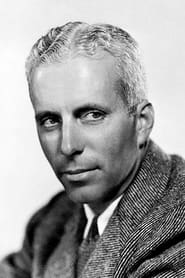
More from Howard Hawks
View all →

More about this film
About the production
Release dateJanuary 3, 1931
Budget$300,000 (estimated)
Box officeApproximately $1,000,000 (domestic rental)
ProductionColumbia Pictures
Filmed inColumbia/Sunset Gower Studios, Hollywood, Los Angeles, California
The film was based on the 1929 stage play by Martin Flavin, which had been a significant hit on Broadway. Director Howard Hawks took a realistic approach to the material, insisting on a gritty atmosphere that eschewed the melodrama common in early talkies. To ensure authenticity, the production utilized a large number of actual ex-convicts as extras in the yard scenes. The film was one of Columbia Pictures' most prestigious 'A' features of the early 1930s, helping to elevate the studio from 'Poverty Row' status to a major Hollywood player.
Themes
The morality of the legal systemThe unwritten code of silenceRedemption and rehabilitationThe corrupting influence of prison lifeClass conflict and political ambition
Themes & topics
prisonwardendistrict attorneymanslaughtercode of silencecellmaterevengepardonchauffeur1930s
Historical background
The Criminal Code (1931) emerged during the studio-system peak and early sound decades, when exhibition habits and national film industries were still taking shape.
Why this film matters
The Criminal Code remains accessible through digital archives, giving modern viewers a direct link to 1931 screen culture.
Making of
Howard Hawks was known for his collaborative style, and during the production of 'The Criminal Code,' he encouraged the actors to improvise lines to make the dialogue feel more naturalistic and less 'theatrical.' The film faced significant scrutiny from early censorship boards due to its sympathetic portrayal of a convict and its harsh depiction of the legal system. Hawks fought to keep the ending as realistic as possible, resisting studio pressure to make it a purely happy Hollywood conclusion. The lighting was intentionally kept low-key and high-contrast by cinematographer James Wong Howe (uncredited) and Ted Tetzlaff to emphasize the claustrophobia of the prison cells.
What critics said
Retrospective notes on The Criminal Code emphasize its value as a period production rather than blockbuster reception.
Did you know?
- Director Howard Hawks reportedly used real former inmates as extras to provide an authentic atmosphere for the prison yard scenes.
- The film was remade twice by Columbia Pictures: once as 'Penitentiary' in 1938 and again as 'Convicted' in 1950.
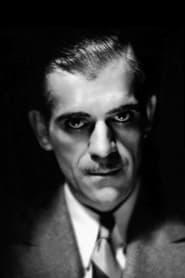
- Boris Karloff reprised his stage role as the menacing Ned Galloway; his performance here is often credited with catching the eye of James Whale, leading to his casting in 'Frankenstein' later that year.
- This was one of the first films to utilize a 'subjective camera' technique during certain high-tension sequences to mimic the protagonist's perspective.
- The film's title refers to the unwritten law among prisoners: 'Never squeal on a fellow inmate.'
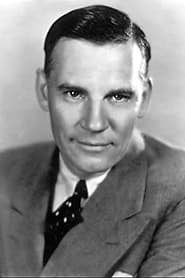
- Walter Huston accepted the role of Mark Brady because he was impressed by the moral ambiguity of the character, who transitions from a hard-line prosecutor to a sympathetic warden.
- The production was filmed during the transition from silent to sound cinema, and Hawks experimented with overlapping dialogue, a technique that would become his directorial trademark.
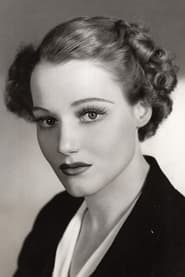
- The film features a very young Constance Cummings in one of her earliest credited screen roles.
- The 'yard' set was one of the largest interior sets ever built at Columbia at that time.
- The film was released in several different languages for international markets, a common practice before dubbing became standardized.
Awards & recognition
- National Board of Review - Top Ten Films of 1931
Visual style
The cinematography is characterized by its use of deep shadows and stark, expressionistic lighting that reflects the psychological state of the prisoners. The camera work is notably more fluid than many other films from 1931, using tracking shots to follow characters through the crowded prison corridors. The visual contrast between the dark, cramped cells and the bright, open spaces of the warden's mansion serves as a visual metaphor for Graham's internal conflict.
Innovations
The film is notable for its sophisticated use of sound editing to create a sense of space within the prison. It was also one of the first films to successfully integrate large-scale crowd scenes with synchronized dialogue, a difficult technical feat in the early years of the 'talkies.' The set design was praised for its architectural accuracy, mimicking the oppressive feel of real-life penitentiaries like Sing Sing.
Music
As an early sound film, the 'score' is minimal, relying heavily on diegetic sound—the clanging of cell doors, the rhythmic shuffling of feet in the yard, and the echoing voices of the guards. This lack of traditional orchestral music enhances the stark, documentary-like feel of the prison environment. The silence itself is used as a dramatic tool, heightening the tension during the film's climax.
Famous quotes
Mark Brady: 'The law is the law, and it's my job to enforce it, whether I like it or not.'
Ned Galloway: 'I'll get him. He's a squealer, and I've got a long memory.'
Mark Brady: 'In this joint, the only thing that keeps you alive is your tongue staying behind your teeth.'
Robert Graham: 'Six years is a long time to look at a stone wall and wonder why you're there.'
Ned Galloway: 'D'you ever see a man's eyes when he knows he's gonna die? I have.'
Memorable scenes
- The 'Yard' scene where the prisoners create a deafening wall of noise by banging their cups against the tables to protest the conditions.
- The chilling climax where Ned Galloway (Boris Karloff) stalks the prison stool pigeon through the darkened corridors.
- The opening courtroom sequence where the cold efficiency of the legal 'machine' is established.
- The final confrontation between the Warden and the inmates where the 'Criminal Code' is put to the ultimate test.
What audiences thought
The film was a significant commercial success for Columbia, drawing in audiences with its gritty subject matter and the star power of Walter Huston. Contemporary audiences were particularly struck by the tense 'yard' scenes and the chilling performance of Boris Karloff. It remained a popular staple of television broadcasts in the mid-20th century, cementing its status as a classic of the genre.
Film connections
Influenced by
- The Big House (1930)
- The stage play by Martin Flavin
- Real-life reports of prison riots in the late 1920s
This film influenced
- I Am a Fugitive from a Chain Gang (1932)
- Brute Force (1947)
- The Shawshank Redemption (1994)
- A Prophet (2009)
Film restoration
The film is well-preserved and has been restored by Sony Pictures (the successor to Columbia). It is available in high-quality digital formats and has been released as part of various 'Columbia Classics' collections.
Where to watch
- Available on DVD/Blu-ray via the Criterion Collection (as part of the 'Howard Hawks' or 'Pre-Code' sets)
- Digital rental on Amazon Prime Video
- Apple TV
- Frequently aired on Turner Classic Movies (TCM)