The Hunchback of Notre Dame
"Berman, the film is based on Victor Hugo's 1831 novel"
Keys: Space play/pause · ←/→ 10s · F fullscreen · M mute · </> speed
About this film
Berman, the film is based on Victor Hugo's 1831 novel. It is also noted for being the only film shown at the newly established Cannes Film Festival; the rest of the festival was cancelled due to the start of World War II.
Cast & crew
More films like this
More Drama films
View all →







More from William Dieterle
View all →
More about this film
About the production
Release dateDecember 31, 1939 (premiere), January 5, 1940 (wide release)
Budget$1,877,000
Box office$1.6 million (domestic)
ProductionRKO Radio Pictures
Filmed inRKO Studios, Los Angeles, California, Sherwood Forest, California
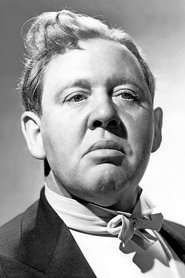
The film featured among the leading elaborate sets ever constructed at RKO Studios, with a full-scale replica of the Notre Dame Cathedral facade and surrounding Parisian streets. The massive set cost over $500,000 and took six months to build. Charles Laughton spent hours each day in the makeup chair, with his transformation into Quasimodo taking up to four hours to complete. The famous bell sequence required Laughton to work with real bells weighing several tons, with special safety precautions taken. The film was among the costliest productions of 1939, competing with other lavish productions like 'Gone with the Wind' and 'The Wizard of Oz.'
Themes
Social prejudice and discriminationObsession and destructive desireSanctuary and religious hypocrisyPhysical appearance vs. inner beautyJustice vs. mob mentality
Themes & topics
cathedralbell ringerhunchbackGothicParismedievalRomaniwitch huntunrequited lovesocial outcastsanctuaryobsessiontragedyprejudicehorror
Historical background
The Hunchback of Notre Dame (1939) circulated in studio-era and wartime programming. Berman, the film is based on Victor Hugo's 1831 novel. Contemporary trade papers and later preservation notes document its place among theatrical and archive releases.
Why this film matters
The Hunchback of Notre Dame remains accessible to researchers and viewers as a screen title in museum, archive, and streaming collections. It is also noted for being the only film shown at the newly established Cannes Film Festival; the rest of the festival was cancelled due to the start of World War II.
Making of
The production of 'The Hunchback of Notre Dame' was one of RKO's most ambitious undertakings of 1939. The film faced numerous challenges, including the construction of the massive Notre Dame set, which required extensive research and architectural drawings to ensure historical accuracy. Charles Laughton's transformation into Quasimodo was a daily ordeal involving hours of makeup application, including a heavy rubber hump, facial prosthetics, and contact lenses that gave his eyes their distinctive appearance. The actor reportedly studied the novel extensively and worked closely with director William Dieterle to develop a portrayal that emphasized Quasimodo's humanity rather than just his physical deformity. The famous bell-ringing sequences were particularly challenging to film, requiring special rigging and safety measures. The production also faced censorship issues from the Hays Code, which required modifications to some of the novel's more controversial elements, particularly concerning Frollo's obsession and the film's religious themes. Despite these challenges, the film's production team managed to create what many consider among the leading visually impressive Gothic films of Hollywood's golden age.
What critics said
Day-one reviews for The Hunchback of Notre Dame are sparse in digitized press archives; later criticism treats it as a reference point for 1939 cinema programming and preservation.
Did you know?
- Charles Laughton was so committed to the role that he studied real cases of physical deformity and spent time observing patients with similar conditions to accurately portray Quasimodo's movements and mannerisms.
- The massive cathedral set was so large and impressive that it was left standing for months after filming, used for other productions and as a tourist attraction for studio visitors.
- This was the first sound film adaptation of Victor Hugo's novel, though there had been several silent versions previously.
- Laughton's makeup was so convincing that some visitors to the set reportedly fainted upon seeing him in full costume.
- The film was originally intended to be shot in color, but budget constraints forced the production to proceed in black and white, which many critics argued actually enhanced the Gothic atmosphere.
- Maureen O'Hara was reportedly considered for the role of Esmeralda before it went to Edmond O'Brien, who was ultimately replaced by Thomas Mitchell's character Gringoire in the final script.
- The bells used in the film were actual church bells borrowed from various California churches, with some weighing over 2,000 pounds.
- Director William Dieterle had previously directed the acclaimed 1935 film 'A Tale of Two Cities' and was known for his ability to handle literary adaptations and period pieces.
- The film's release was delayed several months due to RKO's concern about competing with the other major releases of 1939, often called Hollywood's greatest year.
- Laughton reportedly suffered from back problems during filming due to the hunchback prosthetic, which weighed over 30 pounds.
Awards & recognition
- Academy Award for Best Art Direction ( nomination lost to 'Gone with the Wind')
- Academy Award for Best Original Score ( nomination lost to 'The Wizard of Oz')
- Academy Award for Best Sound Recording ( nomination lost to 'When Tomorrow Comes')
Visual style
The film's cinematography, handled by Joseph H. August, employed dramatic lighting and camera techniques to enhance the Gothic atmosphere. August used extensive low-key lighting and deep shadows to create a sense of mystery and foreboding, particularly in the cathedral sequences. The camera work emphasized the verticality of the cathedral setting, with many shots looking up from below or down from above to reinforce the power dynamics between characters. The film also made innovative use of crane shots to capture the scale of the sets and the dramatic bell-ringing sequences. August employed German Expressionist techniques, particularly in the use of distorted camera angles and dramatic lighting to reflect Quasimodo's psychological state. The black and white photography actually enhanced the Gothic mood, with the high contrast between light and shadow creating a more haunting atmosphere than color might have achieved. The cinematography was particularly praised for its ability to make the studio sets feel authentic and imposing.
Innovations
The film featured several notable technical achievements for its time, particularly in set construction and makeup effects. The Notre Dame cathedral set was one of the largest ever built at RKO, featuring working bells and detailed architectural elements that allowed for dynamic camera movement. The makeup effects created for Charles Laughton's transformation into Quasimodo were groundbreaking, using advanced prosthetic techniques that allowed for expressive facial movement despite the heavy appliances. The film also employed innovative sound recording techniques to capture the complex audio of the bell sequences, using multiple microphones to blend the diegetic bell sounds with the musical score. The production utilized special rigging systems for the bell-ringing scenes that allowed Laughton to perform his own stunts safely. The film's special effects, while modest by modern standards, were effective in creating the illusion of medieval Paris, using matte paintings and forced perspective to extend the sets beyond their physical boundaries.
Music
The musical score was composed by Alfred Newman, one of Hollywood's most prolific and respected composers. Newman created a sweeping, romantic score that incorporated elements of medieval and Renaissance music to enhance the film's historical setting. The score featured prominent use of church bells as both diegetic and non-diegetic elements, with the bells serving as a musical motif representing Quasimodo's connection to the cathedral. Newman's music emphasized the tragic elements of the story while providing emotional support for the romantic scenes. The score also included original songs that reflected the Romani culture of Esmeralda's character. Newman's work on the film was nominated for an Academy Award, reflecting the critical recognition of his contribution to the film's atmosphere. The soundtrack was particularly effective in the bell-ringing sequences, where Newman combined actual bell sounds with orchestral accompaniment to create powerful audio-visual moments.
Famous quotes
Sanctuary! Sanctuary!
Why was I not made of stone like thee?
The bells! The bells! They are my friends!
I am a monster! I know it!
You gave me water when I was thirsty. Now I will give you sanctuary.
Memorable scenes
- The Festival of Fools scene where Quasimodo is crowned King of Fools and then brutally humiliated by the crowd, showcasing the cruelty of society toward those who are different.
- The bell-ringing sequences where Quasimodo finds joy and freedom among the massive cathedral bells, creating powerful visual and auditory moments.
- The climactic siege of Notre Dame where Quasimodo defends the cathedral and Esmeralda from the angry mob, demonstrating his transformation from outcast to hero.
- The opening sequence establishing the grandeur of medieval Paris and the imposing presence of Notre Dame Cathedral.
What audiences thought
The film performed moderately well at the box office, though it was overshadowed by the massive success of other 1939 releases like 'Gone with the Wind' and 'The Wizard of Oz.' Audiences responded particularly strongly to Laughton's performance, which became among the leading discussed aspects of the film. Many viewers were reportedly moved by Quasimodo's tragic character, while others were impressed by the film's visual spectacle and dramatic intensity. The film developed a cult following over the years, particularly among horror film enthusiasts and fans of classic Hollywood cinema. Modern audiences have discovered the film through television broadcasts and home video releases, with many praising its atmospheric qualities and Laughton's iconic performance. The film has maintained a steady reputation among classic film fans as one of the definitive adaptations of Hugo's novel and a high point of 1930s Hollywood production values.
Film connections
Influenced by
- Victor Hugo's 1831 novel 'Notre-Dame de Paris'
- German Expressionist cinema of the 1920s
- Universal horror films of the 1930s
- Previous silent film adaptations of the novel
This film influenced
- The Hunchback of Notre Dame (1956)
- The Hunchback of Notre Dame (1982 TV)
- Disney's The Hunchback of Notre Dame (1996)
- Various horror films featuring sympathetic 'monster' characters
Film restoration
The film is well-preserved in the Library of Congress and has been restored multiple times. A high-quality digital restoration was completed in the early 2000s, preserving the film's impressive black and white cinematography. The original nitrate negatives are stored in climate-controlled facilities, and the film has been selected for preservation in the United States National Film Registry for its cultural, historical, and aesthetic significance.
Where to watch
- Available on DVD and Blu-ray from Warner Home Video
- Streaming on The Criterion Channel
- Available for digital rental or purchase on Amazon Prime Video
- Occasionally airs on Turner Classic Movies
- Available through various classic film streaming services