The Little Train Robbery
Plot
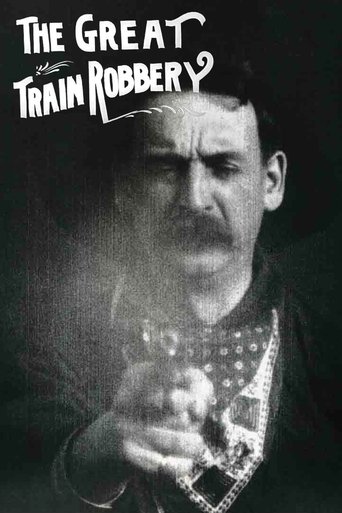
The Little Train Robbery is a comic parody of Edwin S. Porter’s famous 1903 Western The Great Train Robbery, recast with children performing the roles of outlaws, passengers, and lawmen. A gang of young bandits board a toy-sized train, intimidate the little passengers, and steal their belongings in a playful imitation of the earlier robbery film’s structure and action beats. The children then flee with their loot, but they are pursued by a posse of miniature policemen, leading to a chase that ends with the outlaws being captured or otherwise outmaneuvered. Like its model, the film uses straightforward narrative staging, but it adds a mischievous, satirical tone by turning a serious crime story into child’s play.
Director
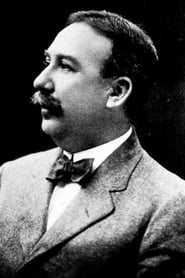
Edwin S. PorterAbout the Production
This short was made as an explicit parody of Edwin S. Porter’s own landmark 1903 western The Great Train Robbery, and it is one of the clearest early examples of film self-parody in American cinema. As with many Edison productions of the period, the film was made on a very modest scale using studio resources, simple sets, and a small cast, with the emphasis placed on gag construction and recognizable visual references rather than elaborate production values. The film’s use of children as the cast gives the action a playful, mock-serious quality that depends on audience familiarity with the earlier Porter film. Precise budget, earnings, and detailed production records do not survive in reliable published form for this title, which is common for films from the 1900s.
Historical Background
The film was made in 1905, at a moment when American cinema was rapidly evolving from novelty attractions into a recognized narrative form. Two years earlier, The Great Train Robbery had become one of the most famous and influential films of the silent era, helping establish the Western and the action-chase film as durable genres. The Little Train Robbery reflects both the cultural prominence of the earlier film and the speed with which early cinema began to quote, parody, and recycle its own successes. It also emerged during the Progressive Era, when railroads were a central symbol of modern American life, technological change, and popular entertainment, making train-robbery stories immediately legible to audiences.
Why This Film Matters
This film matters as an early example of cinematic parody and as evidence that audiences in the 1900s were already familiar enough with film conventions to appreciate a spoof. It demonstrates that early filmmakers were not only inventing grammar and genre, but also reflecting on and joking about those inventions almost immediately. For film historians, it is valuable because it shows how rapidly The Great Train Robbery became a cultural touchstone. The use of children also adds a layer of social comedy, softening the violence of the original while exposing the elasticity of early screen storytelling.
Making Of
The Little Train Robbery was produced during a period when Edwin S. Porter and the Edison Manufacturing Company were testing how far narrative film could be pushed for novelty, humor, and recognition. Rather than invent a wholly new story, the filmmakers relied on the audience’s memory of The Great Train Robbery, transforming its familiar images into a child-centered gag. That approach suggests a sophisticated understanding of intertextual humor at a very early date: the joke depends on the viewer recognizing the original film’s robbers, train setting, and chase structure. Surviving documentation on the shoot itself is limited, but the film’s straightforward staging indicates the same practical studio methods used in many Edison shorts, with emphasis on tableau-like composition, clear action, and efficient editing.
Visual Style
The cinematography is characteristic of early Edison shorts, with a fixed-camera aesthetic, stage-like framing, and emphasis on legible movement within the frame. The film likely uses simple compositions that allow the audience to read the action instantly, especially the robbery, pursuit, and capture beats. Its visual humor comes from the contrast between miniature or child-sized action and the solemn, adventure-film structure it parodies. The style is direct and unadorned, but that simplicity is essential to the clarity of the joke.
Innovations
There are no major technical innovations associated specifically with this title, but it is notable for its early and deliberate use of parody as a narrative device in film. Its achievement lies in applying the still-young grammar of cinematic storytelling to a self-aware comic spoof. By replicating a well-known earlier film’s structure in miniature, it shows how early cinema could use editing, staged action, and recognizable iconography to create meaning through comparison rather than novelty alone.
Music
The film is silent and would originally have been shown with live musical accompaniment, likely improvised or selected by the exhibitor to match the comic action. No original score survives or is known to have been published specifically for the film. Modern screenings may use archive-created or contemporary accompaniment, depending on the venue or source print.
Memorable Scenes
- The children bandits boarding and robbing the toy train, which playfully mirrors the famous outlaw attack in The Great Train Robbery.
- The chase sequence in which tiny or child-sized police pursue the young thieves, turning a standard action climax into comic imitation.
Did You Know?
- It is a parody of Edwin S. Porter’s own The Great Train Robbery, making it an unusual case of a director spoofing one of his most famous films.
- The film is often cited as one of the earliest American movie parodies.
- The robbers, passengers, and police are all played by children, which heightens the comic contrast with the violent outlaw drama it imitates.
- Its title and premise directly invoke the popularity of railroad crime films in the early years of narrative cinema.
- The film survives today and is available through archives and public-domain repositories, unlike many early Edison titles that are lost.
- It belongs to the formative period when film narratives were becoming more complex while still relying heavily on familiar theatrical and melodramatic conventions.
- The movie demonstrates how quickly early cinema developed self-referential humor, only two years after the release of the film it satirizes.
- Because it mirrors the structure of The Great Train Robbery, it is often used by historians to discuss early genre recognition and audience literacy in film.
- Its use of a kiddie train makes the “train robbery” premise literalized in a miniature, playful form, reinforcing the film’s comic tone.
- The film is short, silent, and likely screened with live musical accompaniment in its original exhibitions, as was standard for the era.
What Critics Said
Contemporary review culture for films of this exact era was limited, and detailed first-run criticism is not widely preserved. In later historical assessments, the film has been treated positively as a clever, concise parody and an instructive example of early self-referential filmmaking. Modern critics and historians tend to value it less for artistic depth than for what it reveals about early audience recognition, genre imitation, and the speed of cinematic memory. It is frequently discussed in histories of silent comedy and Edison-era production as a small but revealing piece of film history.
What Audiences Thought
Specific audience surveys or box-office records are not known for this title, but the film likely played effectively as a novelty gag for viewers already aware of The Great Train Robbery. Its humor would have depended on recognition of the earlier film’s famous iconography, and that familiarity likely made it especially amusing to contemporary audiences. As a short subject, it would have been exhibited as part of a mixed program, where its quick joke and clear action would have made it easy to appreciate without elaborate context.
Film Connections
Influenced By
- The Great Train Robbery (1903)
- Early American Western films
- Stage melodrama and comic sketch traditions
This Film Influenced
- Later silent film parodies of Westerns and crime dramas
- Early cinematic spoof shorts that borrowed from recognizable hits
You Might Also Like
More Action Films
View allMore from Edwin S. Porter
View allFilm Restoration
The film is preserved and survives in modern archives and public-domain copies; it is not considered lost.