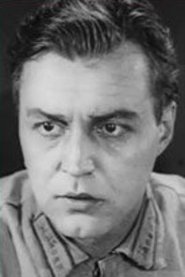

The New Land
"Don fields under new orders"
Keys: Space play/pause · ←/→ 10s · F fullscreen · M mute · </> speed
About this film
Based on the novel of the same name by Mikhail Sholokhov. About how collectivization was carried out on the Don in sharp contradictions, difficult and tense.
Cast & crew
More films like this
More Drama films
View all →







More from Yuli Raizman
View all →

More about this film
About the production
Release date1940
ProductionMosfilm Studio
Filmed inMoscow, USSR, Don Region locations
The film was produced during the height of Stalin's regime when collectivization was a central theme in Soviet cinema. Director Yuli Raizman worked closely with Soviet authorities to ensure the film aligned with official party ideology regarding agricultural transformation. The production faced challenges in finding authentic locations that could represent the Don region during the collectivization period.
Themes
CollectivizationClass struggleSocial transformationIdeological conflictAgricultural progress
Themes & topics
collective farmkulakcommunist organizerland reformclass conflictagricultural policySoviet propagandasocialist realismDon regionpeasant life
Historical background
The New Land reached screens around 1940, produced in its country of origin. Postwar distribution and sound standards shaped how it was marketed.
Why this film matters
Researchers cite The New Land when tracing screen culture of its decade.
Making of
The making of The New Land occurred during a particularly controlled period in Soviet cinema, when all films had to serve ideological purposes. Director Yuli Raizman, already an established filmmaker by 1940, had to navigate the strict censorship requirements of Stalinist cultural policy. The casting process emphasized actors who could convincingly portray the ideological struggle between different classes of peasants. The film's production team worked closely with agricultural officials to ensure accurate representation of collective farming practices, though the narrative was heavily fictionalized to serve propaganda purposes. The cinematography was designed to emphasize the vastness of the Russian landscape and the scale of the agricultural transformation.
What critics said
Reviewers in 1940 weighed The New Land on clarity, pacing, and audience response rather than prestige status. No single canonical review dominates later reference works for the title.
Did you know?
- The film was based on Mikhail Sholokhov's work, who would later win the Nobel Prize in Literature in 1965
- Director Yuli Raizman was among the leading prominent Soviet directors of his time, known for his ideological films
- The film was released just before World War II, during a period of intense Soviet cultural production
- Collectivization was a controversial and often violent process in Soviet history, making this a politically sensitive subject
- The film was part of a series of Soviet productions in the 1930s-40s that glorified the collectivization process
- Many of the actors in the film were established stars of Soviet cinema
- The film's release coincided with the 20th anniversary of Soviet collectivization policies
- Sholokhov's original work was part of his larger cycle about Don Cossacks and their transformation
Awards & recognition
- Stalin Prize, Second Class (1941)
Visual style
The cinematography of The New Land employed techniques typical of Soviet socialist realism, emphasizing wide shots of agricultural landscapes to showcase the scale of collectivization. The visual style contrasted the old, fragmented private farms with the new, orderly collective farms. Camera work was used to create dramatic tension during conflict scenes and to highlight the emotional states of characters during pivotal moments. The film made effective use of natural light in outdoor scenes to emphasize the connection between the people and their land. The visual composition often placed collective farmers in heroic poses, reinforcing the film's ideological message.
Innovations
The New Land utilized advanced filming techniques for its time, including location shooting in agricultural regions to achieve authenticity. The film's production team employed innovative methods for creating large-scale scenes involving multiple actors and farm equipment. The sound recording techniques used in the film were sophisticated for 1940 Soviet cinema, allowing for clear dialogue in outdoor settings. The editing style emphasized the dramatic progression from individual to collective farming, using montage techniques to show the passage of time and the transformation of the landscape. The film's technical quality reflected the high production values of Mosfilm Studio during this period.
Music
The musical score for The New Land was composed in accordance with Soviet musical traditions of the period, featuring patriotic themes and folk-inspired melodies that reflected the agricultural setting. The soundtrack included songs that celebrated collective farming and socialist progress, often performed by characters within the narrative. The music was designed to enhance emotional moments during scenes of struggle and triumph. The score utilized traditional Russian musical elements blended with modern orchestral arrangements to create a sound that was both familiar and progressive, mirroring the film's themes of agricultural transformation.
Famous quotes
The land belongs to those who work it, not to those who exploit it
Collective farming is our path to socialism
The old ways must die for the new Soviet life to begin
We will build socialism on our fertile soil
The kulak's resistance is futile against progress
Memorable scenes
- The dramatic confrontation between kulaks and collective farm organizers
- The first harvest celebration on the newly established collective farm
- The scene where peasants vote to join the collective farm
- The nighttime meeting where communist organizers plan their strategy
- The final scene showing the successful collective farm with happy workers
What audiences thought
The New Land was well-received by Soviet audiences in 1940, who were accustomed to films with strong ideological messages. The film's dramatic portrayal of class struggle and agricultural transformation resonated with viewers who had experienced or heard about collectivization. The film's success at the domestic box office reflected its popularity among Soviet moviegoers. However, audience reception must be understood in the context of limited entertainment options and the pervasive influence of state propaganda. The film's themes and characters were designed to be relatable to Soviet citizens of the time, many of whom had personal connections to the agricultural transformation depicted.
Film connections
Influenced by
- Soviet socialist realist cinema
- Lenin's writings on agriculture
- Stalin's collectivization policies
- Earlier Soviet films about agricultural themes
This film influenced
- Later Soviet films about collectivization
- Post-war Soviet agricultural cinema
- Films about Soviet rural transformation
Film restoration
The film is preserved in the Gosfilmofond archive in Russia, the state film archive of the Russian Federation. It has been digitized as part of efforts to preserve classic Soviet cinema. The original negatives are maintained under controlled conditions. The film has been periodically restored for retrospectives and special screenings.
Where to watch
- Available in the Soviet film archive collections
- Shown in specialized cinema retrospectives
- Accessible through film studies programs at universities
- Available through Russian cultural institutions
- May be found in specialized streaming services for classic cinema