

The New Teacher
"The arrival of the teacher causes confusion in the soul of the young neighbor Agrafena."
Keys: Space play/pause · ←/→ 10s · F fullscreen · M mute · </> speed
About this film
A young teacher comes to work in his native village, plans to build a new school. The arrival of the teacher causes confusion in the soul of the young neighbor Agrafena Shumilina.
Cast & crew
More films like this
More Drama films
View all →







More from Sergei Gerasimov
View all →

More about this film
About the production
Release dateMay 15, 1939
Box officeUnknown - Soviet box office records were not maintained in the Western sense
ProductionLenfilm Studio
Filmed inLeningrad (now St. Petersburg), Russia, Various locations in the Soviet Union
Shot during a challenging period in Soviet cinema, just before World War II. Director Sergei Gerasimov, who also wrote the screenplay, drew inspiration from his own experiences as a teacher in rural areas. The production faced difficulties in finding authentic rural locations that hadn't been collectivized, as the government wanted to present an idealized version of Soviet village life.
Themes
Education as revolutionary transformationIndividual vs. collective valuesTradition vs. progressRomantic love in the context of social dutyBuilding socialism through cultural development
Themes & topics
teacherrural villageeducationSoviet Unionromancesocial transformationconstructionidealscollectivizationliteracy campaignSiberiarevolutionary zealtraditional valuesprogresscommunity building
Historical background
Made in 1939, in Soviet Union, under Sergei Gerasimov, The New Teacher belongs to comedy drama filmmaking as studio systems and national cinemas competed for audiences. The New Teacher is a 1939 Soviet comedy drama film directed by Sergey Gerasimov.
Why this film matters
Within comedy drama history, Sergei Gerasimov's name attaches to the work; 1939 film by Sergei Gerasimov.
Making of
The production of 'The New Teacher' took place during a particularly tense period in Soviet history. Director Sergei Gerasimov, who had established himself as one of the leading directors of his generation, faced the challenge of creating a film that was both artistically compelling and ideologically sound. The screenplay went through multiple revisions to satisfy Soviet censors, with particular attention paid to ensuring the teacher's character was sufficiently revolutionary in his outlook. The casting of Boris Chirkov was strategic, as he was already beloved by Soviet audiences for his portrayal of everyday heroes. The film's rural scenes were shot on location in actual villages, though many of the buildings and sets had to be modified to present the idealized version of Soviet rural life that the government wanted to project. The relationship between Stepan and Agrafena was carefully handled to avoid appearing too bourgeois or individualistic, with their romance ultimately serving the greater purpose of building socialism.
What critics said
Contemporary reviews of The New Teacher are sparse in open sources; later catalog entries chiefly summarize plot and credits.
Did you know?
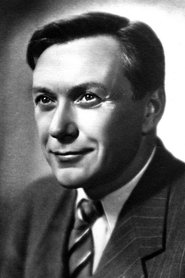
- Boris Chirkov, who played the teacher Stepan, was popular actors in Soviet cinema and had previously starred in Gerasimov's 'The Seven Brave Men' (1936)
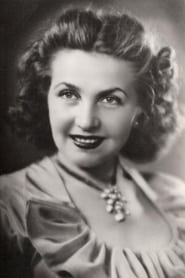
- Tamara Makarova, who played Agrafena, was married to director Sergei Gerasimov in real life, making this one of several collaborations between the couple
- Initially criticized by some Soviet officials for being too sentimental and not sufficiently ideological
- Director Sergei Gerasimov was only 35 years old when he made this film, but was already an established figure in Soviet cinema
- The school building shown in the film was actually a specially constructed set, as finding a real rural school that met the ideological requirements was difficult
- The film's release coincided with the height of Stalin's purges, making its optimistic tone particularly notable for the period
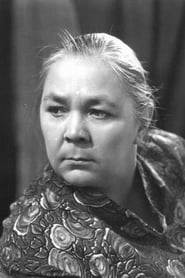
- Lyudmila Shabalina, who played a supporting role, was discovered by Gerasimov and this was one of her first major film roles
- One of the last Soviet productions before the outbreak of World War II to focus on peaceful construction themes
- The character of Stepan Lautin was based on real teachers who participated in the Soviet literacy campaigns of the 1920s and 1930s
- The film's emphasis on education reflected the Soviet government's priority of eliminating illiteracy, which had been nearly 80% at the time of the revolution
Awards & recognition
- Stalin Prize (Second Degree) - 1941 (awarded to director Sergei Gerasimov)
- Order of Lenin - Awarded to the film for its contribution to Soviet cinema
Visual style
The cinematography of The New Teacher was handled by Vladimir Rapoport, who employed a style that balanced realistic documentary-like sequences with more poetic, romanticized imagery. The film makes effective use of wide shots to emphasize the vastness of the Siberian landscape and the isolation of the village, creating a visual contrast between the natural world and the human desire to transform it. Rapoport's camera work during the construction of the school emphasizes the collective effort and progressive spirit of the community. The interior scenes are shot with a more intimate style, particularly during the emotional exchanges between Stepan and Agrafena. The film's visual language draws on both Soviet montage traditions and the emerging realist tendencies of the late 1930s. The use of natural lighting in outdoor scenes gives the film an authentic feel, while the carefully composed shots of the new school building symbolize the bright future promised by Soviet progress. The cinematography successfully supports the film's themes without overwhelming the human drama at its center.
Innovations
While The New Teacher did not introduce revolutionary technical innovations, it demonstrated several notable achievements in Soviet film production of the late 1930s. The film's sound recording was particularly sophisticated for its time, with clear dialogue capture even in challenging outdoor locations. The production team developed special techniques for filming in remote rural areas, bringing mobile equipment to locations that had never before hosted film shoots. The construction sequences featured impressive practical effects and coordinated extras to realistically portray the building of the school. The film's editing, supervised by Gerasimov, effectively balanced the multiple storylines while maintaining narrative coherence. The makeup and costume departments successfully created authentic-looking rural characters while still meeting the aesthetic standards of Soviet cinema. The film's preservation and restoration over the decades have demonstrated the durability of the original film stock and production quality, allowing modern audiences to appreciate the film's technical merits.
Music
The musical score for The New Teacher was composed by Venedikt Pushkov, who created a soundtrack that blended traditional Russian folk melodies with more modern, optimistic Soviet musical themes. The music emphasizes the film's emotional moments, particularly during the scenes between Stepan and Agrafena, where romantic themes underscore their developing relationship. Pushkov also incorporated educational and revolutionary songs that reflect the film's ideological concerns. The soundtrack features several folk songs performed by the villagers, creating an authentic rural atmosphere while also showing how traditional culture was being adapted to serve Soviet purposes. The music during the construction scenes has a triumphant, forward-looking quality that reinforces the theme of building socialism. The score was praised for its ability to enhance the film's emotional impact without becoming overly propagandistic, a delicate balance in Soviet cinema of the period. The main musical theme became quite popular and was often played on Soviet radio in connection with educational programs.
Famous quotes
A teacher is not just someone who teaches letters and numbers, but someone who builds souls and shapes the future of our country.
Every brick we lay for this school is a brick in the foundation of our socialist future.
Education is the light that will dispel the darkness of ignorance in our village.
We are not just building a school, we are building a new world for our children.
The greatest revolution is the one that happens in the minds of people through education.
Memorable scenes
- The opening sequence showing Stepan Lautin's train journey back to his native village, filled with his optimistic thoughts about bringing enlightenment to his people
- The scene where Stepan first addresses the village council about building a new school, facing skepticism from the older peasants but winning over the youth
- The emotional confrontation between Stepan and Agrafena by the river, where their true feelings for each other are revealed amidst the backdrop of the Siberian landscape
- The montage sequence showing the entire village working together to build the new school, accompanied by triumphant music and intercut with scenes of children eagerly awaiting their education
- The final scene showing the completed school with students attending their first classes, symbolizing the successful transformation of the village and the triumph of progress over tradition
What audiences thought
Was extremely popular with Soviet audiences upon its release. Boris Chirkov, already a beloved actor, further cemented his status as popular film stars in the Soviet Union with his performance as Stepan Lautin. The film's emotional story and relatable characters resonated with viewers, many of whom had personal experience with the literacy campaigns and rural transformation depicted in the film. The romantic subplot between Stepan and Agrafena particularly appealed to audiences, providing a human element that transcended the film's ideological message. The film ran successfully in theaters across the Soviet Union for months and was frequently revived for special screenings, particularly on Teachers' Day and other educational holidays. Even decades after its release, The New Teacher remained a familiar and beloved film for generations of Soviet viewers, with many remembering specific scenes and lines of dialogue. Its enduring popularity demonstrated how Soviet cinema could create works that both served the state's ideological needs and genuinely moved audiences.
Film connections
Influenced by
- Soviet socialist realist literature of the 1930s
- Earlier Soviet films about education such as 'Road to Life' (1931)
- The works of Maxim Gorky, particularly his stories about rural transformation
- Soviet propaganda posters emphasizing education and progress
- Real-life experiences of teachers in Soviet literacy campaigns
This film influenced
- The Village Teacher (1947)
- Spring on Zarechnaya Street (1956)
- We'll Live Till Monday (1968)
- Numerous later Soviet films about teachers and education
- Post-Soviet Russian films examining the legacy of Soviet education
Film restoration
Has been well-preserved in the Russian State Film Archive (Gosfilmofond). The original negatives survived World War II and the subsequent decades, allowing for high-quality restorations. The film underwent a major digital restoration in the early 2000s as part of a project to preserve classic Soviet cinema. The restored version has been shown at various international film festivals and is available in high definition. Some original elements, including outtakes and alternative takes, are preserved in the Lenfilm archives. The film's survival is notable given that many Soviet films from this period were lost or damaged during the war years. The preservation status allows modern audiences to appreciate the film in quality close to its original theatrical presentation.
Where to watch
- Available on streaming platforms specializing in classic cinema such as Kanopy (with university library access)
- Included in the Criterion Channel's collection of Soviet cinema
- Available on DVD and Blu-ray from specialized distributors of classic world cinema
- Can be viewed at film archives and cinematheques that maintain collections of Soviet films
- Occasionally screened at film festivals and retrospectives of Soviet cinema
- Available on some Russian streaming platforms with English subtitles