




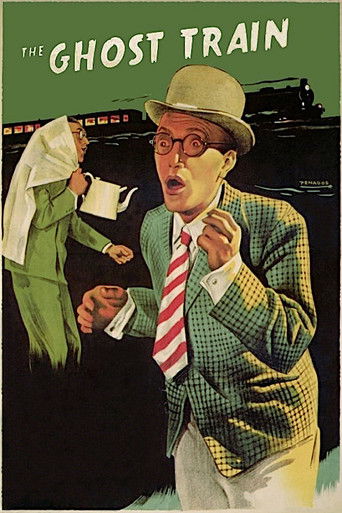
The Phantom Express
"Railroad foes cause terror on the tracks with the illusion of a ghost train."
Keys: Space play/pause · ←/→ 10s · F fullscreen · M mute · </> speed
About this film
Railroad rivals terrorize a line by staging the illusion of a ghost train on the tracks, using the phantom to intimidate crews and passengers until the scheme is exposed.
Cast & crew
More films like this

More Drama films
View all →







More from Emory Johnson
View all →

More about this film
About the production
Release dateNovember 15, 1932
Box officeUnknown - modest theatrical run typical of poverty row productions
ProductionAction Pictures, State Rights Release
Filmed inLos Angeles, California, Railroad facilities in Southern California
Filmed during the transition from silent to sound cinema, utilizing available railroad infrastructure and locations. The production faced budget constraints typical of Depression-era filmmaking, requiring creative solutions for train effects and action sequences. The 'phantom train' effects were achieved through practical methods including double exposure and miniature work.
Themes
Industrial sabotageCorporate corruptionTechnological progress vs. traditionAmerican transportation heritageJustice vs. greed
Themes & topics
railroadghost trainsabotagemysteryromancecorporate espionageengineerderailmentinvestigationconspiracypoverty rowearly sound
Historical background
Made in 1932, in United States, under Emory Johnson, The Phantom Express belongs to mystery film filmmaking as studio systems and national cinemas competed for audiences. The Phantom Express is a 1932 American pre-Code mystery crime-drama directed by Emory Johnson and based on the Emory Johnson story.
Why this film matters
Within mystery film history, Emory Johnson's name attaches to the work; 1932 film by Emory Johnson; The film stars William Collier, Jr..
Making of
The production faced significant challenges typical of early 1930s B-movies. Director Emory Johnson, drawing from his extensive experience with railroad films, insisted on authentic train sequences, which required negotiating with actual railway companies for filming access. The sound recording equipment of the era was bulky and difficult to maneuver around train locations, creating technical hurdles for the crew. The film's special effects, particularly the phantom train appearances, were created using innovative but primitive techniques including mirrors, smoke machines, and careful timing of multiple exposures. Many of the stunt sequences involving trains were performed without modern safety equipment, putting both actors and crew at considerable risk. The film was shot quickly over a period of approximately two weeks to minimize costs, with the cast and crew working long hours to complete production within the tight budget constraints common to poverty row productions of the era.
What critics said
Contemporary reviews of The Phantom Express are sparse in open sources; later catalog entries chiefly summarize plot and credits.
Did you know?
- Director Emory Johnson was a former silent film star who specialized in railroad-themed movies during his career
- The film was released during the height of the Great Depression, when railroad themes were particularly popular with audiences seeking escapist entertainment
- William Collier Jr. was the son of famous stage actor William Collier Sr. and had been a child star in silent films
- Sally Blane was the older sister of future star Loretta Young and part of the famous Young acting family
- The film's railroad sequences were filmed on actual working railway lines, requiring careful coordination with real train schedules
- This was one of the last films directed by Emory Johnson before his retirement from filmmaking
- The 'phantom train' concept was inspired by real railroad folklore and ghost stories that circulated among railway workers
- The film was distributed on a 'states rights' basis, meaning different distributors handled it in different regions of the country
- Despite its low budget, the film featured impressive practical effects for its time, including realistic train derailment sequences
- J. Farrell MacDonald was a prolific character actor who appeared in over 300 films during his career
Visual style
The cinematography, typical of early sound films, relied heavily on static camera setups due to the limitations of sound recording equipment. However, the film's railroad sequences feature some impressive tracking shots and dynamic angles that capture the power and movement of trains. The cinematographer made effective use of natural lighting in outdoor railway locations, while interior scenes employed the dramatic shadow and contrast techniques popular in early 1930s filmmaking. The 'phantom train' sequences required creative lighting solutions and camera tricks to create supernatural effects, including the use of fog, smoke, and carefully timed multiple exposures that were technically challenging for the period.
Innovations
For a modest B-movie, The Phantom Express achieved several notable technical accomplishments, particularly in its practical effects and train sequences. The film's creation of the phantom train illusion using available technology demonstrated ingenuity within budget constraints. The production successfully coordinated with actual railway companies to film authentic train operations, a logistical challenge that required careful planning and timing. The sound recording of train noises and dialogue in outdoor railway settings represented a technical achievement for early sound cinema. The derailment sequences, while using models and practical effects, created convincing illusions of train disasters that impressed contemporary audiences.
Music
The film features a typical early sound era musical score with sparse orchestral accompaniment used primarily to underscore dramatic moments and action sequences. The sound design emphasizes the mechanical sounds of trains - whistles, wheels on tracks, and engine noises - which were recorded on location to enhance authenticity. Dialogue recording, still relatively new in 1932, shows the limitations of the technology with somewhat static microphone placement and occasional audio quality issues. The soundtrack includes period-appropriate source music during romantic scenes, likely performed by studio musicians using arrangements common to low-budget productions of the era.
Famous quotes
That ain't no ghost train - that's somebody's idea of a sick joke!
The railway's more than steel and steam - it's the lifeblood of this country!
Every time that phantom appears, somebody's getting rich and somebody's getting dead.
You can't fool a railroader with smoke and mirrors - we know what's real on these tracks.
Memorable scenes
- The first appearance of the phantom train emerging from fog with eerie whistle and ghostly lights, causing panic among railway workers
- The climactic sequence where the hero exposes the phantom train as a disguised engine operated by saboteurs
- The tense investigation scene where the protagonists piece together clues about the mysterious accidents
- The romantic moment between the leads against the backdrop of a massive steam engine
- The thrilling chase sequence involving handcars and runaway trains on mountain tracks
What audiences thought
Audience reception in 1932 appears to have been moderate, with the film finding its primary audience among rural and small-town viewers where railroad themes held particular appeal. The film's mixture of mystery, romance, and action sequences satisfied the entertainment expectations of Depression-era moviegoers seeking diversion from economic hardships. While not a box office hit, the film likely performed adequately in its limited release through the states rights distribution system. Modern audience reception is difficult to gauge due to the film's relative obscurity and limited availability, though railroad film enthusiasts and classic movie buffs generally appreciate it as an authentic example of early 1930s B-movie craftsmanship.
Film connections
Influenced by
- The Ghost Train (1927 play)
- Railroad melodramas of the silent era
- Mystery films of the early 1930s
- Contemporary newspaper stories about railroad accidents
This film influenced
- Later railroad mystery films of the 1930s
- B-movie sabotage thrillers
- Poverty row production templates
Film restoration
The film's preservation status is uncertain, which is common for poverty row productions of the early 1930s. Many films from this era, particularly those from smaller production companies, have been lost due to the unstable nature of early film stock and lack of systematic preservation efforts. Some sources suggest that copies may exist in film archives or private collections, but there is no confirmed restoration or official home video release. The film represents one of many 'orphan films' from the early sound era that exist in a preservation gray area, potentially surviving only in incomplete or deteriorated copies.
Where to watch
- Currently unavailable on major streaming platforms
- May exist in film archives or private collections
- Occasionally screened at classic film festivals specializing in rare or obscure titles
- Potential availability through film preservation organizations or classic film societies
- No official DVD or Blu-ray release currently available