
The Price She Paid
"In order to save her extravagant mother from bankruptcy."
Keys: Space play/pause · ←/→ 10s · F fullscreen · M mute · </> speed
About this film
In order to save her extravagant mother from bankruptcy, shame and scandal, young society girl Mildred Gower is forced to accept the proposal of Lemuel Siddall, a wealthy man she loathes.
Cast & crew
More films like this
More Drama films
View all →







More from Henry MacRae
View all →
More about this film
About the production
Release dateMarch 17, 1924
ProductionUniversal Pictures
Filmed inUniversal Studios, Universal City, California
The film was based on the popular 1912 novel of the same name by David Graham Phillips, which was considered controversial for its time due to its critique of high society and the limited options available to women. The production was part of Universal's strategy to produce sophisticated melodramas targeting female audiences. Director Henry MacRae, known for his efficient work on serials and action films, brought a more restrained approach to this dramatic material.
Themes
Themes & topics
Historical background
The 1924 release of The Price She Paid belongs to its era's exhibition habits rather than today's franchise model.
Why this film matters
Archivists revisit The Price She Paid (1924) for performance styles and craft choices later mainstream releases refined.
Making of
Production details for The Price She Paid are sparse in surviving records. Direction is attributed to Henry MacRae.
What critics said
Audience data from 1924 is sparse; reception for The Price She Paid is inferred from reissue and archival interest.
Did you know?
- Directed by Henry MacRae.
- Production country: United States.
- Release year commonly listed as 1924.
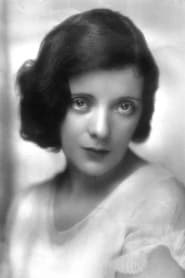
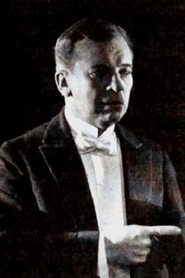
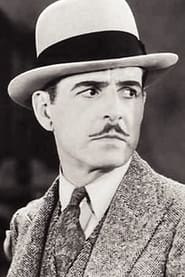
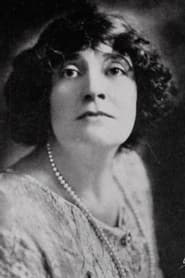
- The Price She Paid is a 1924 American silent drama film directed by Henry MacRae and starring Alma Rubens, Frank Mayo, and Eugenie Besserer.
- TMDB identifier: 600050.
Visual style
The cinematography, likely handled by Universal's regular staff cameramen, employed the sophisticated visual style typical of mid-1920s melodramas. The film featured extensive use of soft focus lighting to enhance the romantic and emotional scenes, particularly in close-ups of Alma Rubens. The contrast between the opulent society settings and more intimate domestic spaces was emphasized through careful lighting design and composition. The film made effective use of location shooting at Universal's backlot to create convincing high society environments. Visual storytelling techniques such as symbolic lighting and carefully composed shots reinforced the narrative themes of entrapment and sacrifice. The cinematography supported the film's emotional arc through varying camera distances and movement, creating intimacy in key moments while maintaining the proper scale for society scenes.
Innovations
While not groundbreaking in technical terms, The Price She Paid demonstrated Universal's commitment to high production values in its dramatic features. The film employed sophisticated lighting techniques that had become standard by 1924, including the use of arc lights for outdoor scenes and various diffusion methods for creating soft, romantic lighting. The set design for society scenes showed advanced construction techniques, allowing for complex camera movements within elaborate interiors. The film's editing maintained smooth continuity while building emotional tension through careful pacing of scenes. The intertitles, an essential element of silent storytelling, were crafted to be both informative and emotionally resonant, reflecting the sophisticated approach to narrative that had developed in Hollywood by this period.
Music
As a silent film, The Price She Paid would have been accompanied by live musical performance in theaters. The original cue sheets, if they exist, would have specified appropriate musical selections for each scene. Typical accompaniment would have included classical pieces for society scenes, romantic themes for Mildred's emotional moments, and dramatic music for confrontational scenes. Large urban theaters might have employed small orchestras, while smaller venues would have used piano or organ accompaniment. The music was crucial in conveying emotion and dramatic tension, particularly in scenes without intertitles. Universal likely provided suggested musical selections to theater musicians to ensure consistent emotional impact across different venues.
Famous quotes
I would rather die than be your wife!" - Mildred Gower
A woman's duty is to her family, no matter the cost." - Stephen Gower
Money cannot buy happiness, but it can buy respectability." - Lemuel Siddall
Memorable scenes
- The climactic confrontation scene where Mildred finally stands up to Lemuel Siddall and declares her independence, rejecting the gilded cage of her loveless marriage and choosing personal integrity over social standing.
What audiences thought
Patrons who saw The Price She Paid during initial runs judged it alongside other silent film releases of the day.
Film connections
Influenced by
- The novel 'The Price She Paid' by David Graham Phillips
- European melodramatic traditions
- Victorian literature on social class
- Contemporary women's fiction
- Stage melodramas of the early 20th century
This film influenced
- Later adaptations of David Graham Phillips' works
- Universal's subsequent melodramas
- Films exploring similar themes of female sacrifice in the 1920s
Film restoration
The preservation status of The Price She Paid (1924) is uncertain, which is unfortunately common for silent films from this period. Many Universal films from the 1920s were lost in the 1948 studio vault fire or were deliberately destroyed when silent films fell out of commercial value. No complete version is currently known to be held by major archives like the Library of Congress, UCLA Film & Television Archive, or the Museum of Modern Art. However, fragments or incomplete prints may exist in private collections or smaller archives. The film is listed as lost or missing in most film preservation databases, though ongoing discoveries of silent film material mean that previously lost films occasionally resurface.
Where to watch
- Currently unavailable for viewing due to its lost/poor preservation status. No known commercial releases exist on any home video format or streaming platform. Film enthusiasts interested in viewing similar films from this era might seek out surviving Universal melodramas from the 1920s that feature Alma Rubens or explore similar themes.