The Sealed Room
"A count builds a sealed room—and seals his own doom."
Keys: Space play/pause · ←/→ 10s · F fullscreen · M mute · </> speed
About this film
The Count sets out to make a private room for him and his Countess, built in such a way no one can see, hear, and most importantly, disturb them. But unbeknownst to the Count, his wife has set her eyes on the court minstrel. Based on Edgar Allan Poe's “The Cask of Amontillado” and Honoré de Balzac's “La Grande Breteche”.
Cast & crew
More films like this

More Romance films
View all →




More from D.W. Griffith
View all →
More about this film
About the production
Release dateSeptember 2, 1909
ProductionBiograph Company, American Mutoscope and Biograph Company
Filmed inBiograph Studio, New York City, Fort Lee, New Jersey
Filmed in just one day during Griffith's prolific period at Biograph, where he was directing multiple films per week. The production utilized simple but effective set design with a movable wall to create the illusion of the room being sealed. The brick wall sequence was accomplished through stop-motion techniques, showing the wall gradually being built to trap the lovers.
Themes
Themes & topics
adulterysealed roomentombmentrevengearistocracyminstrelbetrayalgothichorrorsilent filmearly cinemaliterary adaptation
Historical background
The Sealed Room (1909) survives in catalogs and archives as a record of the earliest projected-film era.
Why this film matters
Scholars and collectors reference The Sealed Room when discussing how the earliest projected-film era filmmakers addressed popular themes.
Making of
The production of 'The Sealed Room' exemplifies Griffith's rapid work pace at Biograph, where he was churning out multiple films weekly. The casting of Arthur V. Johnson as the Count and Marion Leonard as the Countess was typical of Griffith's use of a stock company of actors he worked with repeatedly. The brick wall sequence was achieved through clever editing and stop-motion photography, showing the gradual construction of the wall that would entomb the lovers. Griffith was already developing his signature close-up techniques during this period, using them to emphasize the emotional reactions of the characters, particularly the Count's cold determination and the Countess's terror. The film's lighting, primarily natural light from studio windows, created dramatic shadows that enhanced the gothic atmosphere of the piece.
What critics said
Where contemporary reviews survive, The Sealed Room is read against the tastes of 1909; revival screenings keep it in circulation.
Did you know?
- This was one of over 400 short films D.W. Griffith directed for Biograph between 1908-1913
- The film is an adaptation of Honoré de Balzac's 'La Grande Breteche' but incorporates elements reminiscent of Edgar Allan Poe's 'The Cask of Amontillado'
- Marion Leonard and Arthur V. Johnson were frequent collaborators with Griffith, appearing in dozens of his Biograph films
- The film was shot on 35mm film at a frame rate of 16 frames per second, standard for the era
- Henry B. Walthall would later star as 'The Little Colonel' in Griffith's controversial masterpiece 'The Birth of a Nation' (1915)
- The sealed room set was one of the more elaborate constructions for a Biograph short of this period
- This film demonstrates Griffith's early experimentation with suspense and psychological horror elements
- The film was copyrighted and released in the same month as Griffith's other notable 1909 films 'A Trap for Santa Claus' and 'The Death of a Child'
- Biograph films of this era were typically rented to theaters rather than sold, with each print costing approximately $15
- The film's intertitles were hand-lettered by Biograph staff members, a common practice before standardized title cards became standard
Visual style
The cinematography by G.W. Bitzer, Griffith's regular cameraman at Biograph, demonstrates the evolving visual language of early cinema. The film uses medium shots to establish the relationships between characters and close-ups to emphasize emotional moments, a technique Griffith was pioneering during this period. The lighting relies primarily on natural light from studio windows, creating dramatic shadows that enhance the Gothic atmosphere. The brick wall sequence employs stop-motion photography to show the gradual construction of the wall, creating a sense of inevitability and claustrophobia. Bitzer's camera work also includes subtle movement and framing choices that guide the viewer's attention to key narrative elements, particularly the Count's discovery of the affair and his subsequent revenge.
Innovations
The film demonstrates several technical innovations that were advancing cinematic storytelling in 1909. The use of stop-motion photography for the brick wall sequence was particularly sophisticated for its time, creating the illusion of a wall being built before the audience's eyes. Griffith's employment of cross-cutting between the Count's discovery and the lovers' tryst shows his growing mastery of parallel editing. The film also makes effective use of depth of field in the compositions, particularly in scenes showing the Count observing through the peephole. The production design, while simple, effectively creates the illusion of a sealed space through careful framing and set construction. These technical elements, while modest by modern standards, contributed significantly to the film's dramatic impact and represent important steps in the development of cinematic language.
Music
As a silent film, 'The Sealed Room' would have been accompanied by live music during exhibition. Typical accompaniment for a Biograph film of this period would have included a pianist or small ensemble in the theater, often improvising based on cue sheets provided by the studio or creating original music to match the on-screen action. The romantic scenes would have been accompanied by tender melodies, while the dramatic sealing sequence would have featured more dissonant and suspenseful music. Some theaters might have used popular songs of the era that matched the film's themes of love and betrayal. The score would have been crucial in establishing the emotional tone and helping audiences understand the characters' motivations in the absence of dialogue.
Famous quotes
No dialogue - silent film with intertitles
Memorable scenes
- The Count discovering the affair through the peephole, his face contorting with rage and betrayal. The gradual brick-by-brick sealing of the room, shown through stop-motion photography as the lovers' expressions shift from passion to terror. The final shot of the Count listening impassively to the muffled cries from behind the wall, his revenge complete. The Countess's desperate attempts to escape as the wall rises, her hands clawing at the bricks. The minstrel's realization of their fate, his musical instrument falling silent as doom descends.
What audiences thought
Audiences of 1909 responded positively to the film's dramatic tension and shocking conclusion. The theme of marital betrayal and its consequences resonated with contemporary viewers, while the visual spectacle of the brick wall sequence provided a memorable climax. The film's relatively short running time and clear narrative made it accessible to audiences still becoming accustomed to cinematic storytelling. As part of Biograph's programming, it would have been shown alongside other short subjects, typically in vaudeville theaters that were increasingly incorporating motion pictures into their bills. The film's success contributed to Griffith's growing reputation as one of Biograph's most reliable and innovative directors.
Film connections
Influenced by
- La Grande Breteche by Honoré de Balzac
- The Cask of Amontillado by Edgar Allan Poe
- Gothic literature tradition
- European romantic drama
- Victorian melodrama
This film influenced
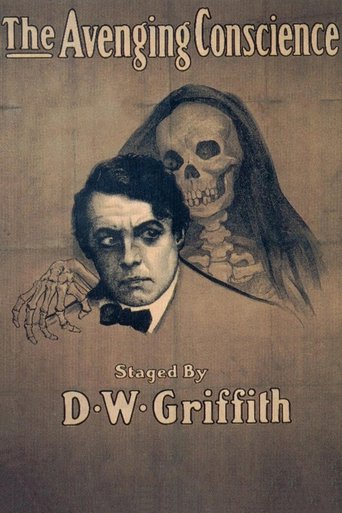
- The Avenging Conscience (1914)
- The Tell-Tale Heart (1928)
- The Fall of the House of Usher (1928)
- The Black Cat (1934)
- Various horror films featuring entrapment themes
Film restoration
The film survives in complete form and has been preserved by the Museum of Modern Art and the Library of Congress. Multiple 35mm and 16mm copies exist in various film archives worldwide. The film entered the public domain in the United States in 1938, 28 years after its initial release. Digital restorations have been created from the best surviving elements, though some deterioration is visible in the original nitrate material. The film is readily accessible through various public domain distributors and streaming platforms.
Where to watch
- Internet Archive
- YouTube (Public Domain uploads)
- Kanopy (through participating libraries)
- The Criterion Channel (occasionally in early cinema collections)
- Various public domain DVD compilations
- Film museum screenings and retrospectives
- Library of Congress National Audio-Visual Conservation Center
- Museum of Modern Art film collection