

The Shining Path
"Textile and worker"
Keys: Space play/pause · ←/→ 10s · F fullscreen · M mute · </> speed
About this film
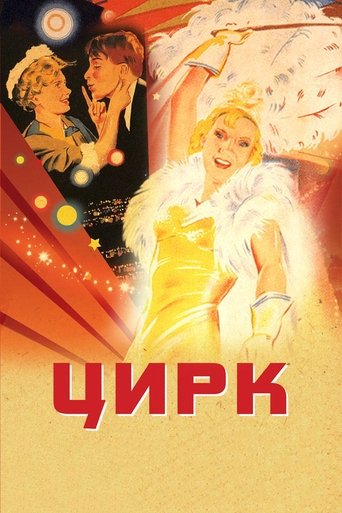
Tanya Morozova, an illiterate but industrious textile factory worker, finds happiness through her education and the Stakhanovite movement. She becomes a shock labourer and ascends through the Party ranks, ultimately being elected as a member of the Supreme Soviet.
Cast & crew
More films like this
More Comedy films
View all →







More from Grigori Aleksandrov
View all →



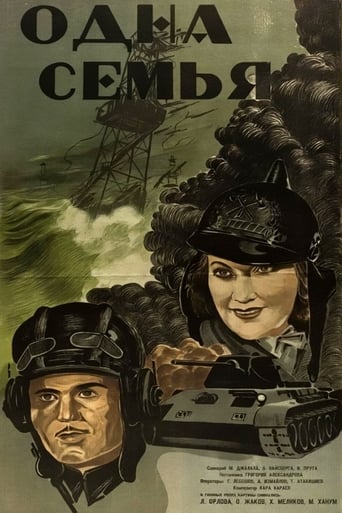
More about this film
About the production
Release dateOctober 7, 1940
Box officeExtremely successful across the Soviet Union with millions of viewers
ProductionMosfilm Studio, Goskino
Filmed inMoscow, USSR, Mosfilm Studios, Textile factories in the Moscow region
The film was made during the height of Stalin's industrialization campaign and served as powerful propaganda for the Stakhanovite movement. Director Grigori Aleksandrov, husband of star Lyubov Orlova, tailored the role specifically to showcase her talents and promote Soviet ideals. The production featured elaborate musical numbers and spectacular industrial sequences that required extensive coordination with real factories. The film's optimistic tone and celebration of Soviet achievement contrasted sharply with the harsh realities of Soviet life during this period, including the ongoing purges and difficult living conditions.
Themes
Socialist transformationEducation and self-improvementWomen's emancipation in Soviet societyIndustrial progressClass mobility through socialist achievement
Themes & topics
factory workerilliteracyeducationStakhanovitepolitical advancementtextile industrySoviet Unionpropagandamusicalsocialist realismindustrializationParty memberSupreme Sovietclass mobilitywomen's liberation
Historical background
Made in 1940, The Shining Path reflects production norms of World War II and immediate postwar filmmaking—shorter runtimes, regional audiences, and limited preservation infrastructure.
Why this film matters
Historians reference The Shining Path (1940) when discussing 1940 film by Grigori Aleksandrov.
Making of
The production of 'The Shining Path' was a massive undertaking that reflected the Soviet state's commitment to using cinema as a tool for ideological education. Director Grigori Aleksandrov, who had studied with Sergei Eisenstein and worked in Hollywood, brought a sophisticated understanding of film technique to what was essentially a propaganda project. The filming in actual factories presented unique challenges, as production had to be coordinated around real work schedules. Lyubov Orlova underwent extensive preparation for her role, spending time in textile factories to understand the work processes and meet with real Stakhanovite workers. The musical numbers required elaborate choreography that incorporated industrial machinery and work movements, creating a unique aesthetic that celebrated industrial labor. The film's post-production involved careful editing to ensure the propaganda message was clear while maintaining entertainment value. State officials closely monitored the production to ensure it aligned with current Party directives, particularly regarding the portrayal of the Stakhanovite movement and the path to success through Party loyalty.
What critics said
Where contemporary reviews survive, The Shining Path is discussed in terms of audience appeal at release; later criticism often reframes it through archive restoration and festival programming.
Did you know?
- The film's original Russian title is 'Светлый путь' (Svetlyy put), which literally translates to 'The Bright Path' or 'The Shining Path'
- Lyubov Orlova was married to director Grigori Aleksandrov and starred in several of his most famous films, making them one of the Soviet Union's most famous power couples
- The film was one of the last major Soviet productions before the outbreak of World War II and the German invasion in 1941
- The Stakhanovite movement depicted in the film was named after Aleksei Stakhanov, a coal miner who reportedly mined 14 times his quota in 1935
- The film featured elaborate musical numbers despite being primarily a propaganda piece, showcasing Aleksandrov's signature style of blending entertainment with ideological messaging
- Many of the factory scenes were filmed in actual working textile factories, with real workers appearing as extras
- The character of Tanya Morozova was based on composite stories of real-life Stakhanovite workers who had risen through the Party ranks
- The film's optimistic portrayal of Soviet industrial achievement was carefully timed to coincide with the completion of several Five-Year Plan goals
- Despite its propaganda nature, the film was technically innovative for its use of mobile cameras and complex choreography in factory settings
- The film was temporarily withdrawn from circulation after Stalin's death during the de-Stalinization period, though it was later restored
Awards & recognition
- Stalin Prize, First Class (1941) - awarded to Grigori Aleksandrov and Lyubov Orlova
- All-Union Film Festival Award (1940) - Best Actress for Lyubov Orlova
- Order of Lenin (1941) - awarded to the film's creative team
Visual style
The cinematography of The Shining Path, handled by Boris Volchek, employed innovative techniques to capture both intimate character moments and spectacular industrial sequences. The film made extensive use of mobile cameras to navigate through factory environments, creating dynamic movement that mirrored the energy of industrial production. High and low angles were strategically employed to emphasize both the grandeur of Soviet industrial achievement and the dignity of individual workers. The cinematography in the musical numbers was particularly sophisticated, employing complex tracking shots and choreographed camera movements that integrated machinery and human movement into unified visual compositions. The use of lighting was carefully controlled to create an optimistic, bright atmosphere that supported the film's ideological message. Industrial scenes were shot with a sense of spectacle, emphasizing the scale and power of Soviet industry while maintaining clarity in the action sequences. The cinematography successfully balanced the requirements of propaganda with artistic innovation, creating visually striking sequences that served both ideological and aesthetic purposes. The film's visual style influenced subsequent Soviet production dramas, establishing a visual language for portraying industrial labor that would be emulated for decades.
Innovations
The Shining Path showcased several technical innovations for Soviet cinema of its era, particularly in its integration of sound, music, and industrial environments. The film employed advanced sound recording techniques to capture both dialogue and the complex sounds of factory machinery while maintaining musical clarity. The mobile camera systems used in the factory sequences represented significant technical challenges, requiring custom equipment to navigate safely through working industrial spaces. The film's musical numbers featured complex choreography that synchronized human movement with machinery, requiring precise timing and coordination between performers, camera operators, and factory workers. The lighting design for industrial scenes overcame the challenges of filming in actual factories, creating visually appealing compositions while maintaining safety for cast and crew. The film's editing techniques, particularly in the musical sequences, employed sophisticated rhythm and pacing that influenced subsequent Soviet musical films. The production's use of actual factory locations and workers as extras created a sense of authenticity that was technically challenging to achieve while maintaining narrative control. The film's technical accomplishments were recognized with awards and influenced the technical standards for subsequent Soviet production films.
Music
The film's music was composed by Isaak Dunayevsky, one of the Soviet Union's most celebrated composers, who created a score that blended popular song styles with classical influences. The soundtrack featured several memorable songs that became popular hits across the Soviet Union, including 'Marriage' and various production numbers celebrating industrial labor. Dunayevsky's music skillfully supported the film's dual nature as both entertainment and propaganda, with uplifting melodies that reinforced the optimistic message. The musical numbers were carefully integrated into the narrative, often occurring during key moments of Tanya's transformation and advancement. The orchestration employed a combination of traditional Russian folk elements with modern, industrial-inspired rhythms, creating a distinctive sound that reflected the film's themes. The soundtrack was recorded using the best available technology of the time, with careful attention to balancing dialogue, music, and industrial sounds. Several songs from the film became standards in Soviet popular music and continued to be performed long after the film's initial release. The music's accessibility and emotional appeal helped make the film's ideological message more palatable to mass audiences, demonstrating how popular culture could effectively serve political ends.
Famous quotes
From illiterate worker to Supreme Soviet deputy - this is the path our Party offers to every dedicated worker!
Knowledge is power, and through knowledge, we build our socialist future!
Each stitch I sew is a stitch in the fabric of our great socialist society!
My hands may be rough from work, but my mind grows sharper with every book I read!
In the Soviet Union, every worker has the opportunity to become a leader if they dedicate themselves to the cause!
The factory is not just where we work - it's where we build our future and our country!
Memorable scenes
- The opening sequence showing Tanya struggling with illiteracy at the factory, unable to read safety signs and work instructions
- The musical number where Tanya and other workers transform the factory floor into a stage, using looms and machinery as part of the choreography
- The emotional scene where Tanya learns to read her first book, tears of joy streaming down her face as she realizes her transformation has begun
- The spectacular Stakhanovite competition sequence where Tanya breaks production records, intercut with shots of amazed workers and approving Party officials
- The final scene at the Supreme Soviet where Tanya, now elegantly dressed and confident, delivers her first speech as a deputy, representing the fulfillment of the Soviet dream
What audiences thought
The Shining Path was enormously popular with Soviet audiences upon its release, drawing millions of viewers across the Soviet Union. Lyubov Orlova was already one of the Soviet Union's biggest stars, and her performance as Tanya Morozova resonated with working-class viewers who saw their own aspirations reflected on screen. The film's musical numbers and optimistic message provided welcome entertainment during a difficult historical period. Many viewers were inspired by Tanya's journey from illiteracy to political success, seeing it as proof that the Soviet system offered genuine opportunities for advancement. The film's popularity endured for years, with frequent theatrical re-releases and television broadcasts making it among the leading-seen Soviet films of its era. During the post-Stalin era, audience reactions became more complex, with some viewers recognizing the film's propagandistic elements while still enjoying its entertainment value. The film continues to be shown in retrospectives of Soviet cinema, though modern Russian audiences often view it with historical detachment, recognizing it as both entertainment and a product of its time. The film's emotional impact on contemporary viewers was significant, with many reporting feeling inspired by Tanya's determination and success.
Film connections
Influenced by
- American musical comedies of the 1930s
- Sergei Eisenstein's industrial films
- Buster Keaton's physical comedy
- Hollywood production values
- Soviet agitprop theater
- German expressionist cinema
- Soviet constructivist art
This film influenced
- Kuban Cossacks (1949)
- The Meeting on the Elbe (1949)
- The Great Citizen (1938)
- Volga-Volga (1938)
- later Soviet musical comedies
- Eastern Bloc industrial dramas
Film restoration
The film is well-preserved in the Gosfilmofond archive in Moscow and has undergone digital restoration. Multiple high-quality prints exist in international film archives, including the Library of Congress and the British Film Institute. The film was restored in the 1990s as part of a major Soviet cinema preservation project and again in 2015 with improved digital technology. The restoration has preserved both the visual quality and the soundtrack, including the musical numbers. The film remains accessible through various archival and educational channels.
Where to watch
- Available on Russian streaming platforms like Kinopoisk and Okko
- Included in Soviet cinema collections on YouTube
- Available through the Criterion Channel special collections
- Accessible on various international streaming services specializing in classic cinema
- Available on DVD/Blu-ray from specialized distributors like Kino Lorber and Artificial Eye
- Screenings at film festivals and cinematheques specializing in classic cinema
- Available through educational film archives and university libraries