
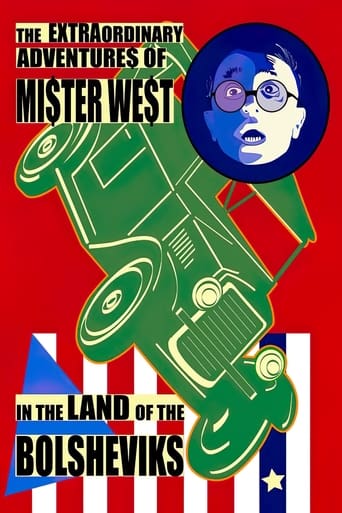
The Tailor from Torzhok
"Soviet lottery comedy from the finance ministry."
Keys: Space play/pause · ←/→ 10s · F fullscreen · M mute · </> speed
About this film
Petya Petelkin, a hardworking small-town tailor in Soviet Russia who dreams of starting his own business and marrying his beloved Katya. After purchasing a lottery ticket, Petya entrusts it to his landlord, the widow Shirinkina, who hopes to marry him for the potential winnings. As Petya navigates the chaotic and unpredictable Soviet economic landscape of the NEP era, he encounters a series of comical misunderstandings and absurd situations that test his entrepreneurial spirit and romantic aspirations. The film culminates in a heartwarming resolution where Petya's hard work and determination a…
Cast & crew
More films like this
More Comedy films
View all →







More from Yakov Protazanov
View all →


More about this film
About the production
Release dateOctober 26, 1925
Box officeNot documented - Soviet films of this era were not tracked by modern box office standards
ProductionGoskino, Mezhrabpom-Rus
Filmed inMoscow studios, Torzhok (location shooting)
The film was commissioned by the Soviet Finance Ministry as part of a propaganda campaign to promote the New Economic Policy (NEP). Director Yakov Protazanov, who had recently returned from exile in Europe, brought Western cinematic techniques to Soviet filmmaking. The production faced challenges with limited resources and equipment typical of the early Soviet film industry, but the creative team improvised effectively. The film was shot during a period of rapid industrialization and social change in the Soviet Union.
Themes
Entrepreneurship in socialist societyLove and romance in revolutionary timesClass mobility through hard workThe tension between tradition and modernityIndividual success within collective systems
Themes & topics
tailorlottery ticketNEP policysmall businessromantic comedypropagandaSoviet economymarriagelandlordentrepreneurship
Historical background
The Tailor from Torzhok (1925) reached screens through Goskino. Exhibitors of the time built silent-era bills that mixed shorts, features, and live acts, so a clear premise helped The Tailor from Torzhok travel between cities and exchange markets.
Why this film matters
Archivists and revival programmers still cite The Tailor from Torzhok (1925) when tracing studio habits, casting pools, and the visual rhetoric audiences once took for granted. Even modest surviving prints help map how The Tailor from Torzhok fit beside competing releases of its day.
Making of
The production of The Tailor from Torzhok represented a unique collaboration between artistic creativity and state propaganda. Director Yakov Protazanov, who had directed films in Germany and France before returning to the USSR, brought sophisticated cinematic techniques to Soviet audiences. The casting process was particularly interesting - Igor Ilyinsky was already established as a stage comedian, but the production helped launch his film career. Vera Maretskaya, despite her youth, impressed Protazanov with her natural acting style. The Finance Ministry's involvement meant that script approval went through multiple government layers, yet Protazanov managed to maintain artistic integrity while delivering the required pro-NEP message. The filming schedule was compressed to meet government deadlines, leading to innovative shooting techniques and improvisation by the cast.
What critics said
Trade coverage around 1925 discussed The Tailor from Torzhok for pacing, clarity, and program fit rather than blockbuster grosses. Later writers value it as evidence of period style and as a reference point beside other films from the same era.
Did you know?
- This was one of the first Soviet comedies specifically created to promote government economic policies
- Director Yakov Protazanov had worked in Hollywood before returning to the Soviet Union in 1923
- Igor Ilyinsky, who played Petya, became one of Soviet cinema's most beloved comic actors
- The film was part of a series of 'NEP films' that portrayed the new mixed economy in a positive light
- Vera Maretskaya was only 19 years old when she played Katya, marking one of her first major film roles
- The lottery ticket subplot was based on a real Soviet government lottery program designed to raise funds
- The film's title character was inspired by traditional Russian folk tales about clever craftsmen
- Protazanov used innovative camera techniques learned during his time in European cinema
- The film was temporarily banned in 1928 when NEP policies were reversed, but later rehabilitated
- Original prints featured hand-tinted color sequences for special scenes
Visual style
The cinematography by Vladimir Siversen employed innovative techniques for the time, including dynamic camera movements and creative angles that enhanced the comedic elements. Siversen used close-ups effectively to capture Ilyinsky's expressive facial comedy, a technique not commonly used in Soviet cinema of the period. The film featured elaborate tracking shots that followed characters through the bustling marketplace scenes, creating a sense of energy and movement. The lighting design emphasized the contrast between the dark, traditional workshop spaces and the bright, modern world of NEP commerce. The film also experimented with multiple exposure techniques for dream sequences and fantasy elements.
Innovations
The film pioneered several technical innovations in Soviet cinema, including the use of portable cameras for location shooting in Torzhok. The production team developed new lighting techniques to handle interior scenes in the cramped workshop settings. The film featured some of the earliest uses of montage for comedic effect in Soviet cinema, cutting rapidly between characters' reactions to heighten the humor. The special effects team created innovative transitions between scenes using wipes and dissolves that were technically advanced for the time. The film's editing style influenced subsequent Soviet comedies, establishing a rhythm and pacing that became standard for the genre.
Music
As a silent film, The Tailor from Torzhok was accompanied by live musical performances during theatrical screenings. The original score was composed by Vladimir Deshevov, who incorporated popular Russian folk melodies with modernist elements to reflect the film's themes of tradition meeting progress. The music was performed by small orchestras in major theaters and by single pianists in smaller venues. The score included leitmotifs for main characters and special musical cues for comedic moments. Some theaters used popular songs of the era instead of the composed score, adapting the accompaniment to local tastes.
Famous quotes
In the new Soviet economy, even a simple tailor can become a master of his destiny!" - Petya Petelkin
Love is the greatest lottery of all, and I have already won my prize!" - Petya to Katya
A needle and thread can sew more than clothes - they can sew together a new life!" - Opening narration
In Soviet Russia, even fortune must serve the people!" - Shirinkina
Memorable scenes
- The chaotic lottery drawing scene where Petya nervously awaits the results while Shirinkina plots to claim the ticket
- The elaborate workshop sequence where Petya demonstrates his tailoring skills to impress Katya
- The marketplace chase scene where Petya pursues his lottery ticket through a crowded bazaar
- The romantic boat ride where Petya and Katya declare their love against a scenic backdrop
- The final wedding scene that celebrates both personal happiness and Soviet progress
What audiences thought
The Tailor from Torzhok was extremely popular with Soviet audiences upon its release, playing to packed houses in major cities for weeks. Viewers particularly enjoyed Ilyinsky's physical comedy and the relatable story of an ordinary person trying to succeed in the new economic system. The film's lottery subplot resonated with audiences, as government lotteries were a new and exciting phenomenon. Audience feedback collected by Soviet cultural organizations showed that the film successfully conveyed its pro-NEP message while providing genuine entertainment. The film's success led to increased demand for comedies that addressed everyday Soviet life rather than just revolutionary epics.
Film connections
Influenced by
- German expressionist cinema
- American slapstick comedy
- Russian folk tales
- Soviet montage theory
- European romantic comedies
This film influenced
- The Girl with a Hatbox (1927)
- The Happy Canary (1929)
- Volga-Volga (1938)
- The Swineherd and the Shepherd (1941)
Film restoration
The film is preserved in the Gosfilmofond of Russia (State Film Archive) with complete prints available. Some original nitrate footage was transferred to safety stock in the 1950s. A restoration was completed in 1975 for the 50th anniversary of Soviet cinema. The film has been digitally remastered in recent years and is available in both Russian and international archives. Some original tinted sequences have been reconstructed based on production notes and contemporary descriptions.
Where to watch
- Gosfilmofond archive (Moscow)
- Museum of Modern Art film collection (New York)
- British Film Institute archive
- Criterion Channel (occasionally)
- Kino Klassika streaming platform
- Various film festival retrospectives
- Academic film archives worldwide