The White Rose
"A wealthy young Southern aristocrat, Joseph, graduates from a seminary and…"
Keys: Space play/pause · ←/→ 10s · F fullscreen · M mute · </> speed
About this film
A wealthy young Southern aristocrat, Joseph, graduates from a seminary and, before he takes charge of his assigned parish, decides to go out and see what "the real world" is all about. He winds up in New Orleans and finds himself attracted to a poor, unsophisticated orphan girl,
Cast & crew
More films like this
More Drama films
View all →







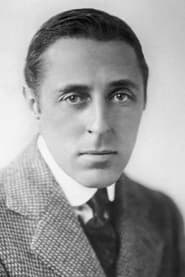
More from D.W. Griffith
View all →
More about this film
About the production
Release date1923-09-09
ProductionD.W. Griffith Productions, United Artists
Filmed inCalifornia, Los Angeles, Griffith Studio
The film was produced during a challenging period for D.W. Griffith, who was struggling to maintain his artistic and commercial dominance in the rapidly evolving film industry of the 1920s. Griffith cast his companion Carol Dempster in the lead role, despite her limited acting abilities, which was a source of tension during production. The film featured elaborate sets designed to recreate New Orleans, showcasing Griffith's commitment to visual authenticity even as his budgets were becoming more constrained.
Themes
Religious hypocrisySocial class divisionsMoral redemptionInnocence corruptedThe conflict between idealism and reality
Themes & topics
seminary studentunwanted pregnancysocial classmoral dilemmaNew Orleansorphanreligious hypocrisyredemptionsouthern aristocratfallen woman
Historical background
Released in 1923 during the late silent period, The White Rose reached audiences when exhibitors were still defining programming conventions. The narrative hook—A wealthy young Southern aristocrat, Joseph, graduates from a seminary and…—reflects what contemporary producers thought would draw viewers.
Why this film matters
The White Rose remains discussed by archivists tracing how screen stories of its period represented work, desire, conflict, and social order. Its central situation—A wealthy young Southern aristocrat, Joseph, graduates from a seminary and…—still prompts questions about genre conventions and audience expectations.
Making of
The production of 'The White Rose' reflected the changing dynamics of Hollywood in the early 1920s. Griffith, once the undisputed master of American cinema, was finding it increasingly difficult to secure financing and maintain creative control. The film was made through United Artists, the company Griffith had co-founded, but even there his influence was waning. During filming, tensions arose between Griffith and his crew, particularly regarding his insistence on casting Carol Dempster, whose performance was considered weak by many contemporaries. The New Orleans settings were recreated on studio backlots, demonstrating Griffith's continued commitment to visual spectacle despite budget constraints. The film's production was marked by Griffith's growing frustration with the industry's shift toward more commercial, less artistically ambitious projects.
What critics said
Trade and newspaper notices for The White Rose generally emphasized casting, spectacle, and program fit rather than extended aesthetic argument. Retrospective screenings and archival notes continue to shape how viewers evaluate The White Rose today.
Did you know?
- This was one of D.W. Griffith's last major silent films before his career decline in the late 1920s
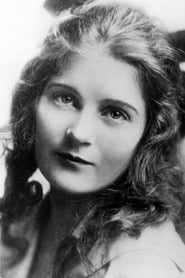
- Carol Dempster, who played Bessie, was Griffith's personal companion and appeared in many of his films despite criticism of her acting abilities
- The film's themes of religious hypocrisy and social morality were controversial for its time
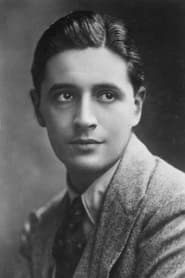
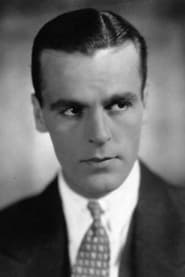
- Ivor Novello, who played Joseph, was a celebrated Welsh stage actor and composer making one of his rare American film appearances
- The original story was written by Griffith himself, drawing on his Southern background and interest in moral dilemmas
- The film was poorly received upon release, contributing to Griffith's diminishing influence in Hollywood
- Despite its commercial failure, the film is now considered by some scholars to contain some of Griffith's most mature thematic explorations
- The production coincided with Griffith's increasing financial difficulties and his separation from longtime collaborator Billy Bitzer
- The film's title refers to the symbolic purity of the protagonist's intentions, which become compromised by worldly experience
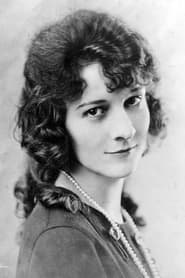
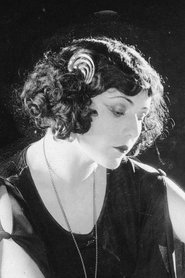
- Mae Marsh, who had been a Griffith discovery and star of his earlier films, returned for this production in a supporting role
Visual style
The cinematography, while not as innovative as Griffith's earlier work, demonstrated his continued commitment to visual storytelling. The film used chiaroscuro lighting to create moral contrasts between characters, particularly in scenes depicting the contrast between Joseph's religious world and Bessie's life in the underworld. The New Orleans sequences featured atmospheric street scenes and detailed set designs that reflected Griffith's background in Southern storytelling. The camera work included some of Griffith's characteristic techniques, such as iris shots and cross-cutting, though these were employed with less frequency and innovation than in his classic period.
Innovations
While not technically groundbreaking like Griffith's earlier works, 'The White Rose' demonstrated refined techniques in set design and lighting. The film's recreation of New Orleans on studio backlots showcased advanced production design capabilities for the time. The lighting techniques used to create moral contrasts between characters and settings were particularly sophisticated, employing the latest developments in artificial lighting technology. The film also featured some innovative uses of focus and depth of field to emphasize emotional moments, though these were subtle compared to the revolutionary techniques Griffith had pioneered earlier in his career.
Music
As a silent film, 'The White Rose' would have been accompanied by live musical performances in theaters. The original score was composed by Louis F. Gottschalk, Griffith's frequent collaborator. The music typically included classical pieces adapted to fit the film's emotional tone, with particular emphasis on religious themes for Joseph's scenes and more melancholic melodies for Bessie's story. The score reflected the film's moral dichotomy through its musical contrasts, using traditional hymns and sacred music alongside popular songs of the era that represented the 'worldly' elements of the story.
Famous quotes
I wanted to see the world as God sees it - with all its sin and suffering.
There are some things a man cannot unsee, some truths he cannot unlearn.
In trying to save the world, I have nearly lost my own soul.
Purity is not something we are born with, but something we must fight to preserve.
The greatest temptation is not the one that calls us to evil, but the one that convinces us we are doing good.
Memorable scenes
- Joseph's graduation from seminary, filled with idealistic speeches about serving humanity that foreshadow his later moral crisis
- The atmospheric New Orleans street sequence where Joseph first encounters Bessie, using chiaroscuro lighting to contrast their different worlds
- The pivotal scene where Joseph learns of Bessie's pregnancy, filmed with tight close-ups to emphasize his emotional turmoil
- The climactic confrontation between Joseph's religious duty and his personal responsibility, set against a stormy backdrop that mirrors his internal conflict
What audiences thought
The film was a commercial disappointment, failing to attract the audiences that had flocked to Griffith's earlier works. Contemporary audience reactions were mixed, with many finding the story overly moralistic and the pacing slow compared to the more dynamic films being produced by younger directors. The film's themes of religious hypocrisy and fallen womanhood, which had been powerful in Griffith's earlier works, seemed dated to 1920s audiences who were embracing more modern and sophisticated entertainment. The poor reception contributed to Griffith's growing financial difficulties and his decreasing ability to secure funding for ambitious projects.
Film connections
Influenced by
- Griffith's earlier films exploring moral themes
- 19th century Southern literature
- Victorian melodrama
- Religious literature
- Social problem plays of the early 20th century
Film restoration
The film is partially preserved with some sequences missing or incomplete. A restored version exists, compiled from various sources including surviving reels and still photographs. The preservation status reflects the challenges of maintaining Griffith's less commercially successful works from his later period. The film has been preserved by several archives including the Museum of Modern Art and the Library of Congress, though complete original elements are not known to survive.
Where to watch
- Available through select film archives and special screenings
- Some segments may be found on YouTube and other streaming platforms
- Preserved versions occasionally screened at classic film festivals
- Available through educational film distribution services