Three Women
"Drama film starring McAvoy."
Keys: Space play/pause · ←/→ 10s · F fullscreen · M mute · </> speed
About this film
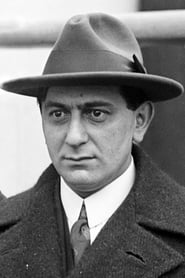
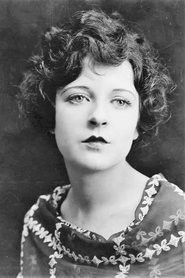
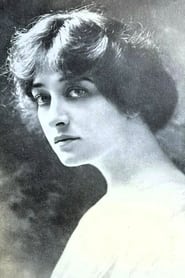
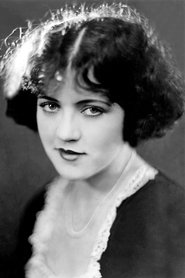
A frivolous middle aged socialite is suddenly put upon to have her daughter live with her. Her conniving paramour dumps her for the daughter, leaving the young boyfriend crushed. Three Women, also known as Die Frau, die Freundin und die Dirne, is a 1924 German-American silent drama film starring May McAvoy, Pauline Frederick, and Marie Prevost, directed by Ernst Lubitsch, and based on the novel Lillis Ehe by Yolande Maree.
Cast & crew
More films like this

More Drama films
View all →







More from Ernst Lubitsch
View all →
More about this film
About the production
Release dateSeptember 22, 1924
Box officeUnknown
ProductionWarner Bros. Pictures
Filmed inWarner Brothers Studio, Burbank, California
This was one of Ernst Lubitsch's early American films after his successful career in Germany. The film was produced during the transition period when Lubitsch was adapting his European cinematic techniques to Hollywood standards. The production featured elaborate sets designed to reflect the luxurious lifestyle of the upper-class characters.
Themes
Themes & topics
Historical background
By 1924, competing studios crowded weekly bills, and Three Women had to win attention alongside newsreels and shorts.
Why this film matters
Festival and repertory screenings keep Three Women in circulation among silent- and classic-film communities.
Making of
Ernst Lubitsch brought his distinctive European sensibility to this American production, carefully crafting the performances to achieve his characteristic blend of sophistication and emotional depth. The director worked closely with his three leading actresses to create believable mother-daughter dynamics, with Pauline Frederick drawing on her own life experience to portray the aging socialite. May McAvoy, who was at the height of her career in 1924, underwent extensive preparation to play the innocent daughter caught in a romantic triangle. The production faced challenges in depicting the controversial themes without offending the moral standards of the time, requiring Lubitsch to use subtle visual storytelling rather than explicit content. The film's elaborate costumes and sets were designed to emphasize the contrast between the characters' social status and their emotional vulnerability.
What critics said
Audience surveys from 1924 are sparse; interest in Three Women is inferred from reissue and archive activity.
Did you know?
- This was Ernst Lubitsch's fifth American film after moving from Germany to Hollywood.
- The film showcased Lubitsch's famous 'Lubitsch Touch' even in this early dramatic work.
- Pauline Frederick was 43 years old when she played the middle-aged mother, while May McAvoy was only 23.
- The film was considered quite daring for its time due to its themes of romantic competition between mother and daughter.
- Warner Bros. promoted the film heavily, capitalizing on Lubitsch's growing reputation in America.
- The original story was adapted from a novel by Yolande Maree.
- The film's intertitles were written by Hanns Kräly, Lubitsch's frequent collaborator from his German days.
- Despite being a drama, the film contains subtle comedic elements characteristic of Lubitsch's style.
- The movie was part of Warner Bros.' strategy to compete with other major studios by importing European talent.
- The film's themes of generational conflict in romance were considered sophisticated for 1924 audiences.
Awards & recognition
- No major awards documented for this film
Visual style
The cinematography by Charles Van Enger employed the soft focus techniques popular in 1924 to create a romantic, dreamlike atmosphere. The film used sophisticated lighting to emphasize the emotional states of the characters, with warmer tones for romantic scenes and cooler lighting for moments of conflict. Van Enger's camera work included subtle tracking shots that followed the characters through elaborate sets, creating a sense of fluid motion that enhanced the film's sophisticated tone. The visual style incorporated elements of German Expressionism that Lubitsch brought from his European career, particularly in the use of shadows and dramatic compositions.
Innovations
The film demonstrated advanced editing techniques for its time, using cross-cutting effectively to build tension between the competing romantic storylines. The production utilized Warner Bros.' improved lighting equipment to create more nuanced visual effects than were common in 1924. The movie's intertitles were particularly sophisticated, incorporating subtle humor and psychological insight that complemented the visual storytelling. The film's makeup techniques, especially in aging Pauline Frederick appropriately for her role, were considered innovative for the period.
Music
As a silent film, Three Women would have been accompanied by live musical performances in theaters. The original score was likely composed by a studio musician at Warner Bros. and would have included popular songs of the era along with classical pieces adapted to fit the film's emotional tone. The music would have emphasized the film's dramatic moments and romantic themes, with different leitmotifs for each of the three main characters. Modern screenings of the film typically feature newly composed scores or carefully selected period music.
Famous quotes
Silent film - no dialogue quotes available
Memorable scenes
- The dramatic confrontation scene where the mother discovers her lover's betrayal with her daughter
- The elegant society ball sequence showcasing the film's elaborate production design
- The emotional climax where the three women must confront the consequences of their choices
What audiences thought
The film received moderate commercial success upon its release, appealing primarily to adult audiences who appreciated its sophisticated themes. Contemporary viewers were drawn to the film's glamorous depiction of high society life and its dramatic exploration of romantic entanglements. The movie's controversial subject matter generated discussion among moviegoers, with some finding it refreshingly honest while others considered it daring. The performances of the three leading actresses were particularly well-received by audiences, with May McAvoy's portrayal of the innocent daughter earning special praise for its sincerity and emotional depth.
Film connections
Influenced by
- German Expressionist cinema
- European melodrama tradition
- American social problem films of the 1920s
This film influenced
- Lubitsch's later sophisticated comedies
- The Women (1939)
- Mildred Pierce (1945)
Film restoration
Three Women is believed to be a lost film. No complete copies are known to exist in major film archives. Only fragments or possibly a single reel might survive in private collections or lesser-known archives. The loss of this film is particularly significant as it represents an important early work in Ernst Lubitsch's American career.
Where to watch
- Currently unavailable for viewing - considered a lost film