
Through The Back Door
"A young Belgian girl"
Keys: Space play/pause · ←/→ 10s · F fullscreen · M mute · </> speed
About this film
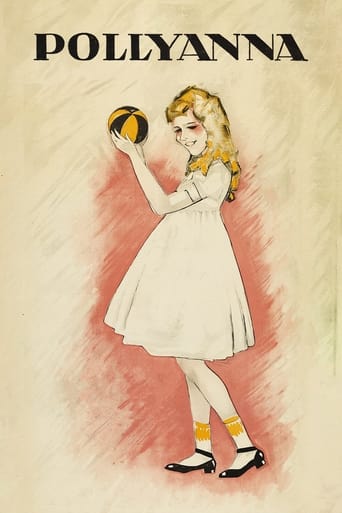
A young Belgian girl, raised by her longtime nanny, flees Europe at the advent of World War I and travels to America to find her real mother.
Cast & crew
More films like this


More Comedy films
View all →







More from Alfred E. Green
View all →
More about this film
About the production
Release dateMay 1, 1921
Box officeSuccessful - Mary Pickford films were consistently profitable during this period
ProductionMary Pickford Corporation, United Artists
Filmed inHollywood, California, Studio interiors at Pickford-Fairbanks Studios
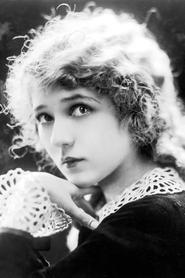
Mary Pickford played dual roles in this film, portraying both the young Jeanne and her mother, requiring sophisticated split-screen techniques and careful coordination. The film was one of several productions Pickford made that addressed contemporary social issues, in this case, the aftermath of World War I. The production utilized elaborate sets to recreate both Belgian and American environments of the period.
Themes
Family separation and reunificationClass division and social mobilityIdentity and self-discoveryThe aftermath of warMother-daughter relationships
Themes & topics
dual roleWorld War Ifamily dramaclass differencesidentity questmother-daughter relationshipservant-master dynamicwar orphansocial climbingemotional reunion
Historical background
Silent-era production in 1921 relied on intertitles, live accompaniment, and studio systems that were rapidly consolidating into national industries.
Why this film matters
Through The Back Door remains part of the screen heritage of its era, offering evidence of prevailing genres, production methods, and audience tastes. Later revivals, archive screenings, and digitization have kept such titles accessible to researchers and dedicated viewers long after their first commercial runs.
Making of
The production of 'Through The Back Door' employed innovative techniques for its dual role performances, requiring Mary Pickford to act opposite herself in several scenes. The film's production team developed sophisticated matte painting and double exposure methods to create convincing interactions between the two characters played by Pickford. Director Alfred E. Green, who frequently collaborated with Pickford, worked closely with cinematographer Charles Rosher to achieve the visual effects needed for the dual role sequences. The film's elaborate sets included detailed recreations of both Belgian village scenes and luxurious American interiors, reflecting the high production values associated with Pickford films. The casting process was particularly important, as Pickford needed supporting actors who could convincingly interact with her dual performances without breaking the illusion.
What critics said
Trade and newspaper reviews from the silent period for Through The Back Door survive only in fragments, making precise reception history difficult to reconstruct. Modern assessment tends to emphasize historical value, craft, and cultural context rather than box-office performance.
Did you know?
- Mary Pickford famously played both the young daughter Jeanne and her mother in the same film, a technical achievement for 1921 cinema
- The film was one of the first productions released through United Artists, the studio co-founded by Pickford, Chaplin, Fairbanks, and Griffith
- Pickford was 28 years old when she played the young Jeanne, demonstrating her remarkable ability to portray child characters convincingly
- The film's title 'Through The Back Door' referred to both Jeanne's literal entry into her mother's home as a servant and the metaphorical back door approach to family reconciliation
- The production featured elaborate recreations of Belgian war-torn villages, which were praised for their authenticity
- This was one of several Pickford films that addressed post-WWI themes, reflecting her awareness of contemporary social issues
- The film's success helped establish the formula of Pickford playing dual roles, which she would repeat in several subsequent productions
- Gertrude Astor, who played the antagonist, was one of the few actresses willing to play against Pickford's popular image
- The film's release coincided with the peak of Pickford's popularity, when she was known as 'America's Sweetheart'
- The movie's themes of class division and family separation resonated strongly with post-war American audiences
Visual style
The cinematography by Charles Rosher employed innovative techniques for the dual role sequences, using careful camera placement and timing to create convincing interactions between Pickford's two characters. The film featured elaborate lighting schemes to distinguish between the Belgian and American settings, with the war-torn European scenes using darker, more dramatic lighting while the American interiors employed brighter, more glamorous illumination. The cinematography utilized the full range of silent film visual storytelling, with expressive close-ups and carefully composed wide shots to establish the social hierarchies central to the plot. The camera work was particularly praised for its technical achievement in making the dual role scenes believable to contemporary audiences.
Innovations
The film's most significant technical achievement was its sophisticated use of double exposure and matte painting techniques to create convincing dual role scenes. The production team developed innovative methods for split-screen photography that were considered groundbreaking for 1921. The film featured elaborate set constructions that could be filmed from multiple angles to support the dual role sequences. Specialized makeup techniques were employed to help Pickford convincingly portray both a young girl and her adult mother. The movie's editing techniques, particularly in the scenes involving both characters, demonstrated advanced understanding of continuity and spatial relationships in early cinema.
Music
As a silent film, 'Through The Back Door' would have been accompanied by live musical performances during its original theatrical run. The typical score would have been provided by theater organists or small orchestras, using cue sheets provided by the studio. The music would have featured dramatic themes for the war sequences, tender melodies for the mother-daughter moments, and lighter compositions for the comedy elements. The original musical cues emphasized the emotional beats of the story and helped guide audience responses to the narrative developments. Modern restorations of the film have been accompanied by newly composed scores that attempt to capture the spirit of silent film accompaniment while appealing to contemporary audiences.
Famous quotes
I came through the back door, but I'm your daughter just the same
Love knows no class distinction
Even in war, a mother's heart knows her child
Money can buy many things, but not a mother's love
Sometimes the longest journey is the one that leads back home
Memorable scenes
- The dramatic revelation scene where Jeanne proves her identity to her skeptical mother through a childhood lullaby
- The emotional climax where mother and daughter finally embrace, transcending class and time barriers
- The technical marvel scene where both of Pickford's characters appear together in the same frame
- The poignant opening sequence showing the separation of mother and child during the chaos of war
- The tense dinner scene where Jeanne serves her own mother, unrecognized, highlighting class divisions
What audiences thought
The film was warmly received by audiences in 1921, who were drawn to Pickford's star power and the emotionally resonant storyline. The movie performed well at the box office, continuing Pickford's streak of commercial successes during this period. Contemporary audience response letters and reviews indicate that viewers particularly connected with the film's themes of family reunification and the triumph of love over social barriers. The film's success demonstrated the public's appetite for stories that addressed post-war realities while providing emotional catharsis. Modern audiences who have seen the film through revival screenings or home media appreciate its historical significance and Pickford's remarkable performance.
Film connections
Influenced by
- The tradition of theatrical dual role performances
- Contemporary post-war literature addressing family separation
- Pickford's previous successful films featuring child characters
- The growing trend of socially conscious melodramas in early cinema
This film influenced
- Subsequent Mary Pickford films featuring dual roles
- Later Hollywood films addressing war-related family separation
- Melodramas featuring class-crossing narratives
- Films using technical innovations for dual role performances
Film restoration
The film is preserved in the Library of Congress collection and has been restored by major film archives. While not completely lost, some elements may show deterioration typical of films from this era. The Mary Pickford Foundation has worked to preserve and restore many of Pickford's films, including this one. Modern restorations are available through specialized film archives and occasionally shown at revival screenings.
Where to watch
- Available through the Mary Pickford Foundation's official website
- Occasionally screened at film festivals and revival theaters
- Available on some specialized streaming platforms featuring classic films
- Accessible through university film libraries and archives
- Included in some home media collections of Mary Pickford's work